From kappa and kitsune to hitodama and haunted umbrellas, Japan’s yokai have shape-shifted through centuries of folklore — and now they’re creeping into anime, TikTok and pop culture around the world.
You’re walking alone at night. It’s too quiet. Just you and the sound of your footsteps … until something rustles in the brush. Was it the wind? A cat? Or is it actually a one-legged umbrella demon with a long lolling tongue?
If you’re in Japan — or Japanese folklore — the answer to that last one could be yes.
Welcome to the world of yōkai (妖怪), pronounced “yo-kye” to rhyme with “eye.” The term that loosely translates to “mysterious apparitions” but covers everything from shapeshifting foxes to haunted bathhouses. They’re not quite ghosts, not quite gods, and not always evil. Some are terrifying. Some are hilarious. A few are oddly relatable.
In this guide, we’ll break down what yōkai are, where they came from, the most common types, what they represent, and why they’ve gone from ancient scrolls to anime stars. You’ll meet river goblins who love cucumbers, women who turn into snakes, and lanterns that scream in the night.
So light a candle, keep your sandals close and let’s begin.
What Are Yokai?
At their core, yōkai are supernatural beings from Japanese folklore. But unlike your standard Western ghost or demon, yōkai defy easy categories. Some look like animals. Others resemble people. A few are just noises. Or household objects with grudges.
The word yōkai combines two kanji: 妖 (yō), meaning “bewitching” or “strange,” and 怪 (kai), meaning “mystery” or “apparition.” Together, they convey a sense of something uncanny — the kind of presence that feels both intriguing and unsettling.
Yōkai aren’t all evil. Some protect. Some pull pranks. But some will devour your soul if you make eye contact — if it’s a Tuesday. They can be beautiful or grotesque, ancient or newly invented. What unites them is their otherness. Yōkai are the things that don’t belong. The ones that make you glance over your shoulder. The feelings you can’t explain.
They’ve appeared in Japanese tales for over a thousand years, evolving with the times. In early Buddhist texts, they were linked to karmic punishment. During the Edo period, they starred in woodblock prints and ghost stories. Now they show up in manga, mascots and video games.
Yōkai are storytelling jacks-of-all-trades. Need to explain why a fireball just floated past your window? Yōkai. Wondering why your shoes are wet every morning? Definitely yōkai. They give form to fear, humor to horror, and personality to the unknown.
What Do Yokai Represent?
Yōkai aren’t just spooky bedtime stories. They’re mirrors. Every eerie moan in the woods or shapeshifting raccoon dog reflects something deeper: fear, guilt, wonder or, possibly, boredom.
1. Fear of the unknown
Before weather apps and forensic science, people had to explain strange events somehow. A flash of light in the forest? Must be a fireball spirit. A drowning in calm water? Blame the kappa. Yōkai gave names and faces to what couldn’t be understood.
2. Moral lessons — often with claws
Yōkai stories are full of “don’t do that” morality. Don’t walk home alone at night. Don’t gossip. Don’t mistreat the teapot. Much like fables, many yōkai tales teach a lesson — though instead of a gentle nudge, they might yank you into a river or haunt your house for a decade.
3. Social anxieties in disguise
A lot of yōkai are stand-ins for societal issues. Hungry ghosts reflect famine. Shapeshifting women evoke distrust of outsiders or shifting gender roles. Mountain witches and swamp creatures live at the edges of society — just like the people they may have once represented.
4. Nature with a temper
Japan’s landscapes are stunning, but they don’t mess around. Mountains, forests, rivers, volcanoes — they’re beautiful and dangerous. Yōkai express that duality. They remind you that nature is sacred but also has teeth.
5. Lingering emotions
Some yōkai are born from intense feelings: grief, rage, jealousy. In Japanese lore, strong emotions can linger after death, taking on a life of their own. That’s how you get yūrei (restless spirits) and onryō (vengeful ghosts). It’s folklore meets therapy.
In short, yōkai are never just monsters. They’re metaphors that just happen to have sharp fingernails. They help people make sense of a chaotic world — through laughter, fear or a weird umbrella with a tongue.
Types of Yokai
If yōkai had a family reunion, it would be total chaos. A fox would flirt with your cousin. Someone’s rice cooker would be possessed. An angry ogre would inflict eternal torment upon a killer. That’s the level of variety we’re dealing with.
While there’s no single official classification — folklorists, artists and mystics have all put their own spin on them — yōkai are usually grouped by form, behavior or origin story. Think of these less like scientific categories and more like cryptid cliques.
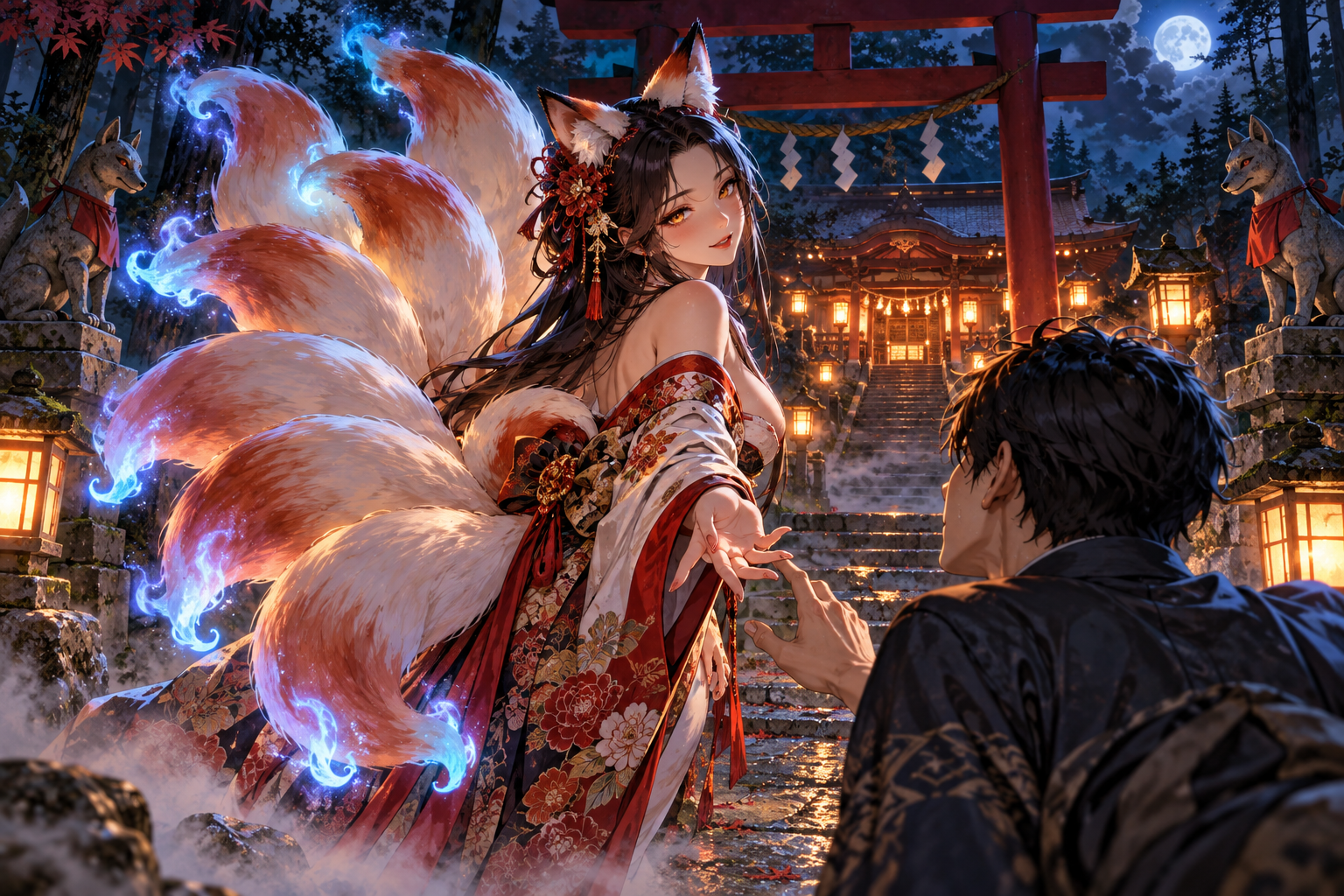
Obake and Bake-danuki: Masters of Disguise
Obake (お化け) literally means “thing that changes.” That’s your first clue. These yōkai are all about transformation. Some are animals pretending to be people. Some are people who just… warped. And then there are the bake-danuki: raccoon dogs with big bellies, magical powers and chaotic good energy.
Common types of obake
1. Kitsune: Foxy and tricky
Kitsune are fox spirits known for their intelligence, beauty and trickery. The older they get, the more powerful they become — some even grow multiple tails. In some stories, they seduce human men. In others, they serve the rice goddess Inari and protect sacred shrines. They can bless or curse depending on their mood.
2. Tanuki: Drunk, jolly and ballsy
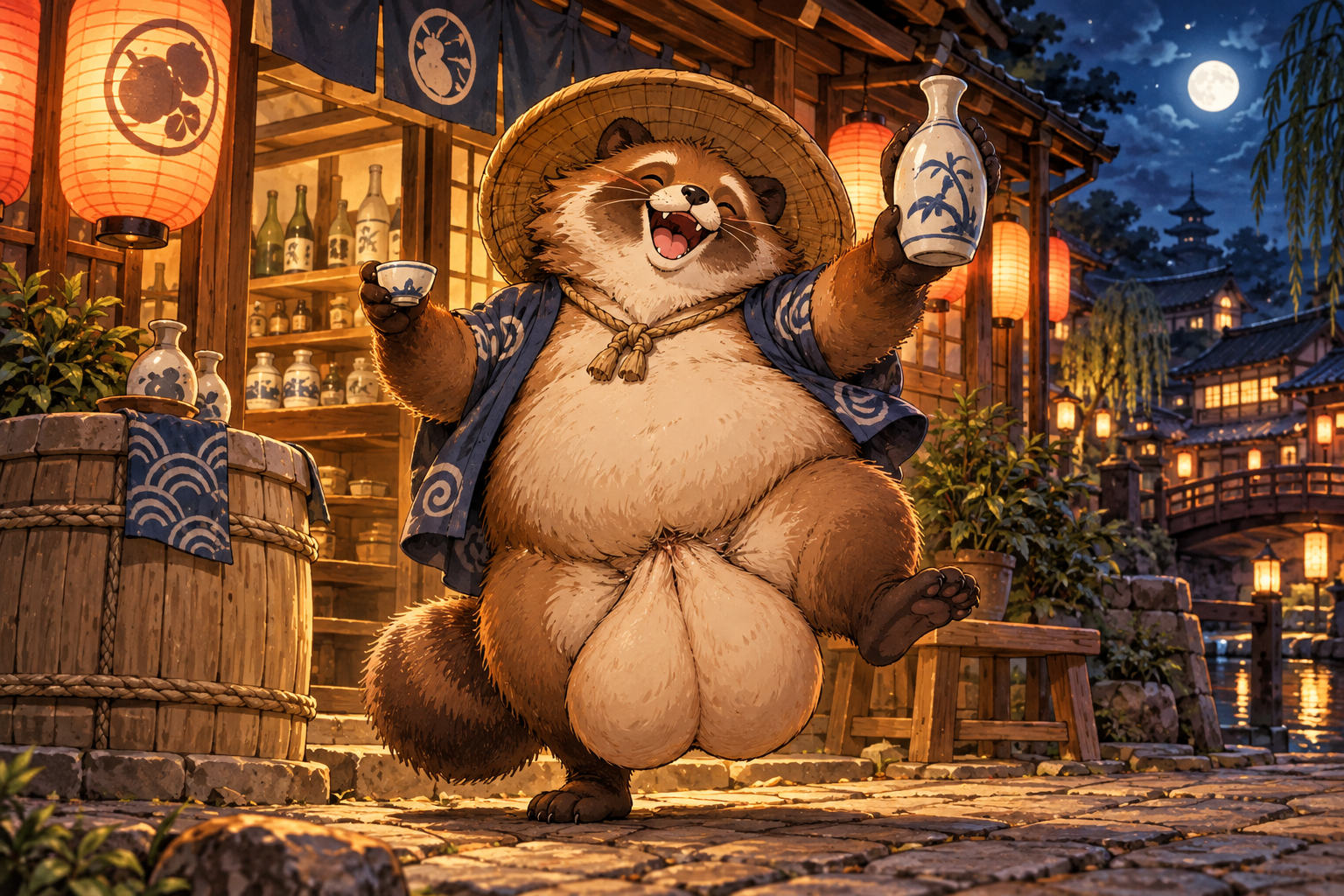
The bake-danuki is a shapeshifting raccoon dog who’s less seductive than the fox, but way more fun at parties. Tanuki can disguise themselves as teapots, monks, even entire buildings. They’re often shown with giant testicles (yes, really) that symbolize wealth and transformation. Umm, okay.
You’ll see tanuki statues outside restaurants and bars across Japan, beckoning customers with a saucy grin and a sake jug.
3. Other obake: People who shift
Obake aren’t limited to animals. A human who undergoes a mysterious or ghostly change — say, a woman turning into a serpent, or a drowned soul that becomes a shadowy version of itself — might be called an obake. They blur the line between spirit, ghost and monster.
Symbolism and subtext
Obake stories are about mistrust, illusion and transformation. They ask, What if the person you’re talking to isn’t who you think they are? What if you aren’t? In a culture that values harmony and appearances, yōkai that toy with identity are particularly disturbing.
Obake in popular culture
Kitsune and tanuki are everywhere, from Studio Ghibli to Naruto to Pokémon. They’re tricksters, mascots, gods and memes. They’ve adapted to every era, just like they always do.
How to defeat obake
Expose the trick: Sudden loud noises, a mirror or catching them in a lie can shatter their disguise.
Outwit them: They respect cleverness, and a quick mind can force them to drop the act.
Leverage symbols: Certain talismans, especially those tied to Shinto shrines, are said to strip away illusions.
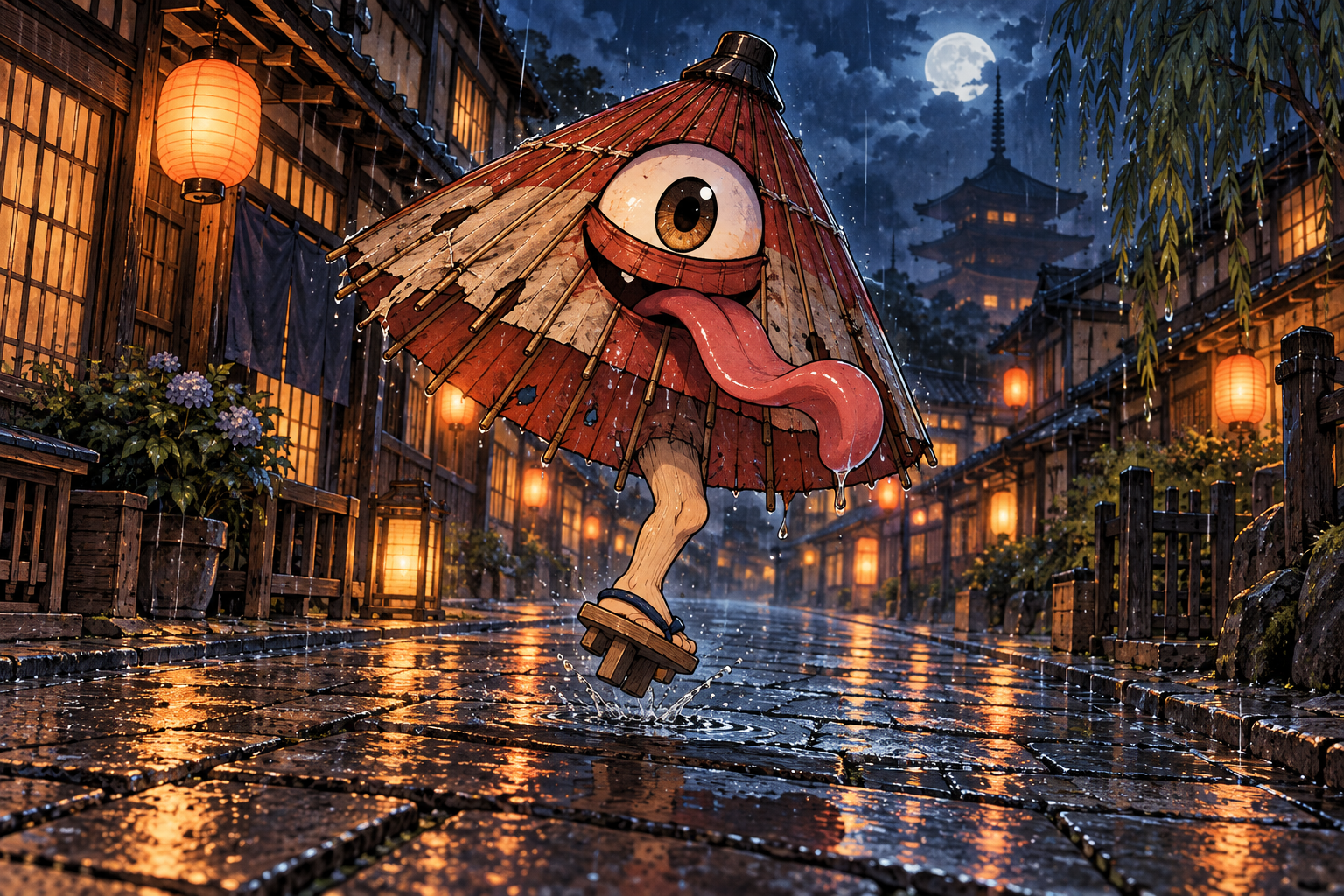
Tsukumogami: When Your Umbrella Gets Petty
Imagine ignoring your toaster — only for it to sprout arms, legs and a vendetta. That’s the spirit (literally) of tsukumogami: yōkai born from your abandoned stuff.
What are tsukumogami?
Tsukumogami (付喪神) are household objects that come to life after existing for a century. But they don’t just animate; they get attitudes. Your once-loyal sandals might now trip you for fun. That paper lantern you forgot in the attic? It’s about to scream in the middle of the night.
In Shintō belief, even inanimate things have souls, or can grow them with time and emotional weight. So when you neglect or disrespect your belongings, don’t be surprised if they take it personally.
Common types of tsukumogami
Karakasa-obake: The most famous: an umbrella with one eye, a foot and a disturbingly long tongue
Biwa-bokuboku: A haunted lute that gets upset when it’s not played
Possessed futons, sandals, lanterns, futons again (they hold grudges)
If it can gather dust, it can haunt you.
Where tsukumogami come from
The idea really caught fire in the Edo period, when artists and storytellers leaned into the creep factor. But the root is older — tied to animism, recycling rituals and a sense that the world is alive with spirit, even your broom.
Symbolism and subtext
Tsukumogami remind us not to be wasteful. They’re walking (or hopping) parables about respecting your possessions and living more mindfully. Today, they hit like eco-guilt wrapped in folklore: Don’t throw away that blender… or it might come back with a grudge.
Tsukumogami in popular culture
You’ll find tsukumogami all over modern Japan:
Mascots for recycling campaigns
Side characters in anime like Princess Mononoke, Natsume’s Book of Friends and Pokémon (Rotom is literally an appliance ghost)
Merch lines with haunted stationery, cute haunted socks, you name it
How to defeat tsukumogami
The surest way to avoid a tsukumogami problem is to treat your belongings with respect — clean them, repair them and retire them properly in rituals like the hari-kuyō (memorial service for old sewing needles).
Once an object has turned, appeasing it with offerings, apologies or a promise of better care can sometimes calm its grudge.
Purification rites and blessings from a priest can drive out the spirit, returning the object to normal. In the worst cases, destruction of the item works — but you risk angering it further, so choose your hammer swing wisely.
Tsukumogami have gone from vengeful spirits to cuddly collectibles — but the warning remains. Be careful what you throw away. It remembers.
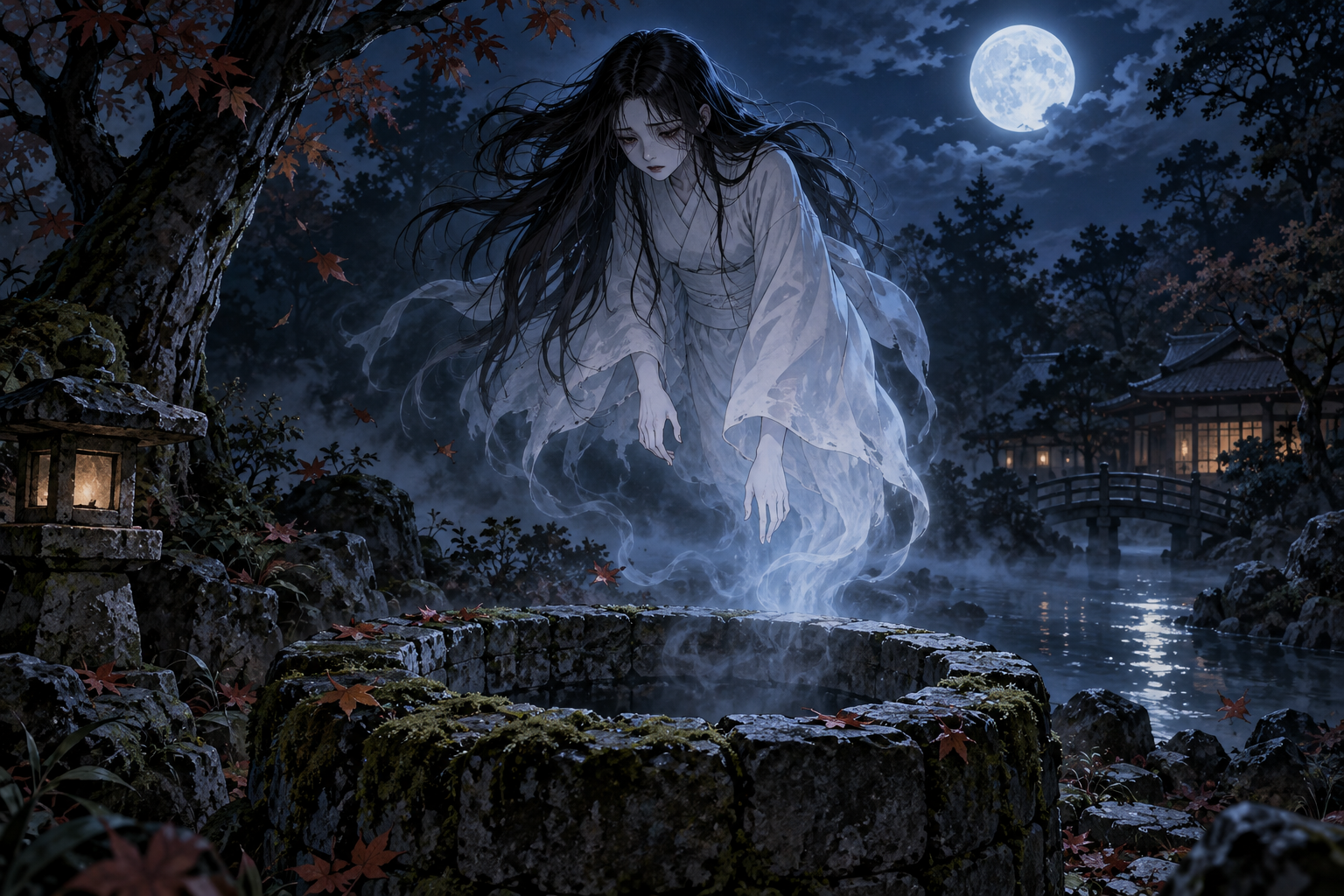
Yurei: Ghosts With Unfinished Business (and Great Hair)
If you’ve seen a Japanese horror movie, you’ve met a yūrei. You know the drill: Pale face. Long, unkempt black hair. White funeral robes. No feet seen. Usually floating. Always pissed.
What are yurei?
Yūrei (幽霊) are the spirits of the dead who haven’t moved on — usually because they died in a state of intense emotion: rage, sorrow, betrayal, jealousy. If their funeral rites weren’t done properly, or if their deaths were unjust, they stick around. And they want you to know it.
Where Western ghosts might go boo, yūrei stand silently at the foot of your bed and ooze betrayal.
Common types of yurei
Oiwa: Betrayed by her husband, disfigured by poison, and now haunting literally every stage version of Yotsuya Kaidan
Okiku: Accused of breaking a valuable plate, thrown down a well, and now doomed to count broken dishes forever
Otsuyu: The ghostly woman who seduces a man night after night… until he realizes she’s very, very dead
What makes a ghost a yurei?
White burial kimono (used in Buddhist funerals)
Unbound hair (symbolizing spiritual unrest)
Floating or footless forms (they don’t walk among the living; they hover)
Symbolism and subtext
Yūrei aren’t monsters. They’re symptoms. Of grief, injustice, forgotten obligations. They’re what happens when you ignore pain. Many stories are metaphors for gender roles, social rigidity and emotional repression — especially for women.
These stories weren’t just horror; they were catharsis. Women wronged by society or men found revenge and voice as ghosts.
Yurei in popular culture
The Ring’s Sadako? Straight from the yūrei playbook
The Grudge’s Kayako? Ditto
Countless anime, horror games and TikTok filters draw from their aesthetic
Even Western horror borrowed the look (see: The Conjuring 2, The Woman in Black)
How to defeat yurei
Most yūrei can be laid to rest by resolving what keeps them tethered to the living world: righting a wrong, delivering an unspoken message, or performing the proper funeral rites they were denied.
In Buddhist tradition, prayers, sutras and memorial services can guide the spirit onward. Shinto purification rituals, salt barriers and protective charms are also said to keep them at bay. In some tales, simply avoiding their haunting grounds works — but in others, they’ll follow until their grudge is settled.
Yūrei are scary, sure. But they’re also tragic, poetic and endlessly watchable. They remind us that unfinished stories have consequences — and that your ex might haunt more than your social feed.
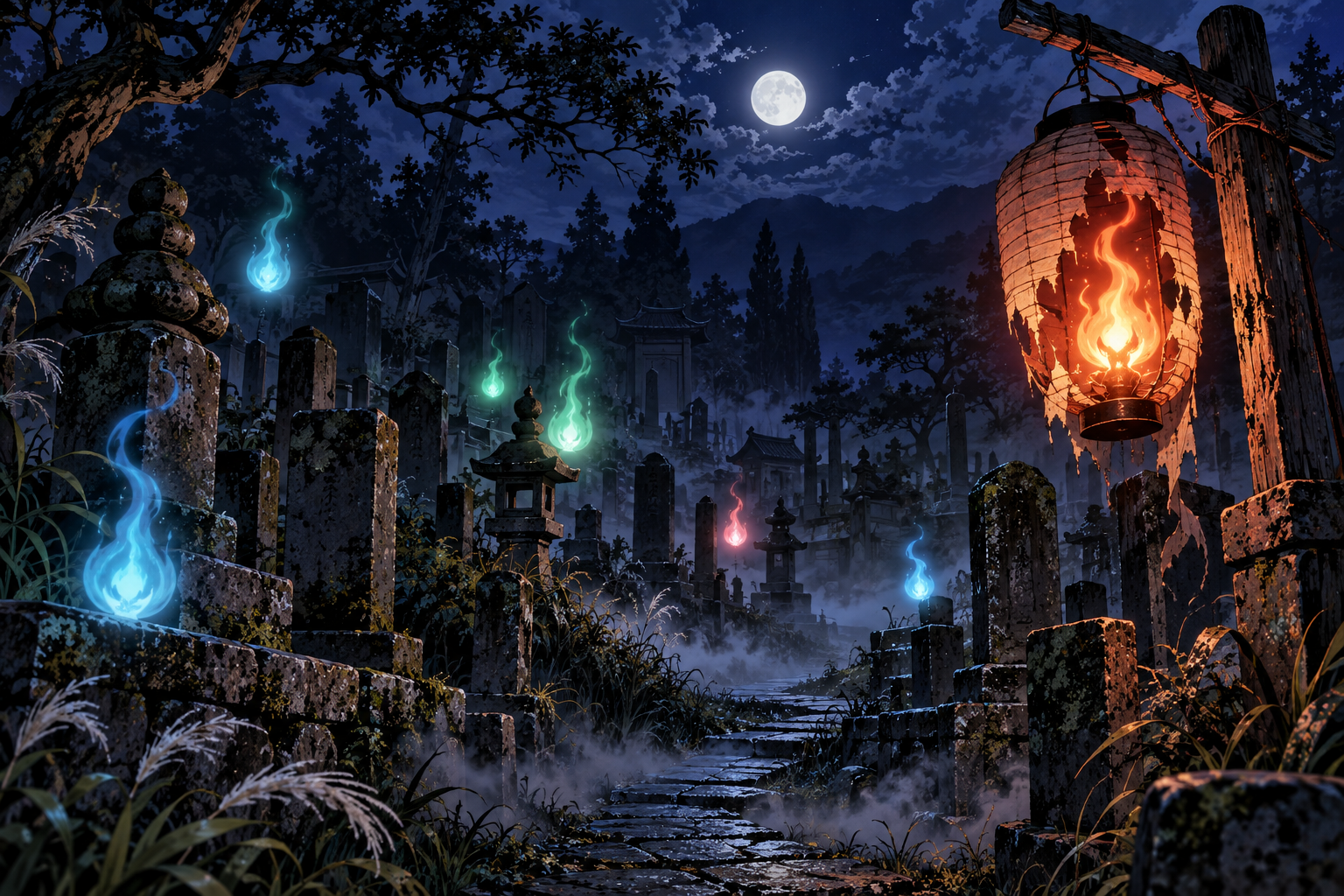
Hitodama and Chochinbi: Misleading Lights
Not all yōkai have bodies. Some are just… floating flames. But don’t let the cozy glow fool you; these lights don’t guide, they mislead. They flicker just far enough ahead to draw you off the path. And by the time you realize what’s happened, the path is gone.
What are hitodama and chochinbi?
Hitodama (人魂): Literally “human souls,” these are floating orbs of blue, green or reddish flame said to be the spirits of the recently dead
Chōchinbi (提灯火): “Lantern fire”: A cousin to hitodama, often linked to ghostly processions or haunted lanterns
They drift through graveyards, forests and lonely roads at night, especially in humid summer months, when the veil between worlds thins.
What hitodama and chochinbi do
Lure travelers away from safety
Appear near death or disaster as a warning
Occasionally just vibe (some don’t do harm at all; they just float by)
They’re the original ghost orbs, long before paranormal TV crews on the Travel Channel lost their minds over them.
Symbolism and subtext
Seen as tama, or souls, that haven’t reached the afterlife
Could appear during Obon season, when spirits return home
In some tales, they’re the remains of people who died suddenly or without proper rites
Japanese funerals sometimes include lanterns to help spirits find their way — and prevent them from becoming these lonely floaters.
Hitodama and chochinbi in popular culture
Studio Ghibli’s Spirited Away uses ghostly flames during spirit scenes
Pokémon’s Litwick and Lampent feed on life energy, echoing these tales
Appearing in shrine imagery, horror manga and glowing merch galore
How to defeat hitodama and chochinbi
You don’t so much “defeat” these wandering lights as avoid becoming their next cautionary tale. In most stories, the key is to not follow them — no matter how much they seem to beckon. Staying on marked paths, traveling in groups and carrying a lantern of your own are commonsense protections.
Buddhist rites, protective amulets or salt can also ward off malevolent versions. If they’re linked to a restless soul, proper memorial offerings may put the light to rest. The easiest solution? Treat strange floating fire like you’d treat an unmarked van — give it space and keep walking.
These yōkai aren’t loud or vengeful. They just drift. Quietly. Unnaturally. A reminder that not everything that lights your way is your friend.
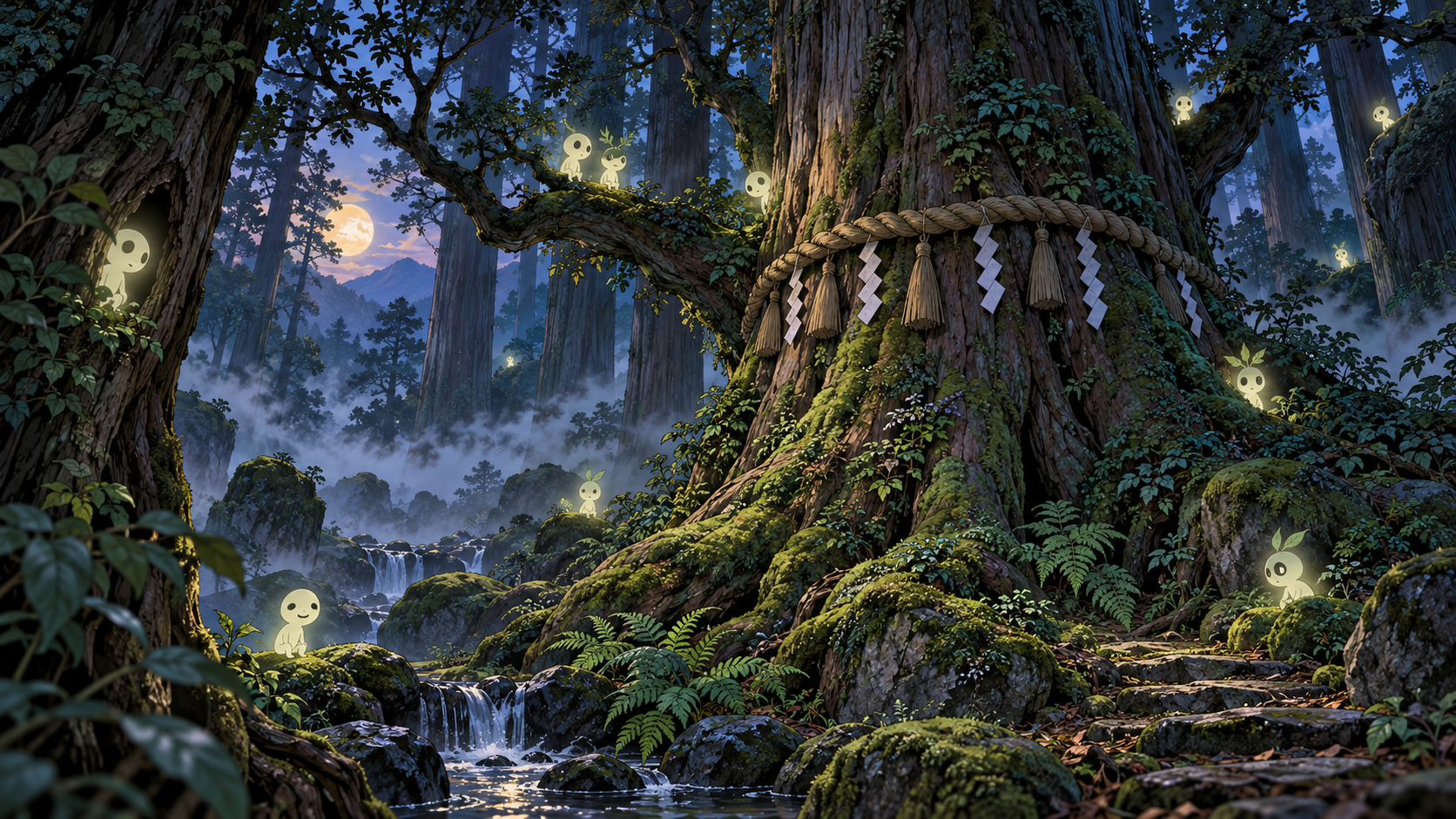
Kodama: Echoes in the Trees
Sometimes, Japan’s forests talk back. The kodama (木霊) are tree spirits, protectors of ancient groves and occasional pranksters with a talent for throwing your voice.
What are kodama?
Kodama are spirits believed to inhabit certain old trees, usually massive cedars or oaks deep in the mountains. Cutting down a kodama tree without proper rituals is said to bring curses, illness or death — a warning against disrespecting nature. Sometimes they’re invisible; sometimes they appear as small, glowing figures or eerie humanoid forms hidden in the foliage.
What kodama do
Echo sounds back through the forest (hence their name, which means “tree echo”)
Protect sacred groves and punish those who harm them
Occasionally guide lost travelers — or confuse them further with misleading calls
Symbolism and subtext
Kodama embody Japan’s Shintō belief in kami (spirits) inhabiting natural places. They’re reminders that forests are alive, sacred and deserving of respect. On a practical level, they also reinforce conservation: Don’t cut down old-growth trees without cause, or you risk angering what lives within.
Kodama in popular culture
Studio Ghibli’s Princess Mononoke made them famous worldwide as rattling, bobble-headed forest sprites
Appear in shrine imagery, ghost stories and rural legends tied to sacred groves
Influence game and anime spirits tied to forests and echoes
How to defeat kodama
The good news: You usually don’t want to. Kodama aren’t malevolent unless provoked. The “defense” is respect — bow before ancient trees, offer thanks and avoid unnecessary felling.
Shrines and rope markers (shimenawa) often signal a kodama’s presence, warning loggers to stay away.
If you treat the forest well, the kodama will leave you in peace — or even protect you.
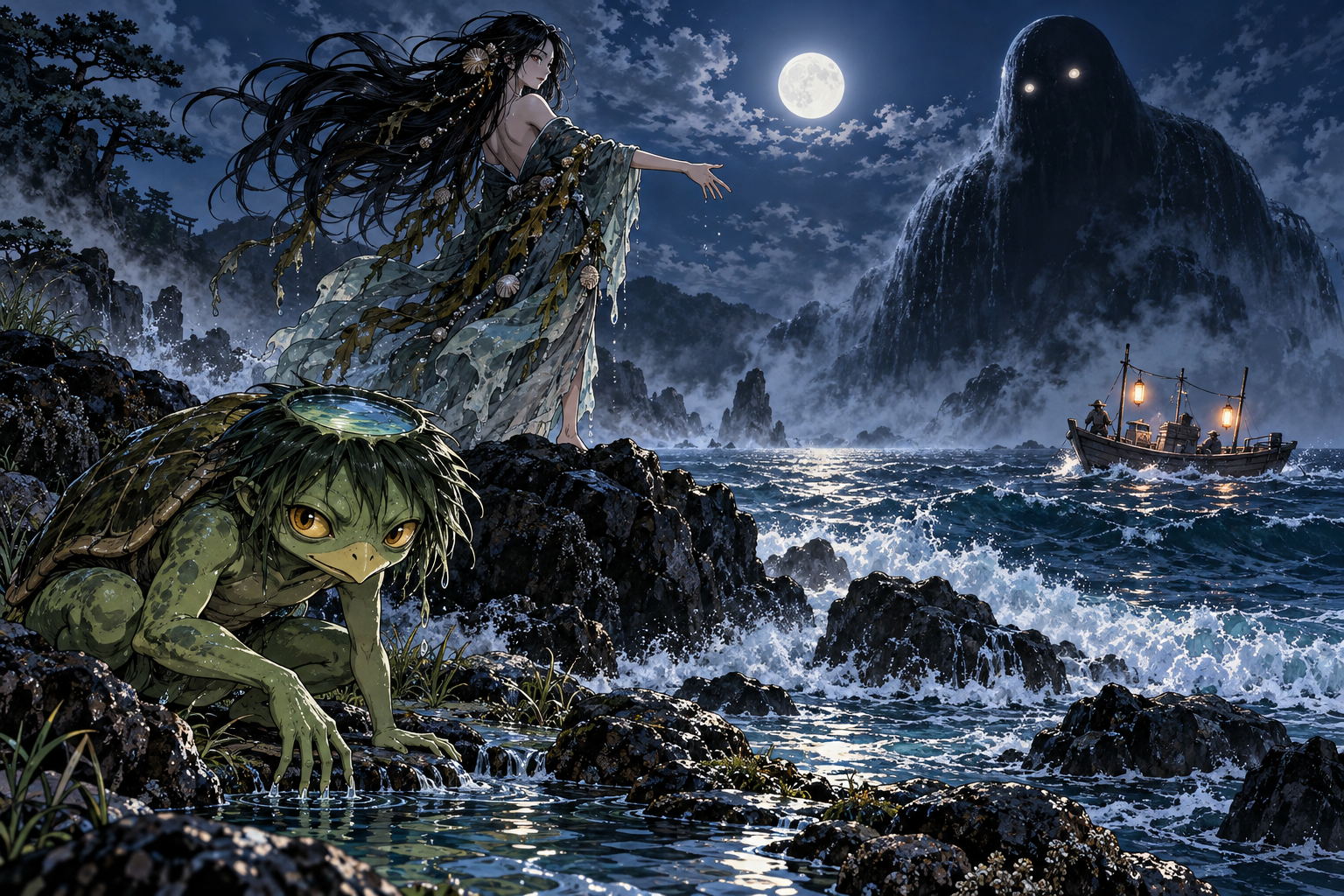
Aquatic Yokai: River Goblins and Spirits With a Splash of Danger
Japan’s rivers, lakes and coastlines are beautiful — but in folklore, they’re also alive. Beneath those shimmering surfaces lurk some of the most memorable yōkai of all: creatures who swim, drag, rape, drown and occasionally eat cucumbers.
What are the aquatic yokai?
Aquatic yōkai are water-dwelling spirits and monsters. Some protect, some punish, some just want to wrestle. These beings tend to haunt specific places — bridges, wells, shorelines — and love targeting anyone foolish enough to ignore a warning sign.
There are a few examples:
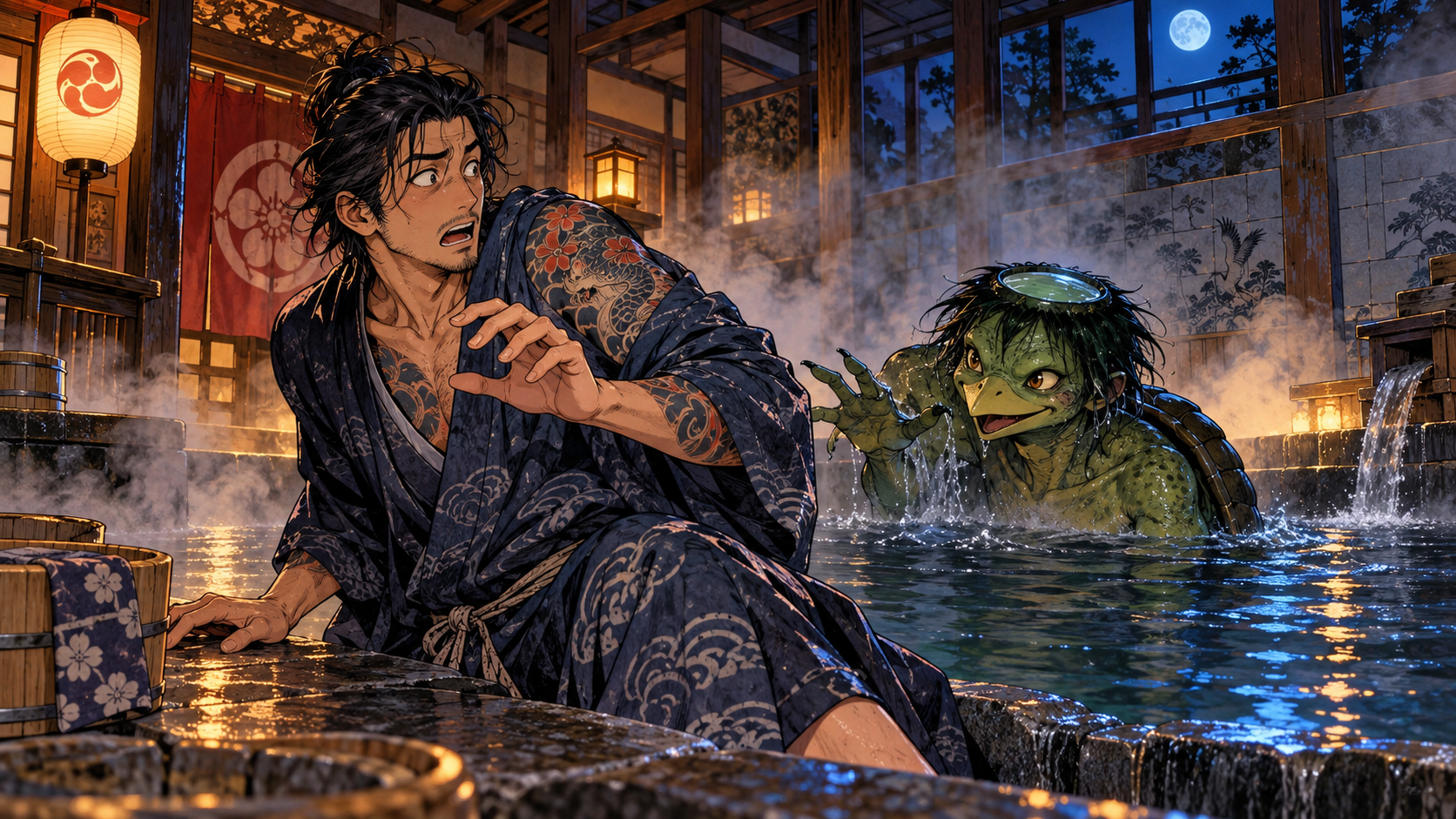
Kappa (河童): Green, turtle-like creatures with a water-filled dip in their heads. They might drown you, drag out your shirikodama (a mythical soul-ball that comes from your butt), or take liberties with you (a nice way of saying they’re rapists).
Umibōzu (海坊主): Giant, shadowy sea monks who rise from calm seas to capsize ships. No one knows what they really look like because anyone who sees them tends not to live long.
Iso-onna (磯女): A beautiful woman who appears on coastal rocks, luring sailors to their deaths with a smile.
Symbolism and subtext
Many aquatic yōkai serve as folklore PSAs about water safety: Don’t swim alone, don’t trust calm waters, and never go near the rocks for a midnight rendezvous.
They also reflect a deeper fear of nature’s unpredictability. Water gives life, but it can just as easily take it.
Aquatic yokai in popular culture
Kappa appear in everything from children’s books to Yokai Watch, and even on Japanese river warning signs.
Umibōzu feature in horror manga, ghost stories and urban legends.
Aquatic yōkai influence Pokémon (hello, Golduck), anime (Natsume’s Book of Friends, Inuyasha), and monster-of-the-week TV tropes. Kappa show up as one of the monsters of the mobile game Harry Potter: Wizards Unite. And I can’t help but wonder if the Teenage Mutant Ninja Turtles owe a bit of their inspiration to kappa.
How to defeat aquatic yokai
Kappa: Kappa lose their strength if the water in the dish on their head is spilled — so bow deeply; politeness compels them to return the bow, emptying it themselves.
In some tales, carve your name and a protective prayer onto cucumbers (their favorite food) and toss them into the water to distract them. Avoid swimming alone in kappa-haunted rivers, and keep your distance from the shore if you hear splashing.
Umibōzu: The classic survival trick is to offer them a bottomless bucket — they’ll waste precious time trying to use it to drain the sea while you row away.
Sailors also avoid saying their names at sea, believing it summons them. If the seas turn suddenly dark and still, steer toward shore immediately.
Iso-onna: Resisting her lure is the key. Folklore suggests that avoiding eye contact and refusing her invitation will save you. Traveling with companions and keeping a safe distance from coastal rocks after dark are the most reliable protections. In some stories, salt or charms blessed at a shrine repel her.
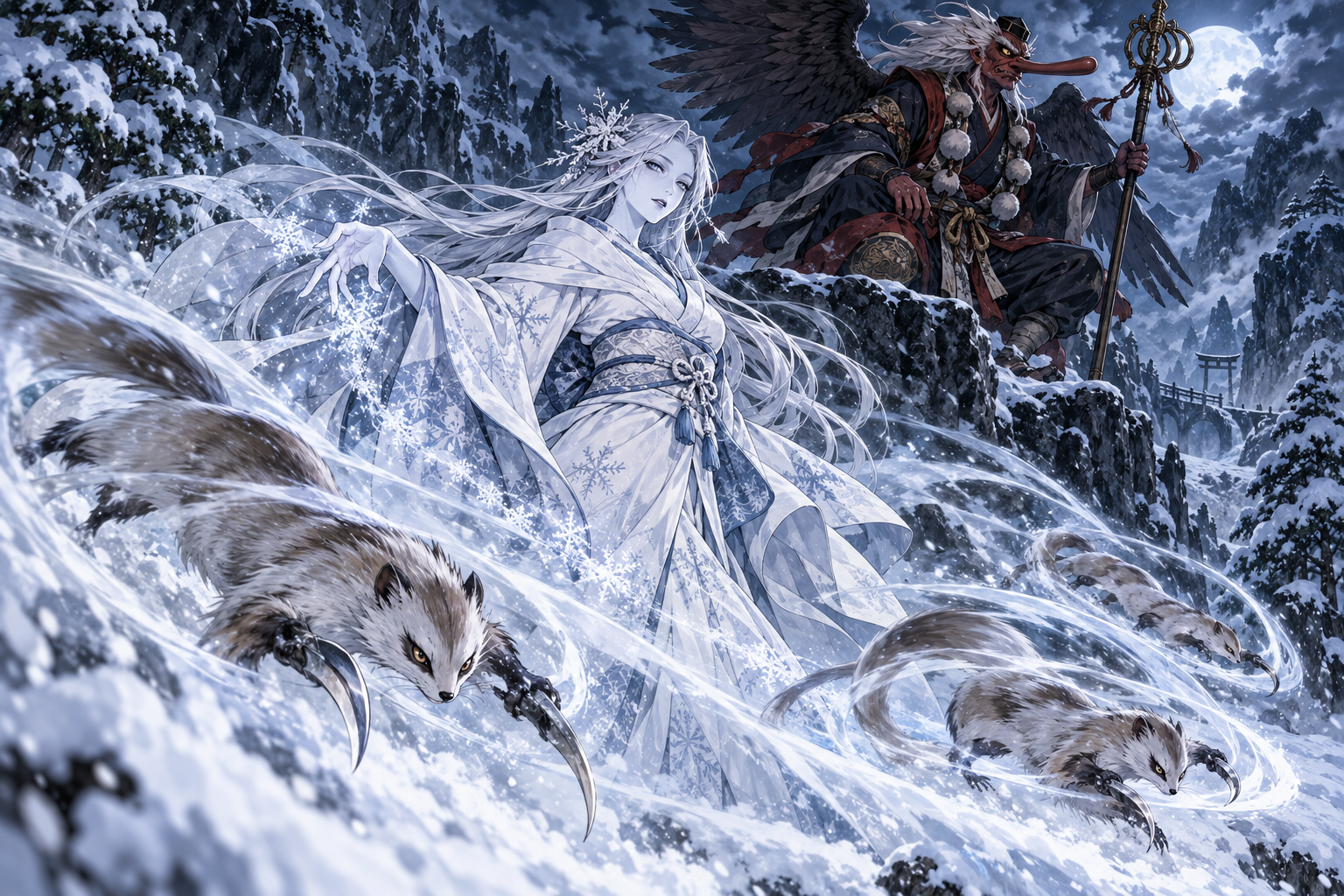
Mountain and Weather Yokai: Cold and Cold-Hearted
Where the air thins and the weather turns without warning, these yōkai rule. Some lure you into snowdrifts with a smile. Others knock you off your feet with a gust sharp enough to draw blood. Mountains in Japanese folklore are the stage for some of the country’s most dangerous encounters.
What are mountain and weather yokai?
This loose group includes supernatural beings tied to high-altitude danger and sudden climate shifts. They’re part elemental, part predator — blending the raw forces of nature with human fears about isolation, getting lost and the cruelty of the elements. They can be protectors of sacred mountain paths or merciless hunters of those who wander too far.
Common types of mountain and weather yokai
Yuki-onna (雪女): The snow woman draped in white. Sometimes she spares lost travelers with a kiss colder than death. Sometimes she doesn’t.
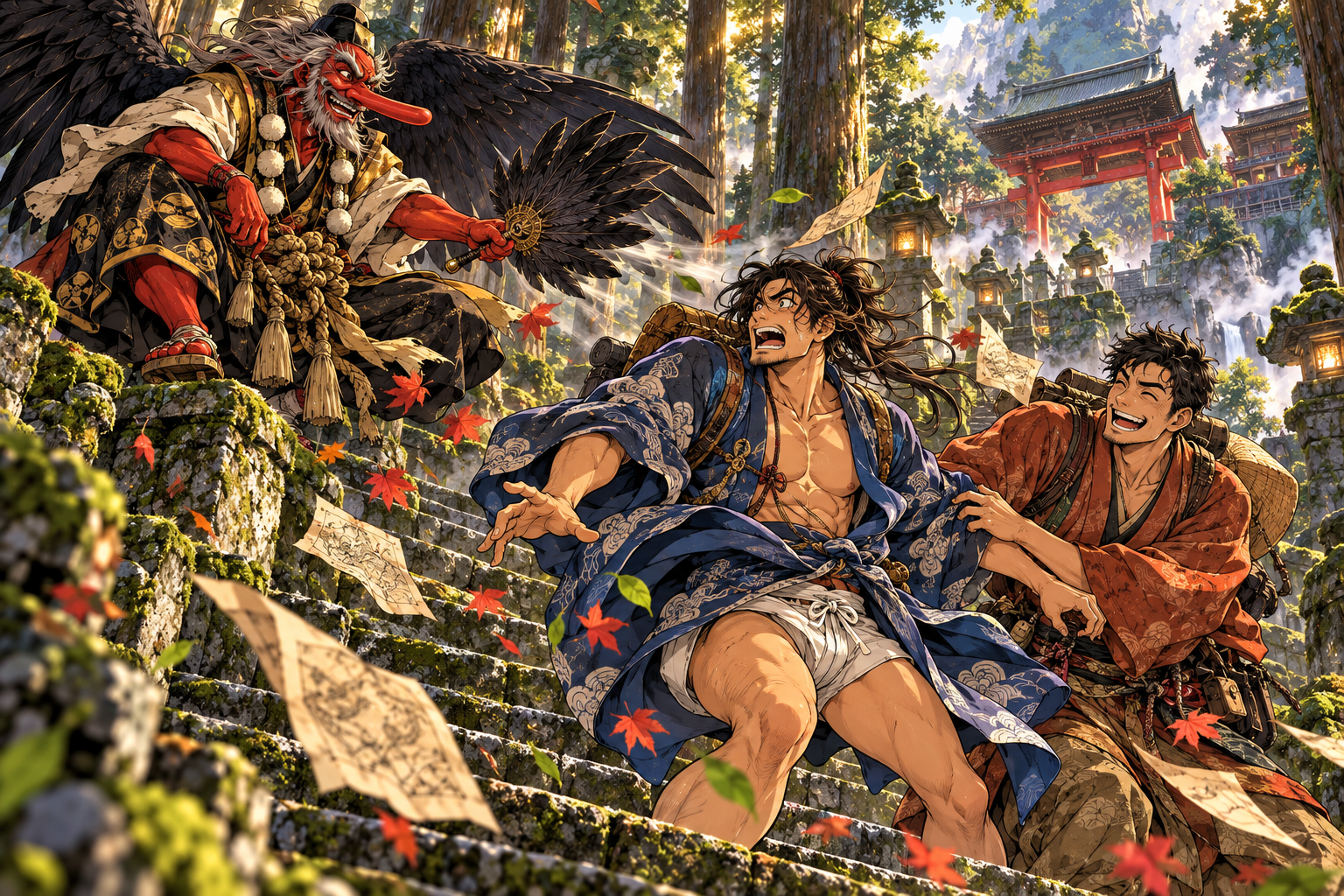
Tengu (天狗): Mountain-dwelling warrior tricksters with long noses and fiery tempers. They might teach you swordsmanship … or carry you off a cliff.
Kamaitachi (鎌鼬): Weasel-like wind spirits who ride sudden gusts, slicing exposed skin with sickle claws before you can even cry out.
Symbolism and subtext
These yōkai embody the peril of underestimating the outdoors — especially in an era when travel meant physical hardship and real risk. In these tales, nature is never passive. It’s a force with agency, personality and sharp edges. These yōkai remind listeners that mountains can be sacred, but they can also kill you.
mountain and weather yokai in popular culture
Yuki-onna gliding through horror films and anime like Hakkenden and Nura: Rise of the Yokai Clan
Tengu appearing as martial arts masters or bosses in games like Nioh and Sekiro
Kamaitachi slashing their way into everything from Pokémon designs to urban legends on Japanese forums
How to defeat mountain and weather yokai
Yuki-onna: Don’t travel alone in storms. Keep to lit paths and warm fires. She sometimes spares travelers who show kindness or keep a promise. Shrine charms and offerings — perhaps warm sake — are said to weaken snow spirits’ hold.
Tengu: Beat them with humility. Don’t rise to dares or follow “monks” into the trees. Carry an ofuda (a protective talisman from a Shintō shrine), ring a bell, and recite prayers to ward off illusions and harmful spirits. Traveling in groups with a stout staff and staying on marked trails makes abduction tricks fail.
Kamaitachi: They ride sudden gusts, so drop low when the wind kicks up, wrap exposed skin and avoid ridgelines during squalls. Protective talismans for wind are traditional. If cut, folk cures call for quick cleansing and heat from moxa (burned mugwort) or a warm compress to close their slashes.
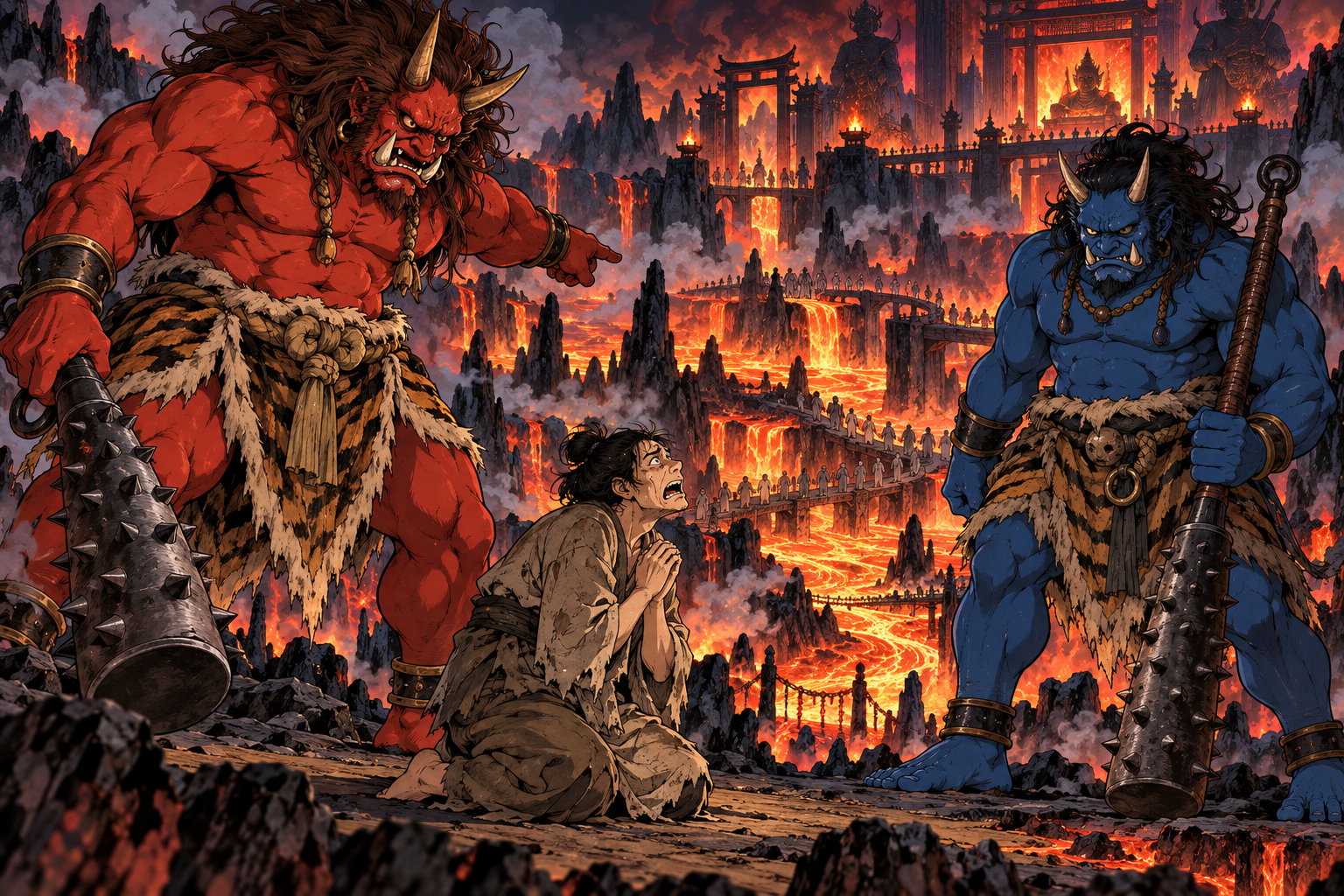
Oni: Horned Hellions
Oni (鬼) are the heavy hitters of Japanese folklore. They’re often armed with massive iron clubs (kanabō), the kind you’d only need if you were in the business of flattening villages or smashing samurai. But oni are more than just brutes; they’re symbolic, standing in for the destructive forces of nature, war, famine and human cruelty.
What are oni?
Oni are a type of ogre or demon with supernatural strength and an appetite for human suffering. Legends place them everywhere from hellish underworlds to remote mountain caves. In Buddhist lore, they serve as punishers of the wicked. But in folk tales, they’re just as likely to be random marauders or villains to be outwitted.
Traits and abilities of oni
Towering, muscular builds with horns, tusks and wild hair
Bright red or blue skin — colors often linked to elemental forces like fire and wind
Incredible physical strength and resilience
Magic that ranges from shapeshifting to summoning storms
Symbolism and subtext
Oni represent the threats that lurk outside the safety of the village — literal dangers like invaders or bandits, and metaphorical ones like greed, violence and vice. They also serve as a kind of moral avengers in stories, punishing liars, thieves and oath-breakers in the afterlife.
Oni in popular culture
Video games like Ōkami, Nioh and Onimusha
Anime and manga from InuYasha to Demon Slayer
Mascots and pop culture cameos, sometimes recast as lovable rogues rather than fearsome demons
How to defeat oni
Outwit them with trickery, overwhelm them with sheer strength (good luck), or repel them during Setsubun, a festival that marks the day before the beginning of spring in the traditional lunar calendar (around the time of the Wiccan holiday Imbolc). Hurtle roasted soybeans while shouting, “Oni wa soto!” (“Demons out!”).
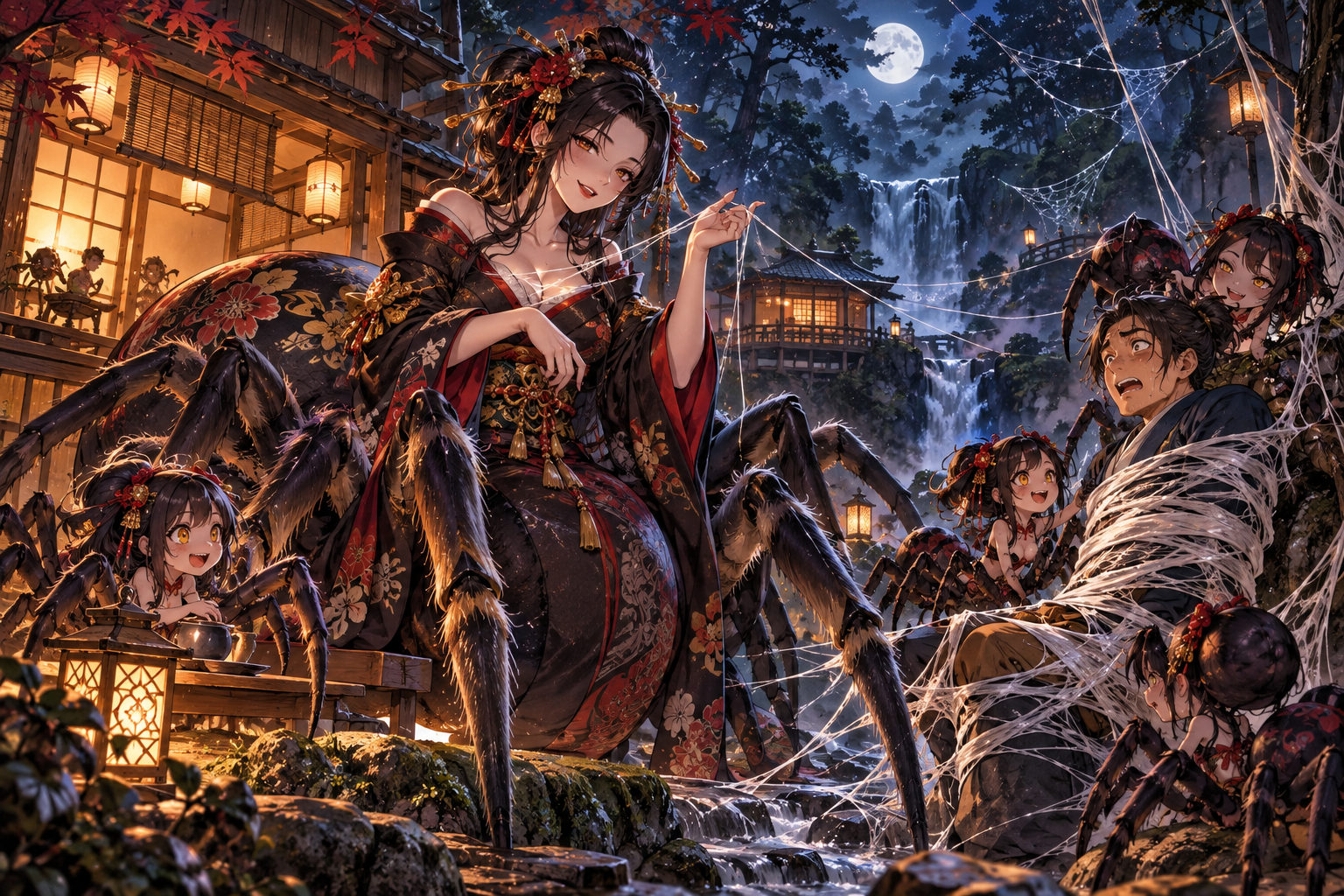
Jorogumo: Spider Seductress
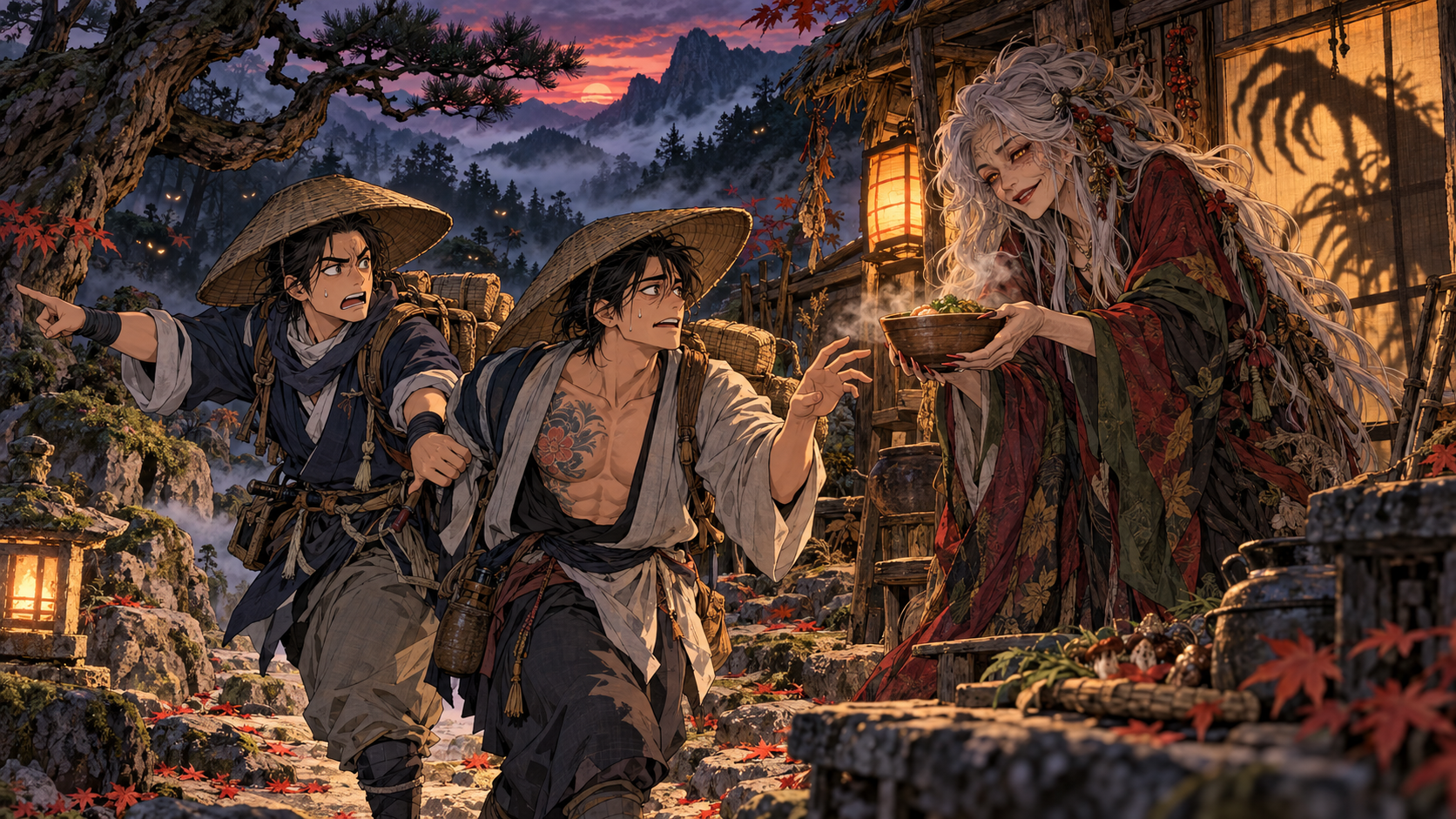
She’s gorgeous. She’s charming. She’s absolutely going to eat you. The jorōgumo (“binding bride”) is a yōkai who takes the form of a beautiful woman to lure men into her home — often near a waterfall or in some picturesque corner of the countryside — before revealing her true identity as a giant venomous spider.
What is a jorogumo?
By day, she’s the perfect hostess: tea poured, a sweet smile and a soft voice asking you to stay just a little longer. By night, she’s an eight-legged terror, spinning silk to bind her prey before delivering the fatal bite. In some versions, she even commands smaller spiders to help her hunt — because why kill alone when you can make it a family affair?
Famous tales of jorogumo
The Waterfall Bride of Jōren Falls: Said to seduce travelers before dragging them into the spray, never to be seen again
The Silk-Laced Room: A young man follows a woman home, only to realize too late that every “curtain” is actually spiderweb
The Fire-Wielding Jorōgumo: In one story, she disguises herself as a geisha and plays shamisen while summoning flame, all to distract before the kill
Symbolism and subtext
On one level, she’s a horror story. On another, she’s a walking (crawling) warning: Beauty can be a trap, seduction can be deadly, and the wild places of the world don’t play by your rules.
Jorogumo in popular culture
Anime and video games often depict her as a glamorous femme fatale — sometimes entirely human in appearance, other times revealing spider legs or web-like markings. She’s appeared in Yo-kai Watch: Shadowside and the Megami Tensei series, often luring victims with beauty and music before striking.
Folklore-inspired horror films and manga use her to explore the “deadly woman” archetype, blending seduction with sudden violence. Examples include Kaidan Kasane-ga-fuchi and chapters of GeGeGe no Kitarō.
Urban fantasy and tabletop games cast her as both enemy and dangerously attractive ally — from Dungeons & Dragons modules featuring spider-women inspired by her legend (Lolth seems a likely suspect), to Japanese RPGs where she can be persuaded to fight alongside you.
How to defeat jorogumo
If you suspect you’re in a jorōgumo’s territory — often near waterfalls, bridges or secluded teahouses — the safest tactic is not to engage at all. Her human form is an illusion, so avoid eye contact, hospitality or invitations to stay.
Should you find yourself in her web, literally, quick action is essential: Cut the silk bindings before they fully set, as her venom works fast.
You could also carry protective charms (ofuda) or invoke Buddhist prayers to break her enchantment. In some tales, fire or bright light forces her to retreat — but getting close enough to try is a gamble few survive.
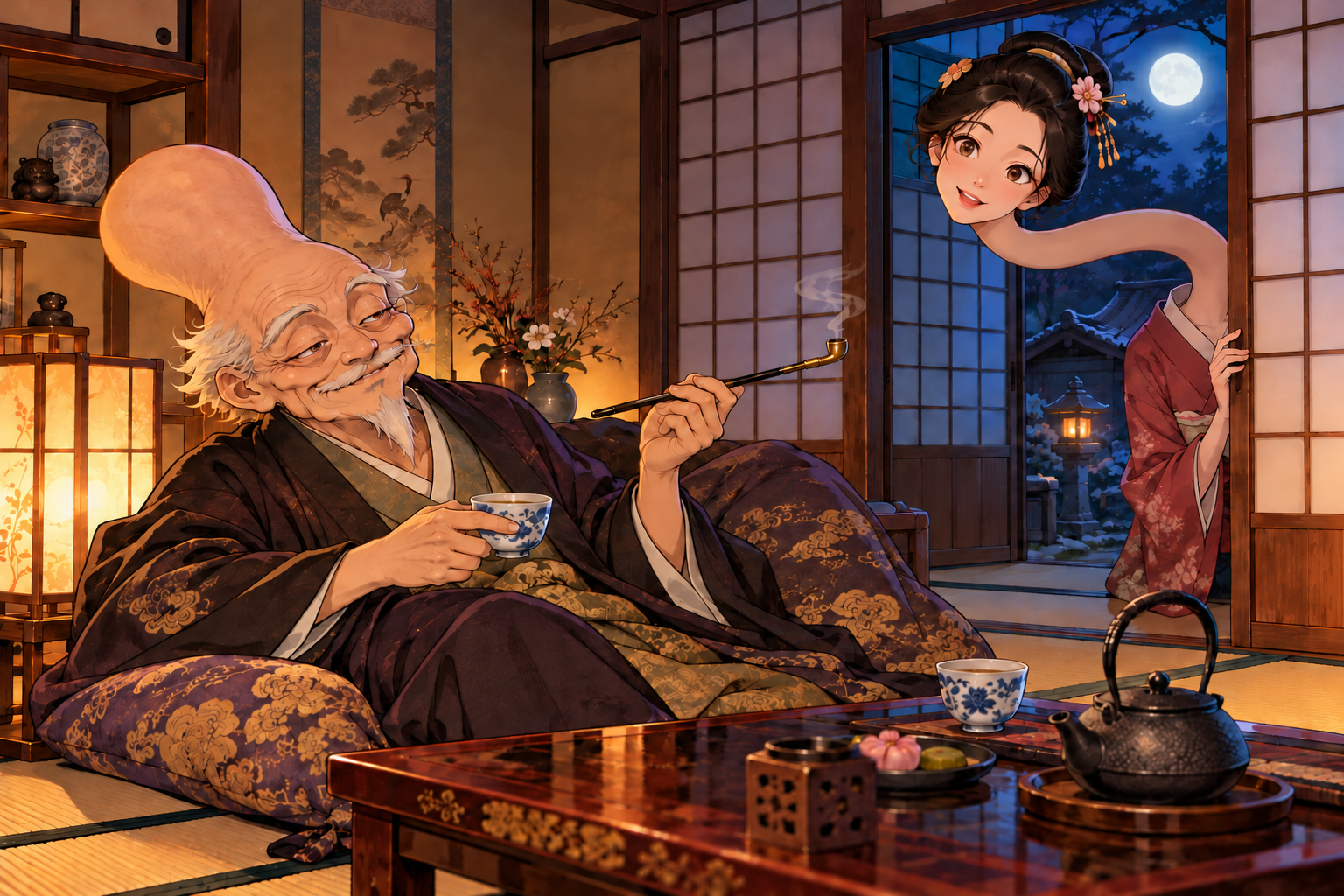
Nurarihyon and Rokurokubi: Domestic Intruders
Some yōkai don’t haunt mountain passes or shadowy forests. They prefer your living room. These spirits and shapeshifters invade the private sphere, upending the comfort and control of home life. Whether they’re sipping your tea or stretching their necks around corners, they turn familiar spaces into strange territory.
Common types of nurarihyon and rokurokubi
Nurarihyon (滑瓢: “slippery gourd”): This odd-looking figure — an old man with a gourd-shaped head — slips into homes as if he owns them. Once inside, he helps himself to tea, smokes a pipe, and lounges like the master of the house. In many stories, the household serves him without protest, as though under a spell.
Rokurokubi (轆轤首: “potter’s wheel neck”): By daylight, they look like perfectly ordinary women. But at night, their necks elongate to impossible lengths, snaking into rooms to spy, frighten or even harm. Some are mischievous pranksters, others far more dangerous — their serpentine reach making escape difficult.
Symbolism and subtext
Nurarihyon and rokurokubi disrupt the idea of the home as a safe, controlled environment. Their intrusion plays on fears of violated privacy, social obligation, and the unsettling possibility that a familiar face could hide something monstrous.
Nurarihyon and rokurokubi in popular culture
Nurarihyon pops up in manga, anime and games — often as a leader of yōkai clans, notably in Nurarihyon no Mago.
Rokurokubi feature in tokusatsu and horror anthology films, across GeGeGe no Kitarō’s anime and manga adaptations, and horror-comedy animations and manga, like Hell Teacher Nūbē.
How to defeat nurarihyon and rokurokubi
Nurarihyon’s power lies in slipping into your home and acting like he belongs there, often leaving you compelled to serve him. The way to defeat him is through awareness and refusal: Recognize him for what he is, break the social spell, and firmly (but politely) send him away. In some stories, ofuda or strong protective household wards prevent his entry entirely.
Rokurokubi are vulnerable when their necks are extended; striking or binding the neck during this state can break their power or force them back into human form.
Some tales say reciting Buddhist prayers or displaying sacred charms will drive away the spirit possessing them — especially if the condition is a curse rather than their true nature. In other versions, simply confronting them with their reflection or catching them in the act can break the enchantment.
Why Yokai Are More Popular Than Ever
You used to have to stumble into a haunted forest to meet a yōkai. Now they’re in your Netflix queue, your sticker pack and possibly your closet (if that old umbrella starts hopping, good luck).
So why are these centuries-old spirits suddenly everywhere?
1. Timeless weirdness, modern appeal
Yōkai are flexible. They’ve always shapeshifted to fit the culture around them, and in a world that’s increasingly strange, unpredictable and memeable? They fit right in.
From ancient scrolls to smartphone wallpapers, they’ve mastered the art of rebranding.
2. Pop culture powerhouses
Anime and manga have done a lot of heavy lifting here. Shows like GeGeGe no Kitarō, Inuyasha, Natsume’s Book of Friends and Yokai Watch introduced new generations to yōkai through characters that are cute, creepy and emotionally layered. Even global franchises like Pokémon and Spirited Away borrow heavily from yōkai lore.
3. Nostalgia meets identity
In Japan, there’s a growing interest in cultural heritage and folklore as a counterbalance to hyper-modern life. Yōkai represent a uniquely Japanese blend of spirituality, humor and horror that resonates with younger people trying to reconnect with tradition.
4. Global fascination with folklore
Yōkai also scratch a global itch: We’re hungry for myths, monsters and meaning. Just as Norse gods, Slavic house spirits and Mexican La Llorona stories are seeing renewed attention, yōkai have become Japan’s folklore ambassadors. They’re specific enough to feel authentic, but flexible enough to feel universal.
Yokai Tourism: Where to Get Spooked in Style
If reading about yōkai isn’t enough and you want to see them up close (or at least their statues, museums and souvenir socks), Japan’s got you covered. Folklore is baked into the landscape, and entire towns lean into their supernatural side.
Here’s where to go if you want a trip with a side of ghostly mischief.
Mizuki Shigeru Road, Sakaiminato, Tottori
This coastal town is the hometown of GeGeGe no Kitarō creator Mizuki Shigeru, and they’ve gone full yōkai.
Over 170 bronze yōkai statues line the street.
The Mizuki Shigeru Museum dives deep into his life and art.
Shops sell everything from yōkai curry to umbrella monster plushies.
It’s part haunted art walk, part comic con, part fever dream. Highly recommended.
Tono, Iwate Prefecture
Known as the “Town of Folklore,” Tono is packed with yōkai legends. You can:
Visit the Tono Monogatari Museum, based on the region’s most famous folklore collection
Hear stories of kappa sightings near the Kappa-buchi Pool
Leave an offering (cucumber preferred)… just in case
Zentsu-ji Temple, Kagawa Prefecture
This temple is famous for its yōkai-themed night illumination events, complete with eerie projections, music and atmosphere. A great mix of sacred and spooky.
Festivals with a ghostly twist
Obon Festival (sometimes mid-August, though the dates vary by region): Not strictly yōkai, but a time when spirits return to visit the living. Expect lanterns, dances and ancestor offerings.
Setsubun (February): People throw beans to chase away oni, sometimes while dressed as them.
Local events inspired by the Hyakki Yagyō (Night Parade of 100 Demons) pop up in Kyoto and other cities during the summer.
Yokai-themed cafés, bars and attractions
In Tokyo and Osaka, you’ll find ghostly cafés, escape rooms and bars with drinks named after cursed lanterns and seductive river spirits. The experience is more theatrical than terrifying.
Whether you’re chasing folklore or just want a kappa latte, yōkai tourism combines the strange, the spooky and the selfie-worthy. Just remember to bow politely — you never know who’s watching.
What Yokai Teach Us About Fear, Folklore and the Unseen World
From one-eyed umbrellas to seductive sea spirits, yōkai aren’t just spooky stories; they’re shapeshifting snapshots of Japanese culture, emotion and imagination. These creatures thrive in the cracks between the natural and supernatural, the known and unknowable, the ordinary and the just a little too strange.
They’re warnings. They’re metaphors. Sometimes, they’re just weird for the sake of weird. But that’s part of their power. Yōkai evolve with the times. They adapt. They follow us from rice paddies to subway tunnels to smartphone screens.
In a world that often demands certainty, yōkai remind us that mystery still has a place — and that sometimes, it has one eye, no feet and a really long tongue.
So the next time you hear a strange sound at night or your umbrella goes missing… don’t say we didn’t warn you. –Wally