virgin mary

Fierce, Flawed and Faithful: The Boldest Women of the Bible

Meet the women of the Bible who defied kings, led armies, seduced heroes, saved nations — and rewrote the rules. From Jezebel and Bathsheba to Deborah and Delilah, these are the stories of power, survival and divine disruption.
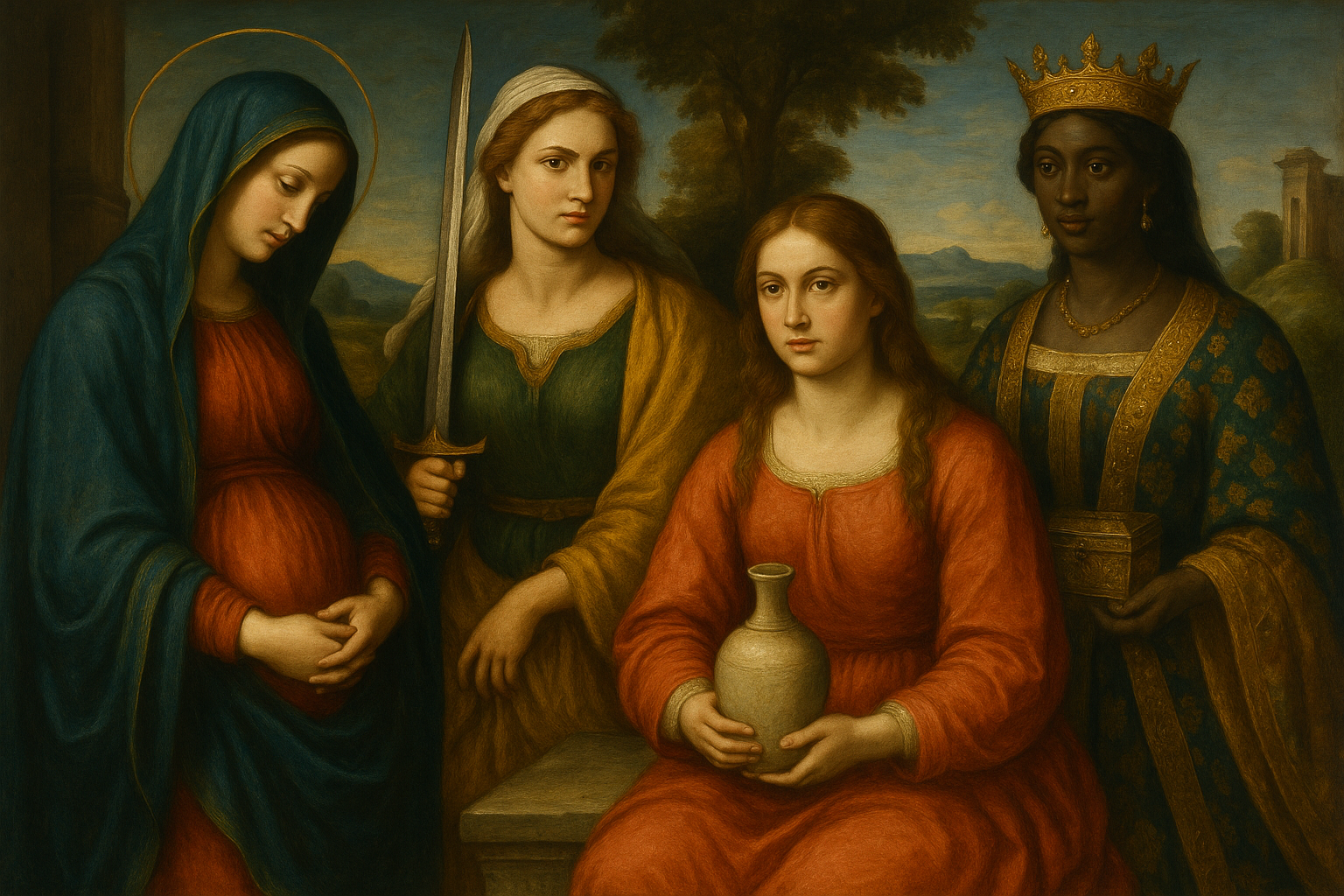
Women of the Bible, including the Virgin Mary, Judith and the Queen of Sheba

When people picture women in the Bible, they often imagine quiet obedience, gentle kindness or domestic virtue. But crack open the text, and you’ll find something far juicier: prophets, rebels, assassins, queens and seductresses. These are women who changed the course of history — whether scripture painted them as saints or sinners.

Some were praised, others demonized. Some saved lives with wisdom or loyalty. Others spilled blood without blinking. But one thing’s for sure: None of them were forgettable.

So let’s meet the fiercest women in the Bible: the faithful, the flawed and the downright fearsome.

These women weren’t just background characters. They were prophets, plotters, protectors and provocateurs.

Some were praised. Others were punished. All of them left a mark.

Righteous Rebels

These women broke the rules to do what was right — even when the world was stacked against them.
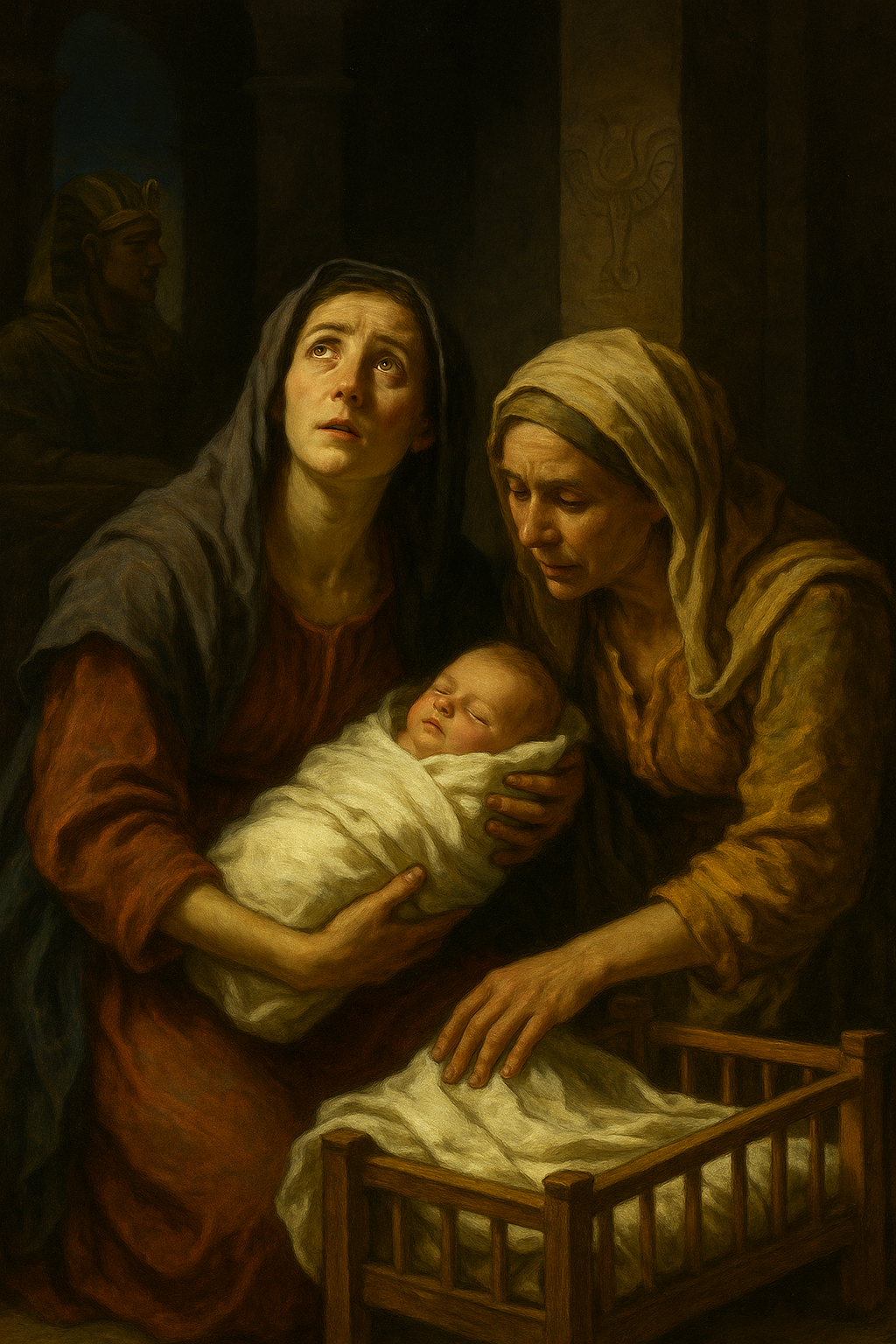
The two midwives Shiphrah and Puah save a newborn baby

Shiphrah and Puah

The midwives who quietly launched a revolution

Bible Verses: Exodus 1:15–21

What They Did: When Pharaoh demanded the death of every Hebrew baby boy, these two women — likely low-status midwives — flatly refused. Instead of violence, they used wit, telling Pharaoh that Hebrew women gave birth too quickly for them to intervene. Their rebellion allowed a generation of children — including Moses — to live.

Modern Take: In a time when midwives had little social power, Shiphrah and Puah used the only weapon available: their word. Their civil disobedience predates Moses’ leadership and reminds us that revolutions often begin with women operating behind the scenes. Historically, midwives were both caretakers and quiet community leaders. Their defiance speaks to moral courage — choosing life over law in the face of a brutal regime.
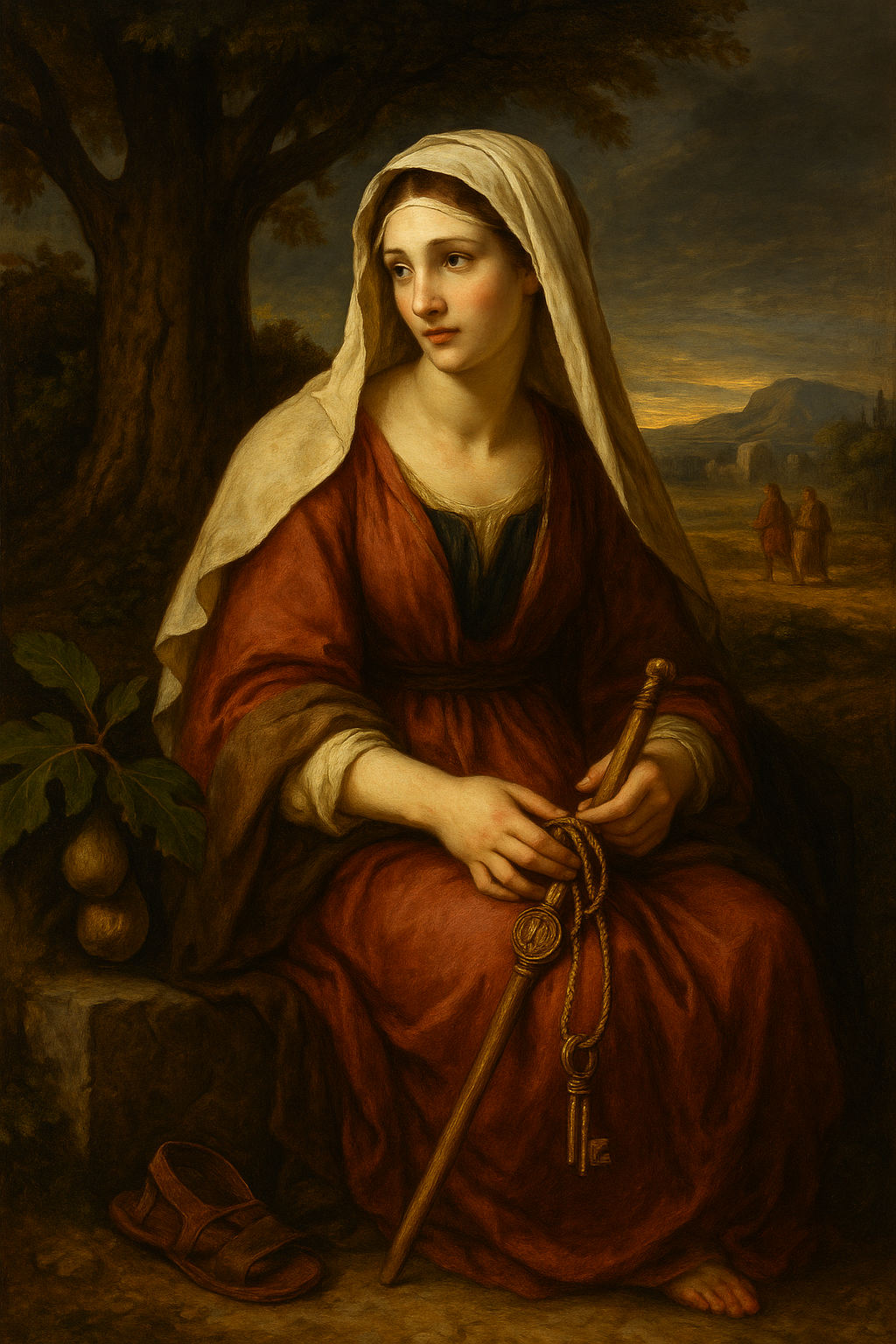
Tamar from Genesis in the Bible sits, holding a staff and keys

Tamar

The widow who outplayed a patriarch — and won her place in history

Bible Verses: Genesis 38

What She Did: Twice widowed by the sons of Judah, Tamar was promised a third husband — but her father-in-law failed to deliver. Taking matters into her own hands, she disguised herself as a prostitute and slept with Judah. When she was found pregnant, he ordered her execution — until she produced his own staff and ring as proof of paternity. Judah, stunned, admits, “She is more righteous than I.”

Modern Take: Tamar’s actions are morally complex but deeply rooted in justice. In a system that left widows vulnerable and childless women powerless, she navigated patriarchal structures with strategy and nerve. From a historical lens, she subverted the levirate marriage laws — which stated that if a man died without children, his brother or another close male relative was expected to marry the widow — to claim her rightful place. Her story is one of resilience and survival: a woman taking back agency in a rigged game. Notably, she becomes an ancestor of King David and Jesus, canonizing her in the royal line.
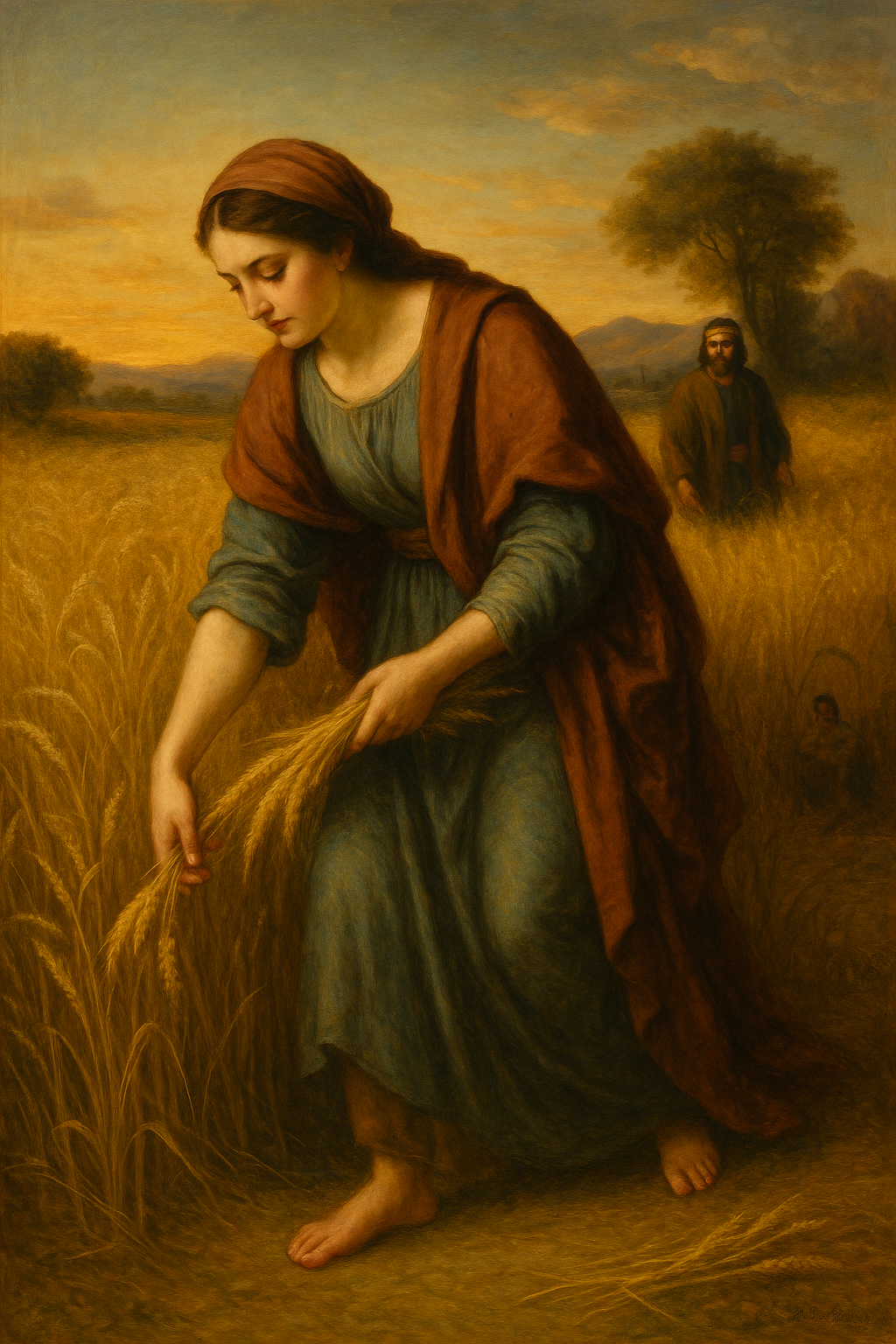
Ruth picks up wheat from a field while Boaz watches

Ruth

The loyal outsider who played the long game

Bible Verses: Book of Ruth

What She Did: After losing her husband, Ruth makes a bold choice: She refuses to abandon her mother-in-law, Naomi, and travels with her to Judah. To survive, she gathers leftover grain from fields — a practice called gleaning, where the poor could pick up scraps after harvest. Her loyalty and grit catch the attention of Boaz, a wealthy landowner and relative of Naomi. Ruth later approaches him at night and proposes marriage — a daring move that leads to a new beginning and places her in the lineage of King David.

Modern Take: Ruth’s story is often cast as sweet and romantic, but beneath the surface lies a tale of calculated risk and social navigation. As a Moabite, she was a foreigner and likely looked down upon. But she used cultural customs — gleaning, kinship ties, levirate marriage — to secure a future. Historically, her story challenged ideas of purity and inclusion. She represents the emotional strength of caretaking and long-term resilience.
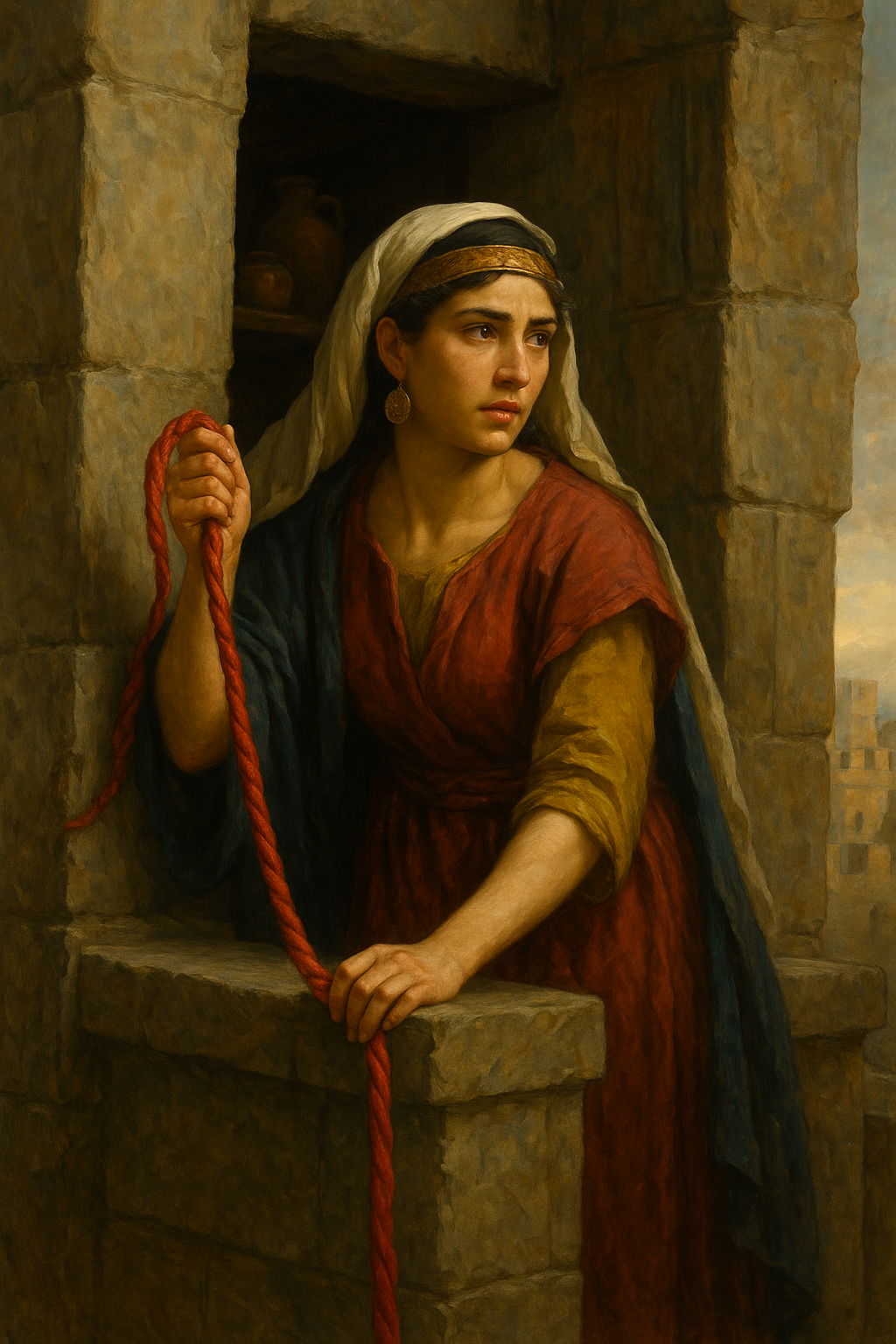
Rahab stands on a balcony in Jericho, holding a red rope

Rahab

The outsider who brokered salvation with scarlet thread

Bible Verses: Joshua 2; Hebrews 11:31

What She Did: Rahab, a Canaanite sex worker living on the edge — literally, her home was built into Jericho’s city wall — welcomed two Israelite spies into her house and hid them under stalks of flax on her roof. When the king’s men came knocking, she coolly lied through her teeth, saying the spies had already left. Then she cut a deal: If she helped them escape, they’d spare her and her family when the Israelites conquered Canaan. Her one condition? “Tie a scarlet cord in the window” — a bright, bloody thread of survival hanging from the same place where she’d once advertised her services. And when Jericho crumbled, hers was the only household left standing.

Modern Take: Rahab embodies the cunning of marginalized people who work outside the system to survive. While labeled a prostitute, she displays diplomatic skill, foresight and shrewd negotiation. In the New Testament, Rahab is actually praised for her faith and included in Jesus’ genealogy, highlighting the Bible’s complicated relationship with female outsiders. Her courage in the face of annihilation marks her as a figure of radical faith.
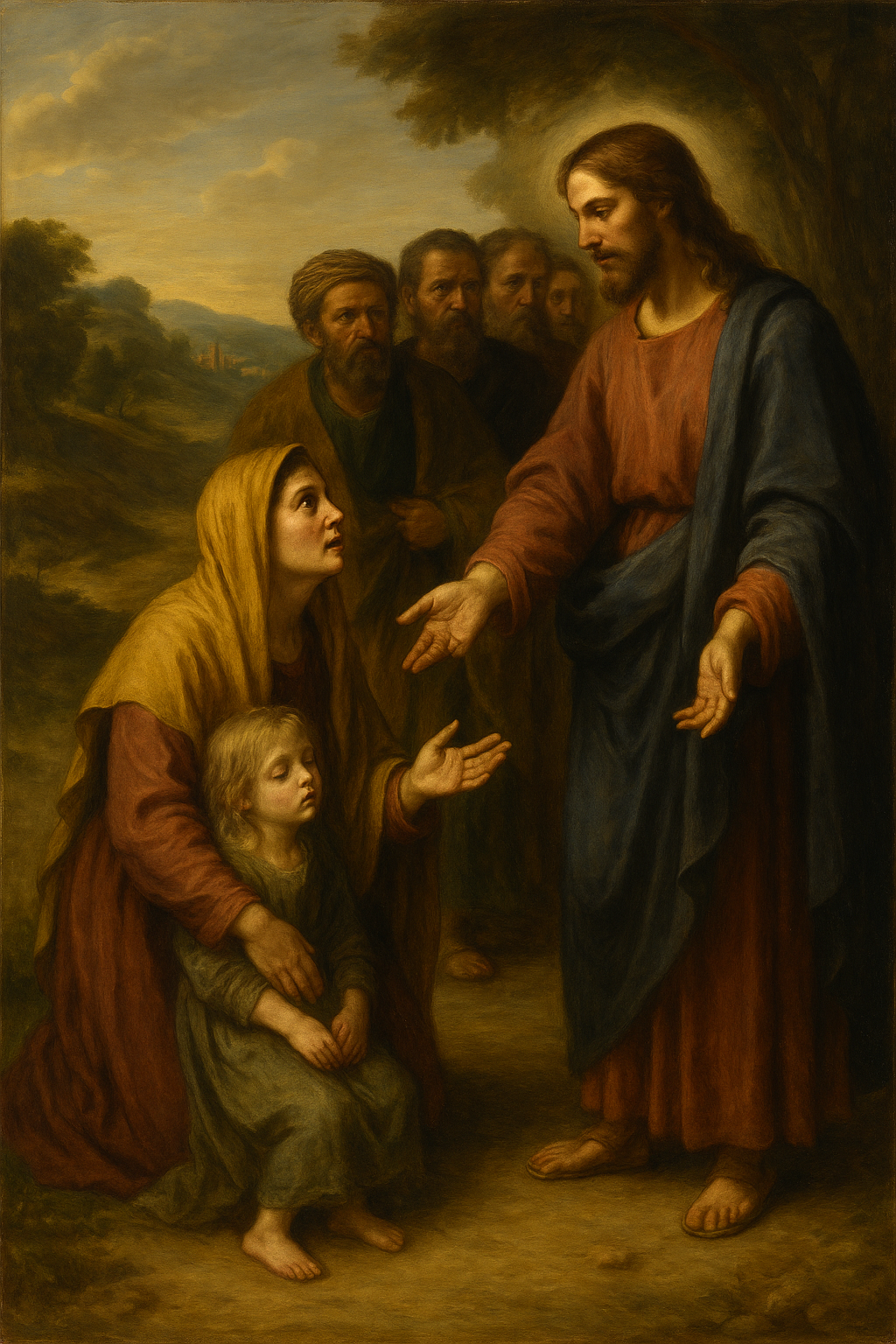
The Syrophoenician Woman pleads with Jesus to heal her sick daughter

The Syrophoenician Woman

The woman who changed Jesus’ mind

Bible Verses: Mark 7:24–30; Matthew 15:21–28

What She Did: A non-Jewish woman asks Jesus to heal her daughter. He rebuffs her, saying it’s not right to give the children’s bread to the dogs. She replies, “Even the dogs eat the crumbs under the table.” Jesus is impressed — and heals her daughter.

Modern Take: This exchange is one of the most shocking in the Gospels. A woman, doubly marginalized by ethnicity and gender, challenges Jesus — and wins. From a cultural standpoint, her story exposes deep prejudices of the time, including those Jesus himself inherited. It’s a moment of boundary-pushing faith, persistence and maternal desperation. Theologically, it’s a turning point that expands the scope of Jesus’s mission — and it happens because a woman insisted she mattered.
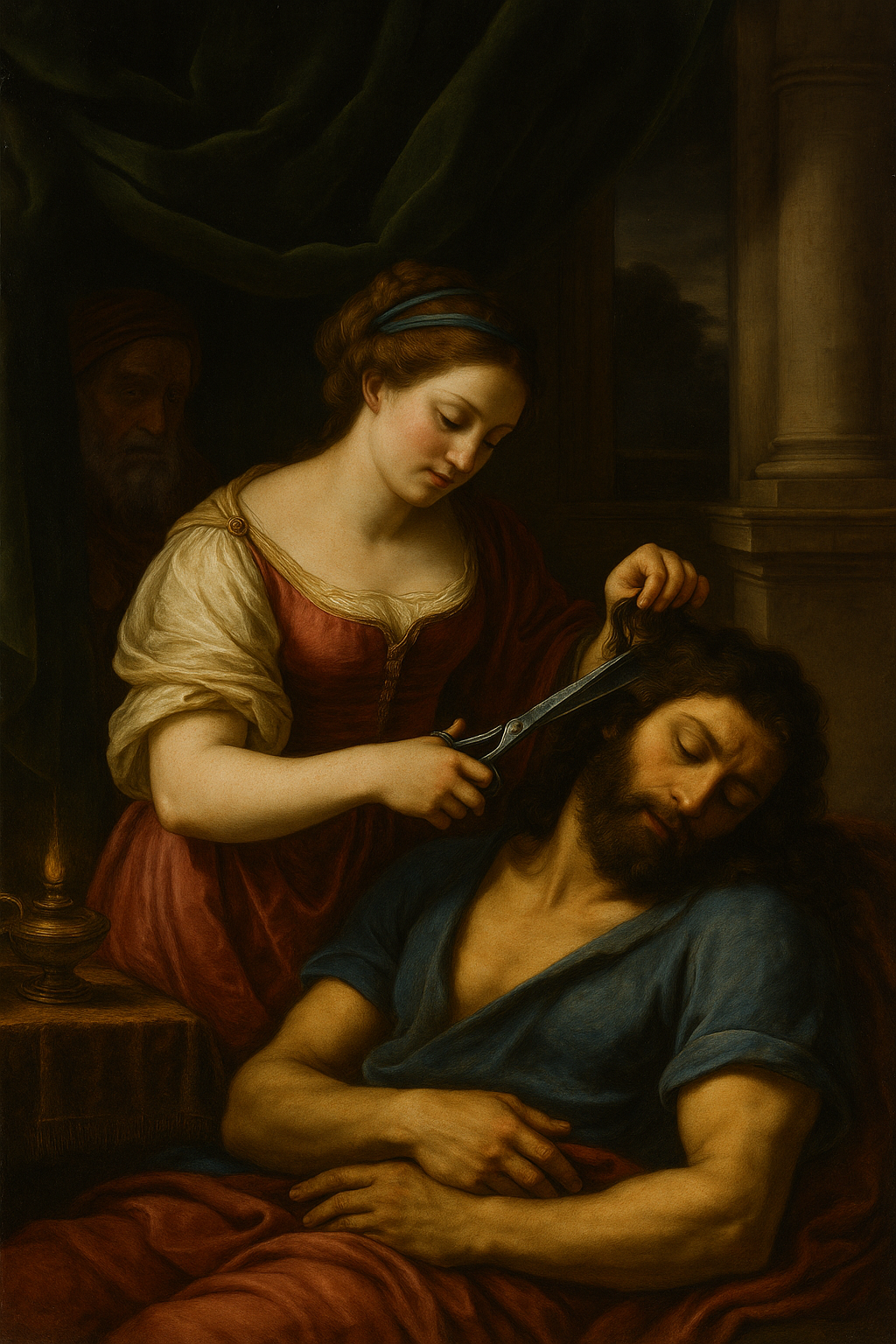
Delilah holds scissors and cuts a sleeping Samson's hair

Delilah

The seductress who toppled a legend

Bible Verses: Judges 16

What She Did: The Philistine rulers knew brute force couldn’t bring Samson down. So they turned to something more dangerous: a woman with motive and access. They promised Delilah a king’s ransom if she could uncover the secret of his strength. She smiled. She agreed. Then she got to work. Night after night, she coaxed and teased, feigned frustration, and tested his love with lies of her own. “Tell me,” she whispered, as he lay tangled in her lap. And every time he fed her a false answer, she sprang the trap — watching as Philistine guards failed again and again. But she didn’t give up. Delilah was patient. She made betrayal feel like affection. Eventually, Samson cracked. He told her the truth: His hair had never been cut. It was his covenant with God. That night, he fell asleep with his head in her lap. She summoned a barber. The scissors whispered. The covenant snapped. And by morning, the man who had once torn lions apart was blind, bound, and defeated.

Modern Take: Delilah is usually cast as a cold-hearted betrayer, but we’re never told her motivations. Was it about money, survival or political loyalty? Unlike Samson, she wasn’t operating under divine direction — just practical, if dangerous, cunning. Her story is a study in how women’s power — especially when sexual or strategic — is often cast as villainous in ancient texts. She fits a familiar mold: the woman blamed for the downfall of a powerful man.
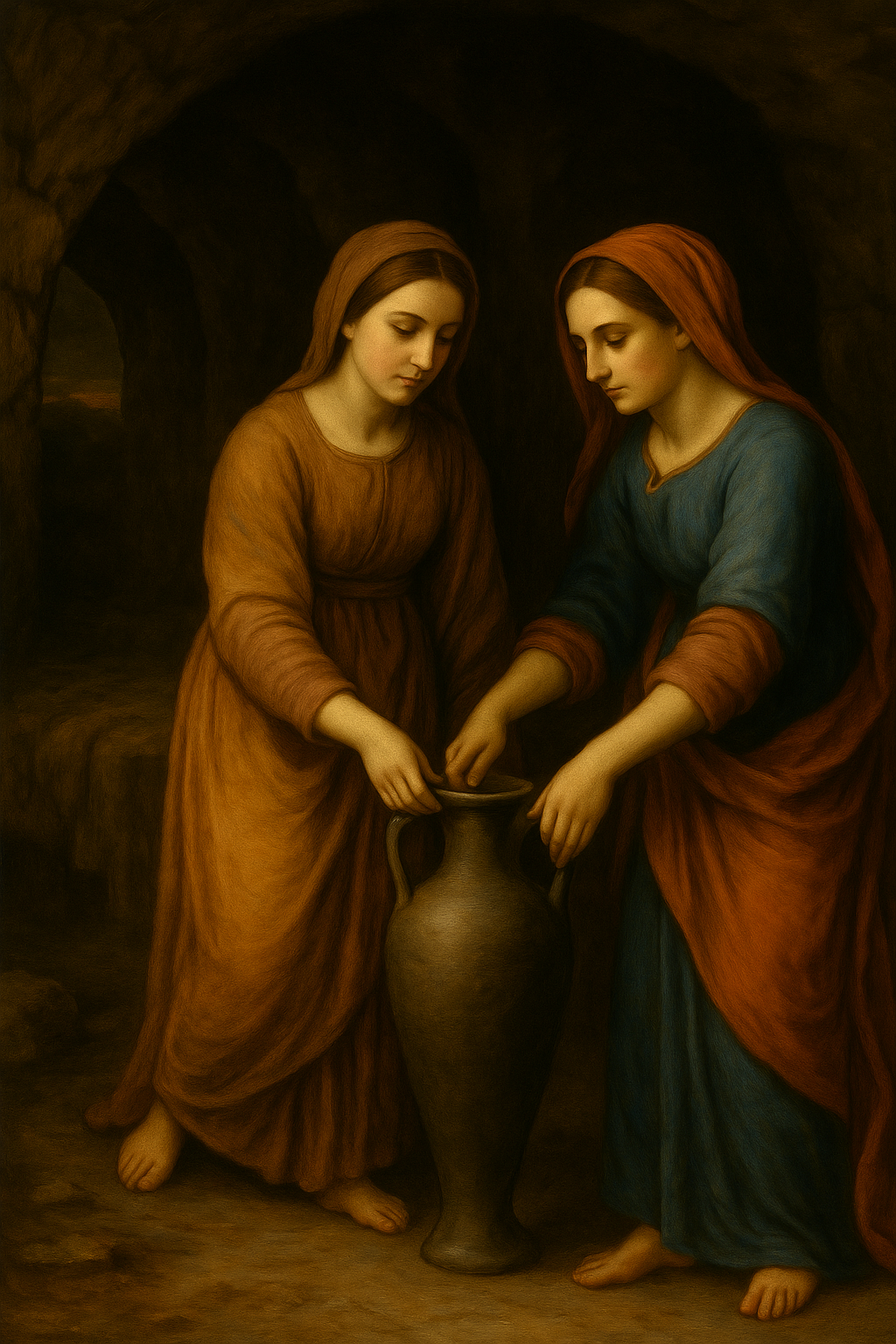
Lot's daughters prep a large vessel of wine to get their father drunk so they can seduce him

Lot’s Daughters

Survivors of Sodom with a disturbing plan

Bible Verses: Genesis 19:30–38

What They Did: After watching their city go up in flames, losing their mother in a pillar of salt, and seeing their fiancés vaporized in the rubble of Sodom, Lot’s daughters took refuge in a mountain cave with their father. There were no towns, no people, no future. Believing the world had ended, they hatched a desperate plan: get their father drunk, sleep with him, and repopulate the earth. One night at a time. One sister after the other. He never knew. Both girls became pregnant — and their sons, Moab and Ben-Ammi, would go on to found two of Israel’s most persistent rivals: the Moabites and Ammonites.

Modern Take: This story is more complex than it appears at first glance. It’s not just about taboo; it’s about fear, trauma and twisted survival instincts. Culturally, it also serves as an origin story used to discredit rival nations. But viewed psychologically, this is a trauma narrative: displaced, motherless and isolated, the daughters act in desperation. Whether you see their actions as horrifying or human, they force us to confront how messy survival can be.
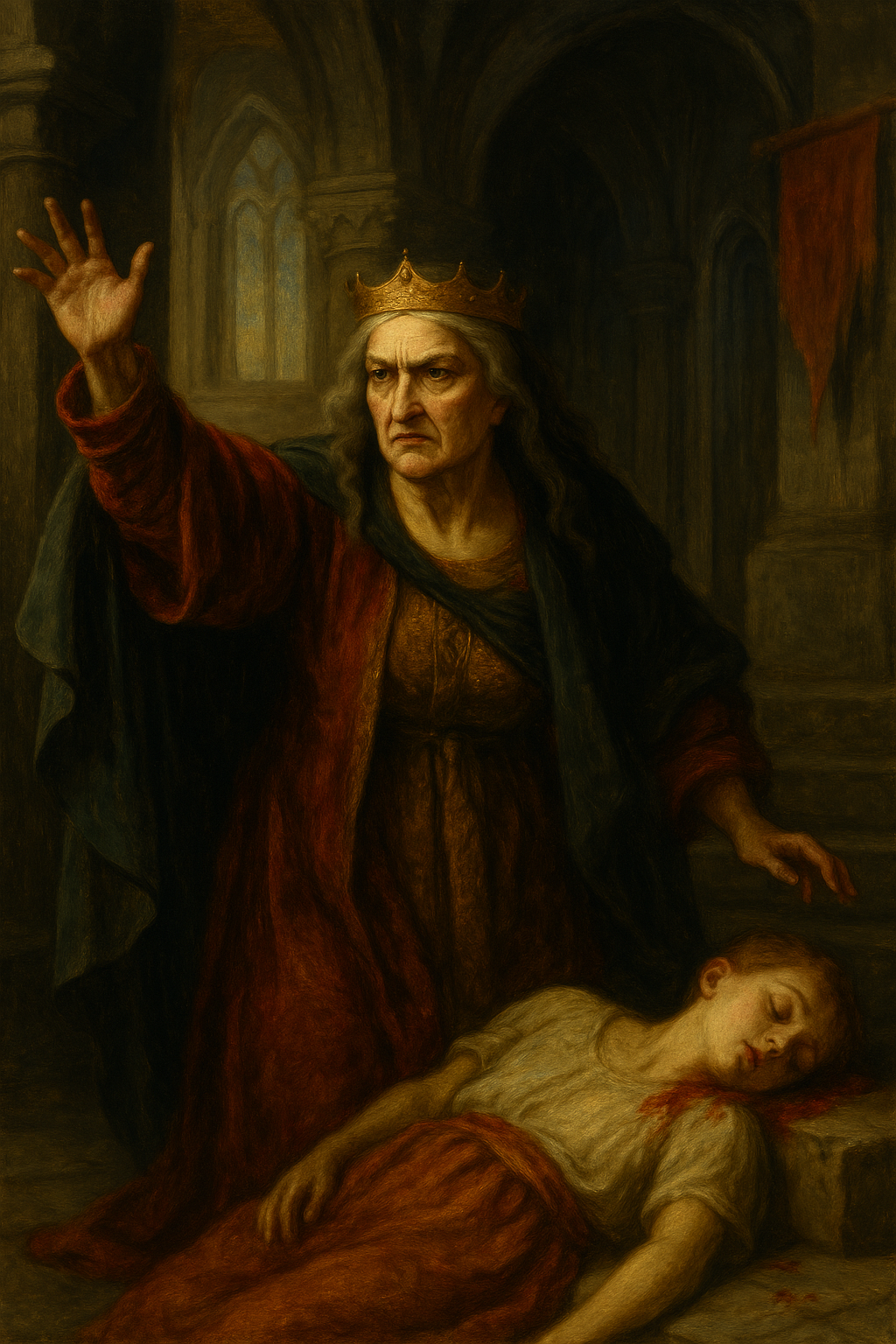
Queen Athaliah stands over a young boy she has had killed

Athaliah

The queen who killed for the crown

Bible Verses: 2 Kings 11; 2 Chronicles 22–23

What She Did: After her son, King Ahaziah, was assassinated, Athaliah seized power by executing the rest of the royal family — except for one hidden grandson. She ruled Judah for six years until she was overthrown by a priest-led coup.

Modern Take: Athaliah did what male monarchs often did — secured power by eliminating rivals — but as a woman, her actions were scandalous. Her rule is painted as a dark, wicked time, but she clearly held onto the throne with force and strategy. She may have been protecting her dynastic line (as the daughter or stepdaughter of Jezebel). Her reign reminds us how easily women in power are branded as unnatural or evil, especially when they don’t play “mother” or “queen” in the expected ways.
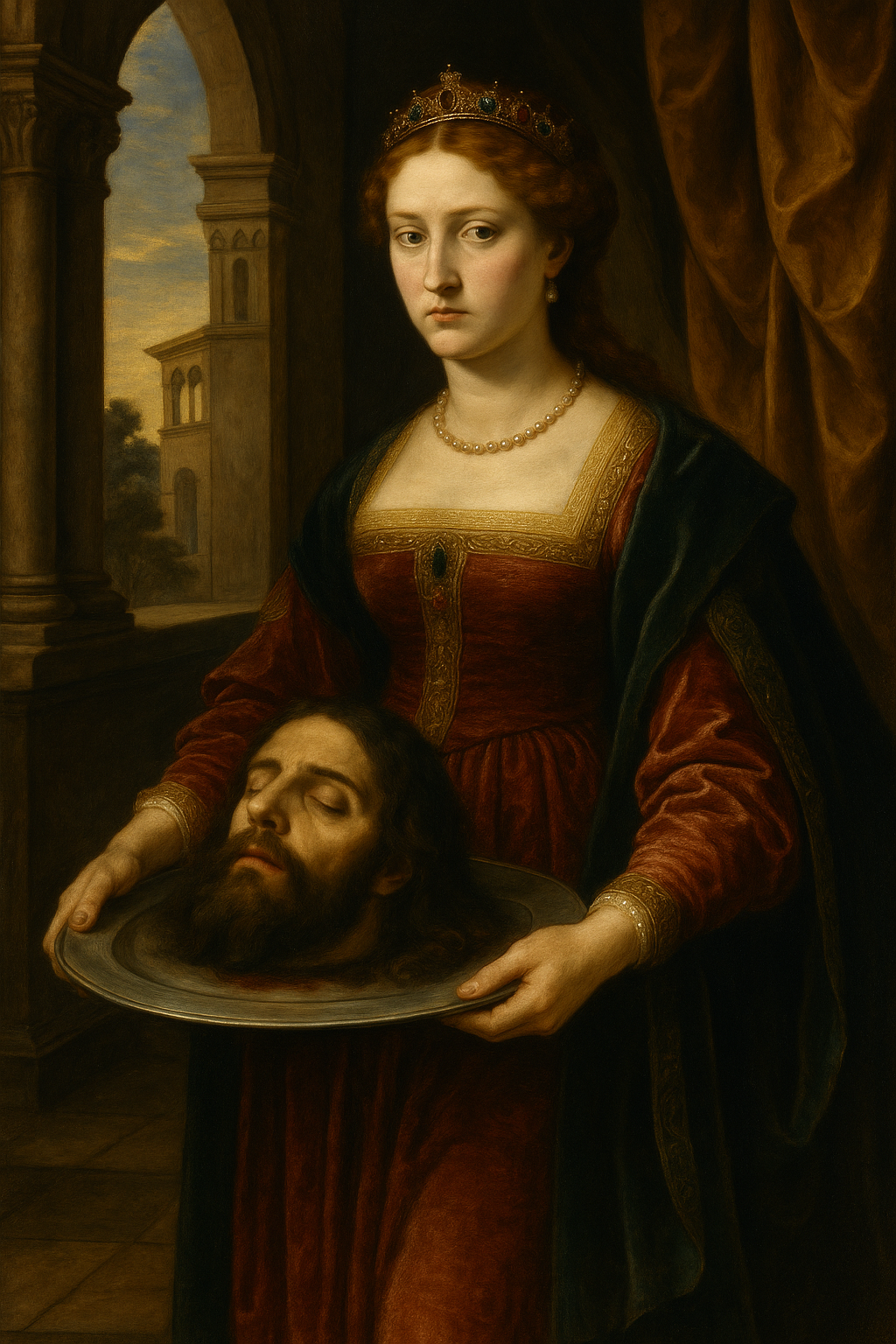
Herodias holds the decapitated head of John the Baptist on a platter

Herodias

The queen who silenced a prophet

Bible Verses: Mark 6:17–29; Matthew 14:3–11

What She Did: Herodias didn’t just marry into power — she remarried into it, divorcing Herod Philip to wed his half-brother, Herod Antipas. The move consolidated her influence but scandalized the region, and no one was louder about it than John the Baptist. He didn’t whisper, he shouted — from the riverbanks and beyond — that her marriage was unlawful. Herodias, humiliated and enraged, bided her time. That moment came during Herod’s birthday banquet. Wine flowed. Dancers twirled. Her own daughter took the floor — young, dazzling and magnetic. Herod was so pleased he promised her anything, even half his kingdom. Coached by Herodias, the girl made a simple, chilling request: “I want the head of John the Baptist — on a platter.” Moments later, the prophet’s severed head was paraded through the banquet hall like a party favor. 

Modern Take: Herodias is often reduced to a manipulative villain, but she was defending her position in a fragile political marriage. John the Baptist was attacking the legitimacy of her union. In ancient honor-based societies, public shame could be fatal. While her methods were brutal, they weren’t out of place in Herodian politics. Her story underscores how women were forced to wield indirect power — often through spectacle, scandal or seduction — because direct influence wasn’t allowed.

Prophets, Leaders and Warriors

They spoke for God, commanded armies, interpreted law, or held entire kingdoms together — often in sandals, not armor.
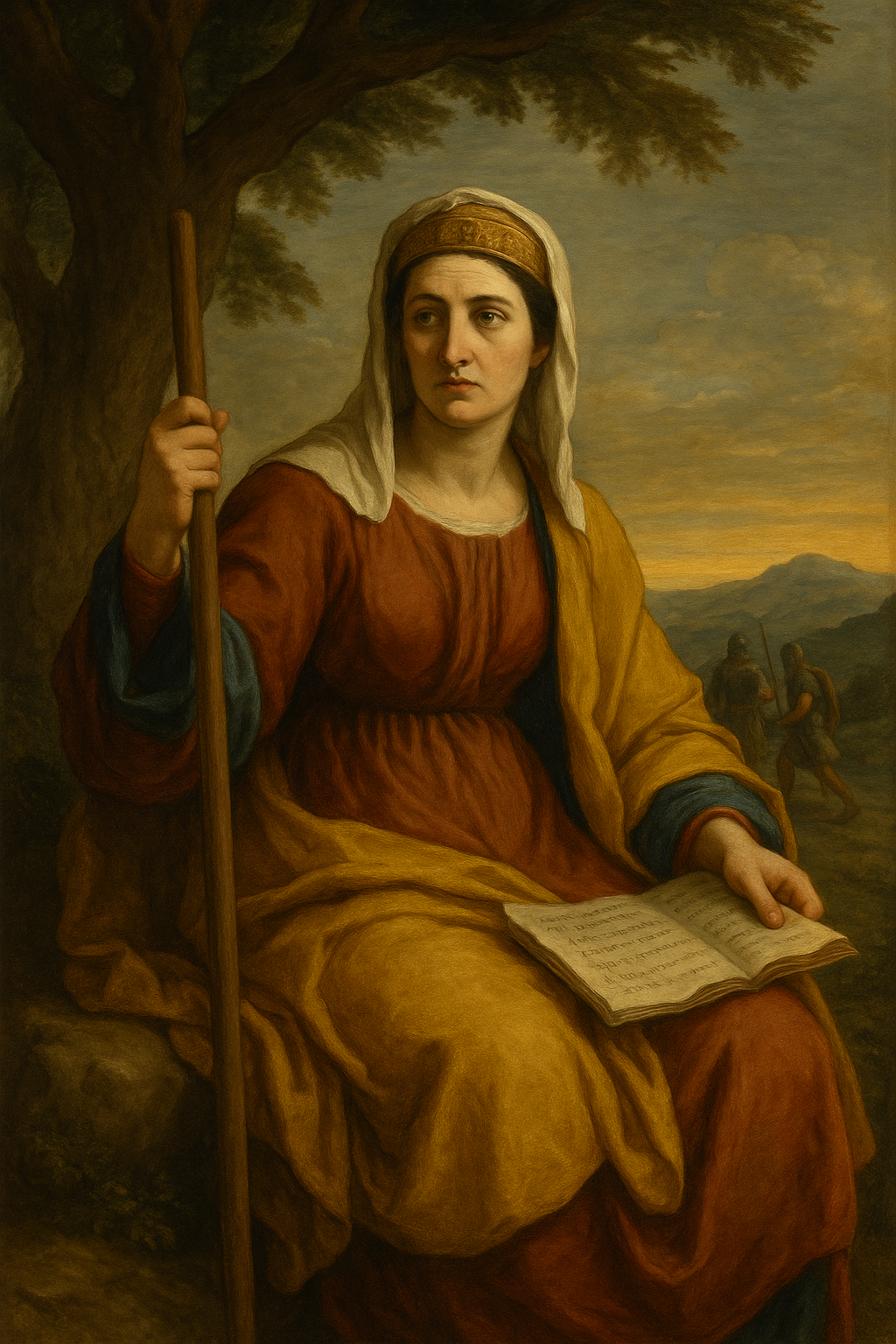
Deborah sits, holding a staff and a book

Deborah

The prophetess who led from both the palm tree and the battlefield

Bible Verses: Judges 4–5

What She Did: Deborah was both a prophet and a judge — meaning she settled disputes, delivered divine messages, and led Israel during one of its most chaotic eras. She summoned the general Barak to battle and foretold that a woman (not him) would get the glory. Spoiler: She was right.

Modern Take: Deborah is often treated as an exception to the rule. But maybe she just proves the rules were never the point. She’s not framed as masculine or controversial; she simply leads, with wisdom and clarity. Her story challenges the idea that women in ancient Israel were always silent or sidelined. Historically, her rise may reflect periods when traditional structures collapsed and leadership was open to those with proven charisma and vision — regardless of gender.
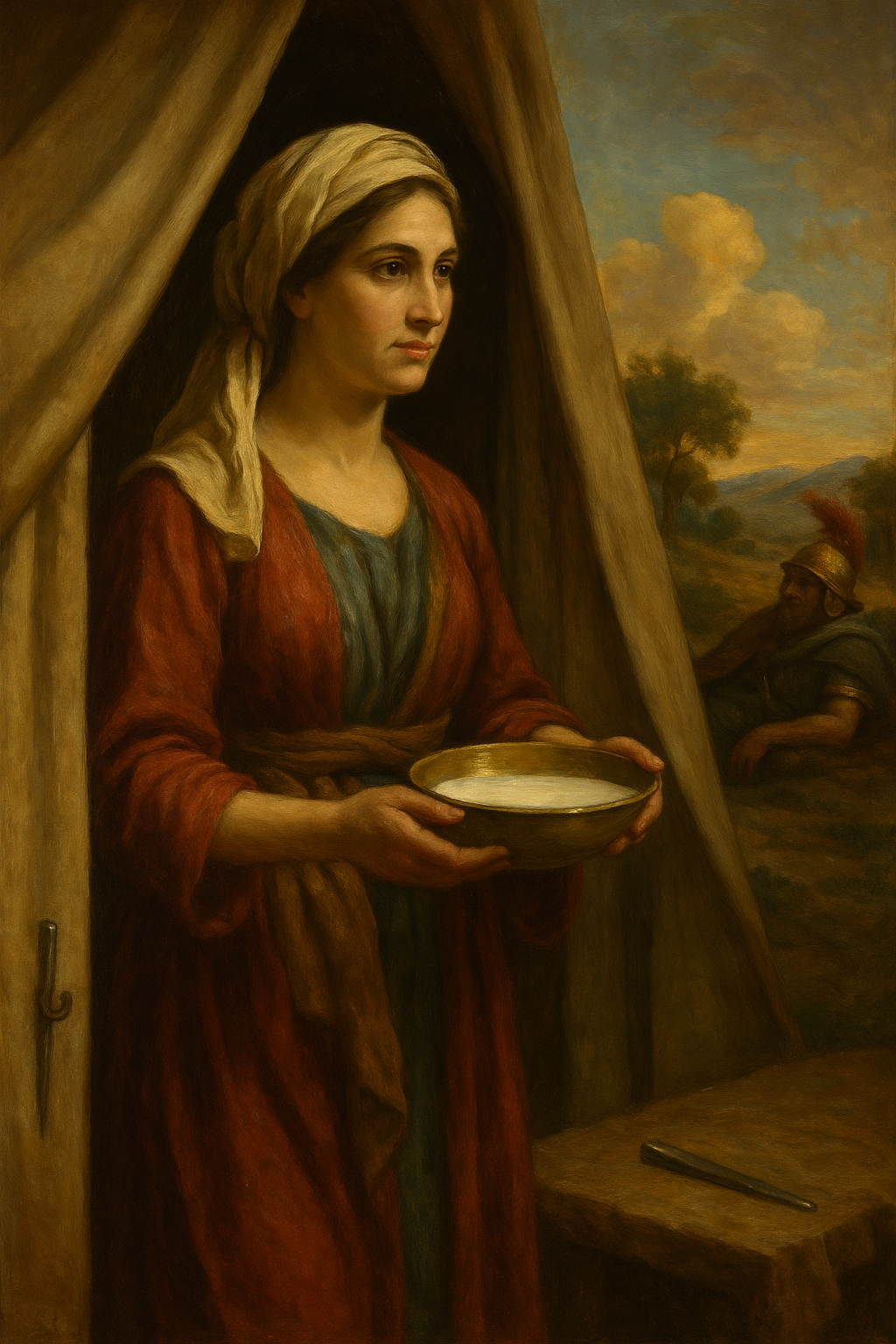
Jael holds a bowl of milk in the entrance to a tent, a peg nearby, which she'll use to kill General Sisera

Jael

The housewife who nailed it — literally

Bible Verses:: Judges 4–5

What She Did: After the Canaanite general Sisera fled the battlefield, he sought shelter in Jael’s tent. She welcomed him, gave him milk, waited until he slept — and then drove a tent peg through his skull.

Modern Take: Jael’s act is both shockingly violent and deeply subversive. She’s not a soldier, but her tent is her battlefield — and she uses tools from daily life (a hammer and peg) to carry out a political assassination. In ancient Bedouin culture, women often set up tents, so she used her own domestic domain as a trap. The story celebrates her action without moral panic — unusual for biblical violence involving women. She’s framed as a hero, not a murderer. Think of her as the ancient world’s quiet avenger.
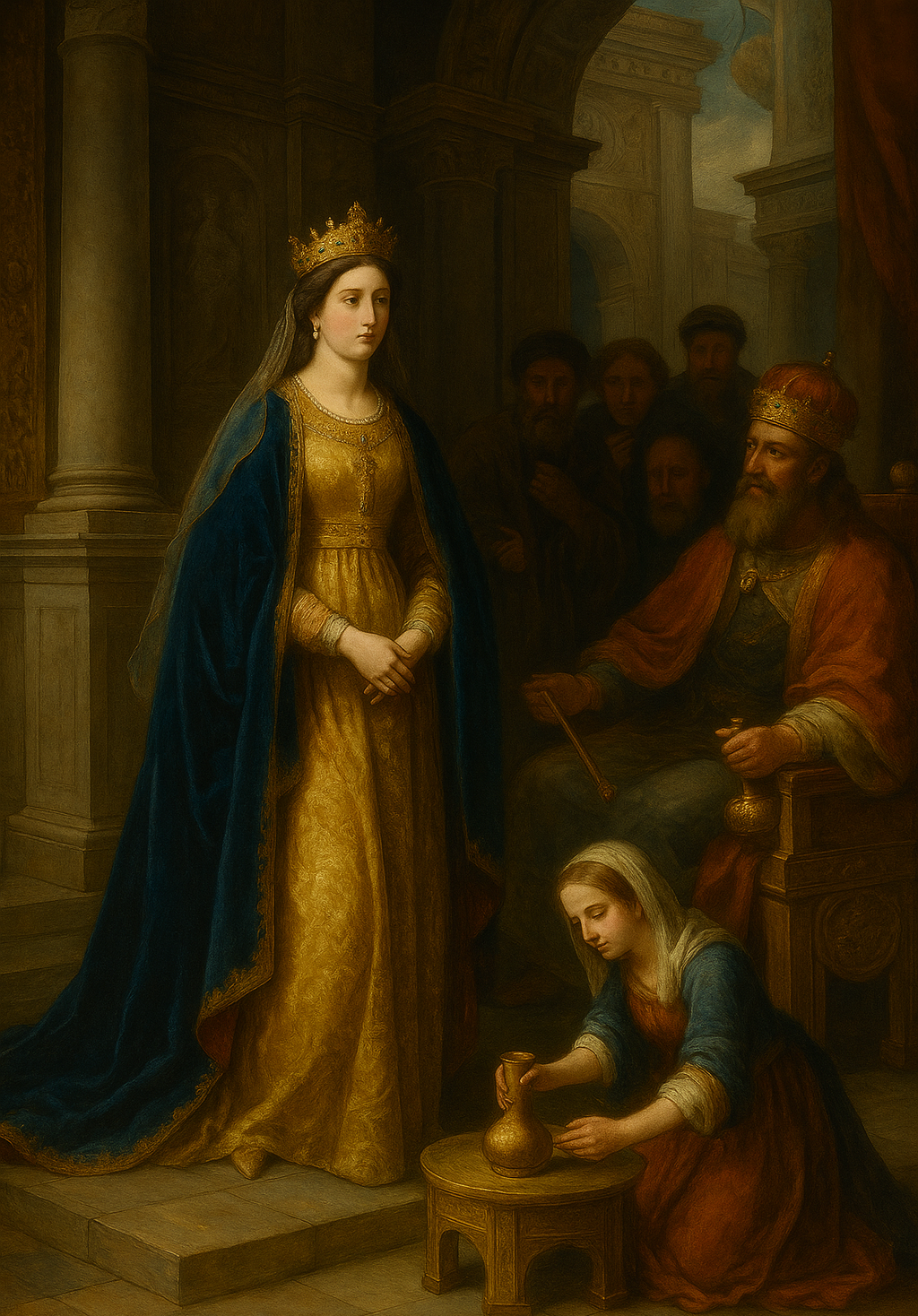
Queen Esther with a servant and the king

Esther

The queen who played the long game and saved a nation

Bible Verses: Book of Esther

What She Did: Chosen as queen for her beauty, Esther kept her Jewish identity secret — until the king’s righthand man plotted genocide. Risking death, she approached the king without invitation and, through a series of well-timed banquets and pleas, exposed the plot and saved her people.

Modern Take: Esther is often seen as a passive beauty queen turned heroine — but she’s far more strategic than that. She uses every tool available to her in a deeply patriarchal court: silence, timing, performance and, yes, her looks. Her story reflects the vulnerability of diaspora communities under imperial rule. Esther’s courage is slow-burning but explosive. She teaches us that bravery doesn’t always look loud — and that saving lives can sometimes start with throwing a really well-planned dinner party.
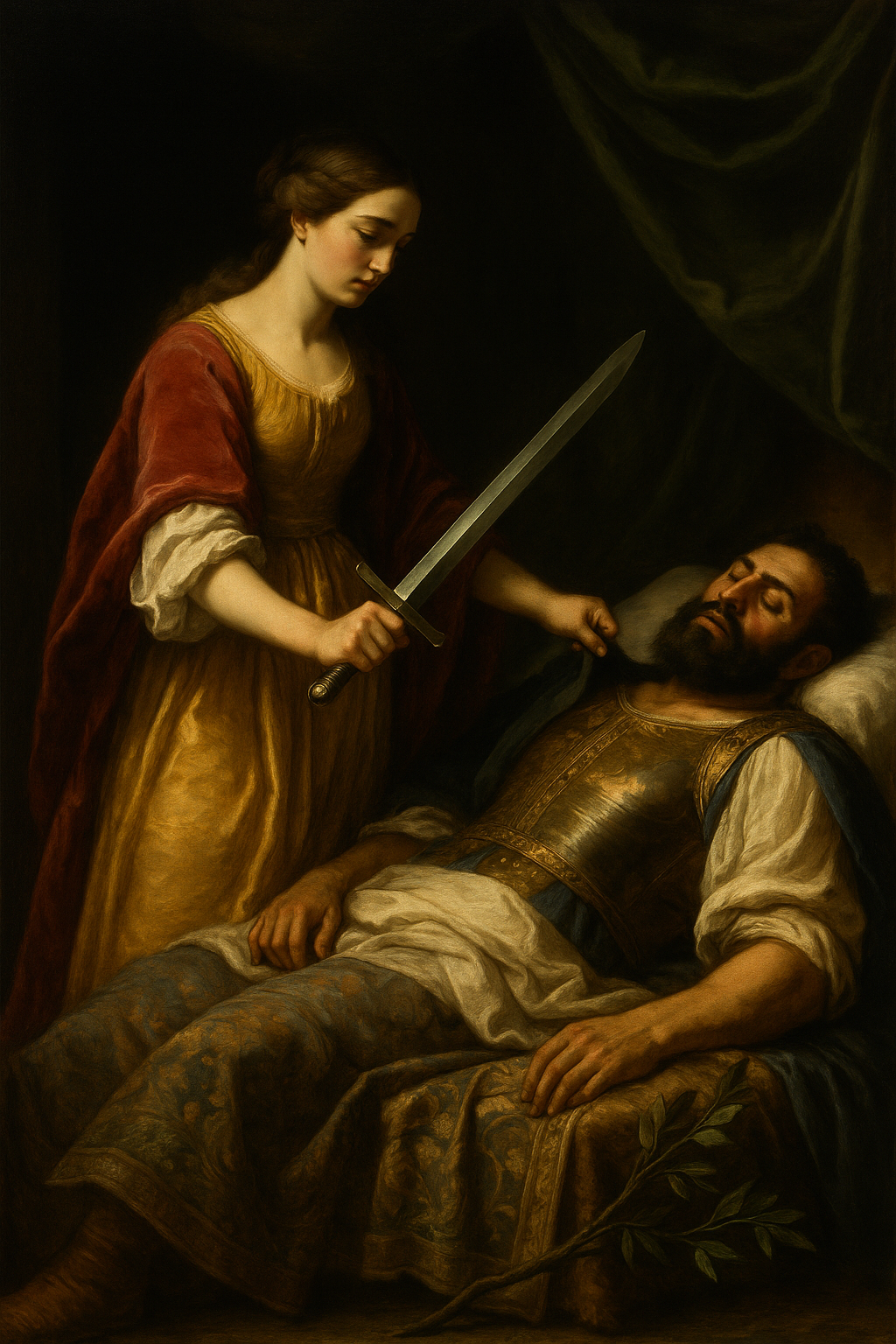
Judith holds a sword over a drunk General Holofernes' head, which she will cut off

Judith

The widow who prayed, seduced and beheaded her way to freedom

Bible Verses: Book of Judith (in the Apocrypha)

What She Did: With her city under siege, Judith took matters into her own hands. Dressed in her finest, she infiltrated the enemy camp, charmed the general Holofernes, got him drunk — and decapitated him in his sleep. She returned home with his head in a bag, and the enemy scattered.

Modern Take: Judith’s story is so cinematic it’s almost unbelievable — which is why many scholars see it as historical fiction or parable. Either way, she embodies a radical blend of piety and violence. She fasts and prays before taking action, but once she moves, it’s swift and irreversible. Her tale has inspired centuries of art — and fear. She’s the kind of woman whose name never got dragged through the mud because she left no room for interpretation. She was both sword and salvation.
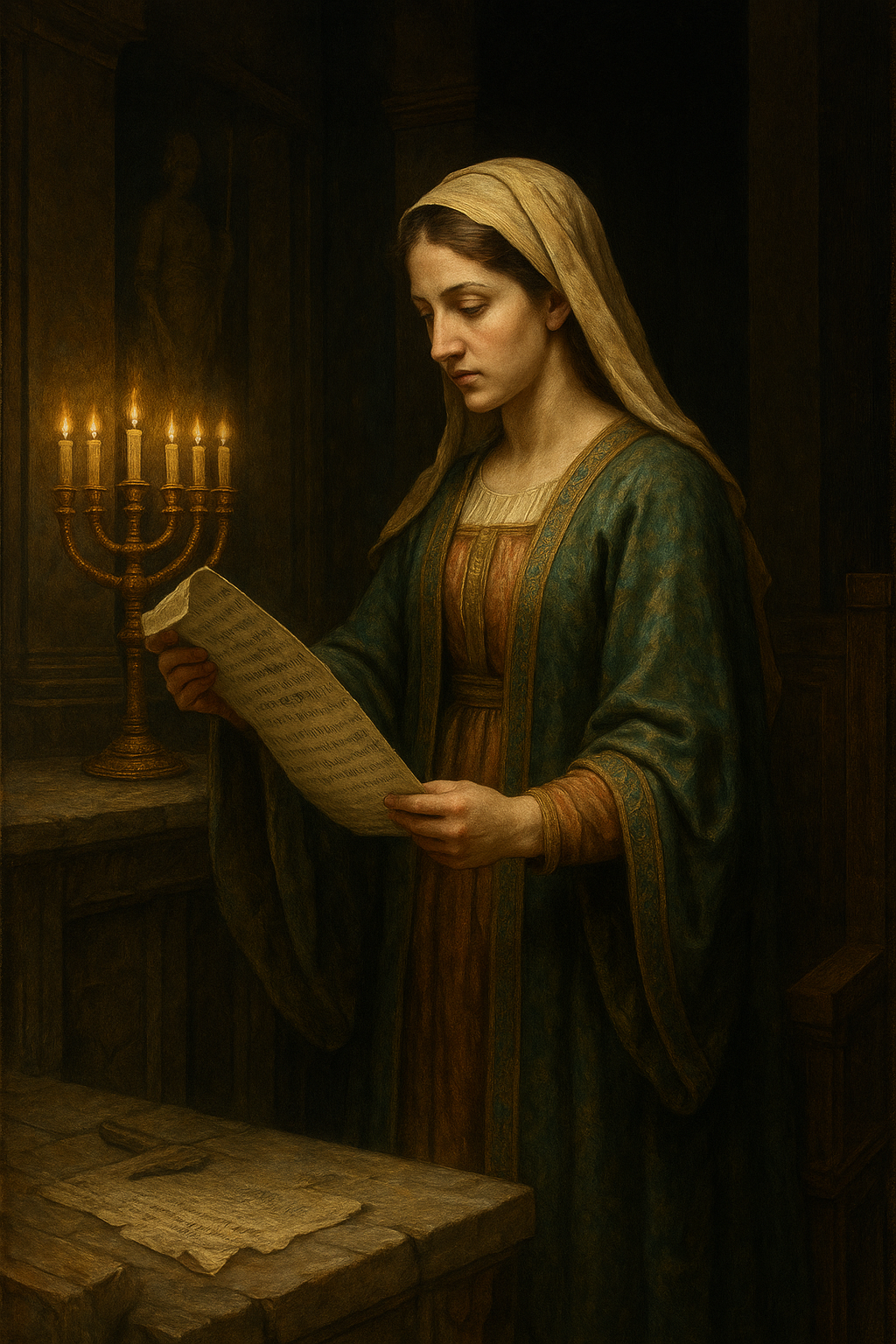
Huldah holds up a scroll near a menorah

Huldah

The prophet who interpreted a rediscovered scroll — and shaped reform

Bible Verses: 2 Kings 22:14–20; 2 Chronicles 34:22–28

What She Did: When a lost book of the law was found in the temple during King Josiah’s reign, the officials didn’t go to a priest; they went to Huldah. She read it, confirmed its authenticity, and prophesied destruction for Judah — but peace for Josiah because of his humility.

Modern Take: Huldah was a recognized religious authority at a time when prophets like Jeremiah were also active. That’s a big deal. She shows us that literate, spiritual women had real influence in ancient Judah. Her brief story reveals how women’s voices were, at times, the final word. In a world that often forgets female scholars, Huldah remains a quiet but powerful counterpoint.

Women of Wisdom and Influence

They weren’t always the ones with swords or scrolls —but they knew how to read a room, bend a situation and leave a legacy.
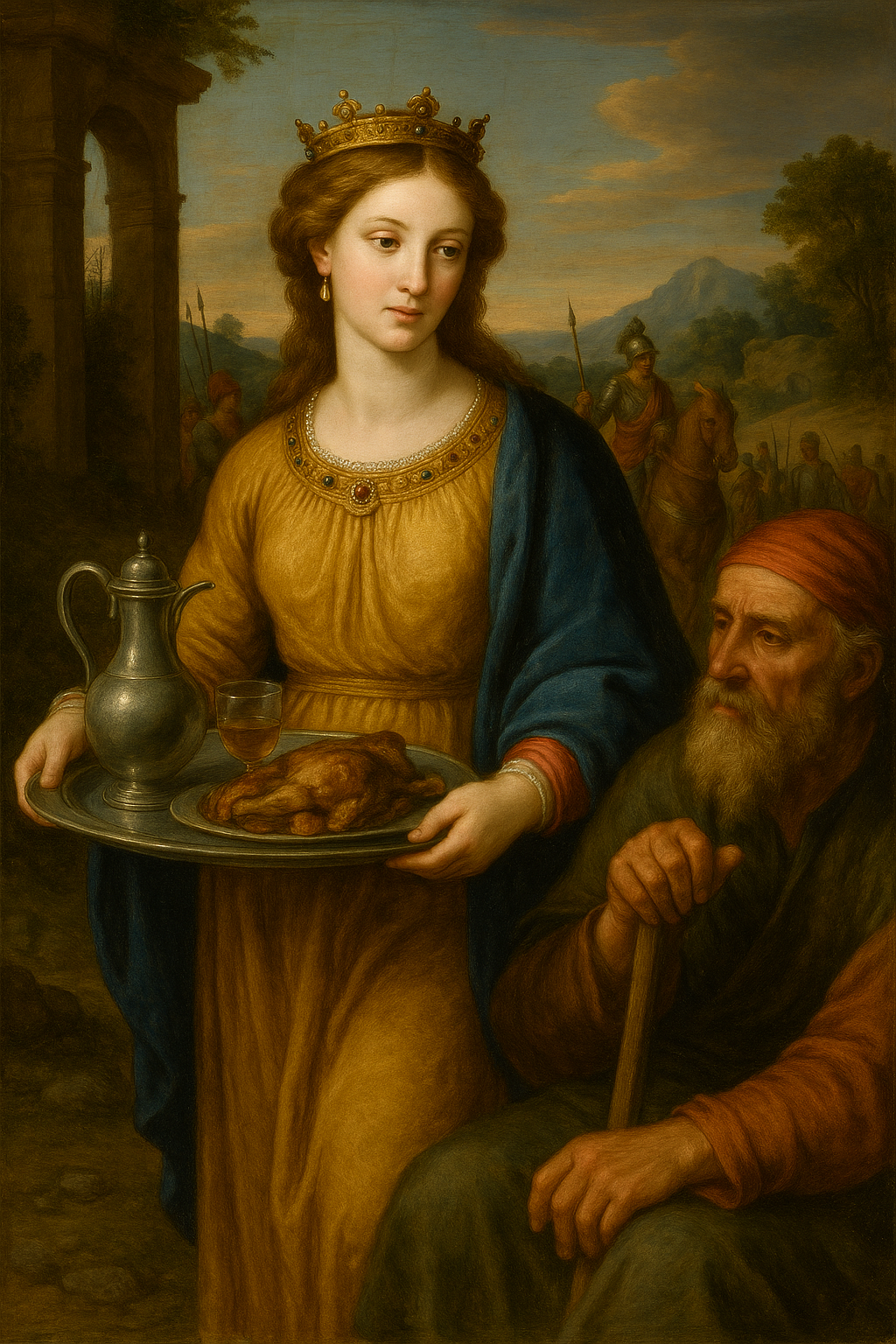
Abigail holds a tray of food and drink for David to save her husband, Nabal

Abigail

The diplomat who stopped a king from bloodshed

Bible Verses: 1 Samuel 25

What She Did: Married to the boorish Nabal, Abigail intervened when David — still a rising outlaw — was about to slaughter her household in revenge. She rushed out with gifts and a speech so persuasive that David praised her wisdom, thanked her for saving him from a terrible sin, and, after Nabal died, married her.

Modern Take: Abigail is the master of de-escalation. She’s calm, strategic and fast-moving. In a culture where women’s voices were often private or domestic, she steps directly into a military crisis and changes the outcome. She represents the “wise woman” archetype: a kind of informal authority figure often embedded in households or towns. She also offers an early model of emotional intelligence and diplomacy. Also, let’s be honest: She traded up.
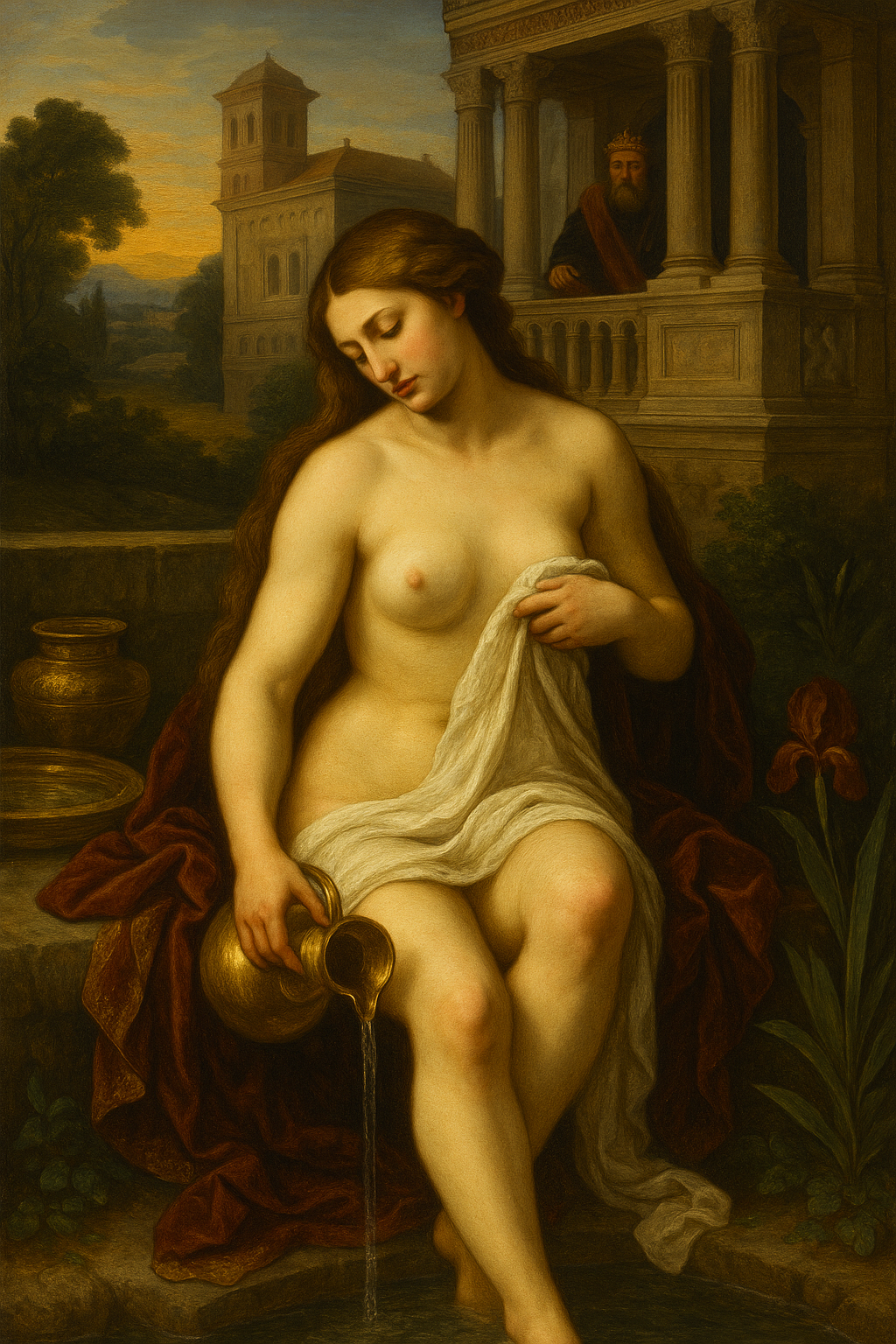
A mostly naked Bathsheba bathes outside while King David watches from his balcony

Bathsheba

From pawn to power behind the throne

Bible Verses: 2 Samuel 11–12; 1 Kings 1–2

What She Did: First introduced when King David saw her bathing and summoned her, Bathsheba is often framed as passive. But later, after their son Solomon is born, she secures his claim to the throne — by confronting David and collaborating with the prophet Nathan. She later becomes the queen mother.

Modern Take: Bathsheba’s story is often filtered through male guilt: David’s sin, Nathan’s rebuke. But read closely, she transforms. After enduring trauma and loss, she becomes politically astute. In ancient royal courts, the role of queen mother was often more powerful than that of the queen herself. She became one of the few women with real dynastic influence. Psychologically, Bathsheba reflects the shift from victim to strategist: someone who learns the system, survives it, and ultimately shapes it.
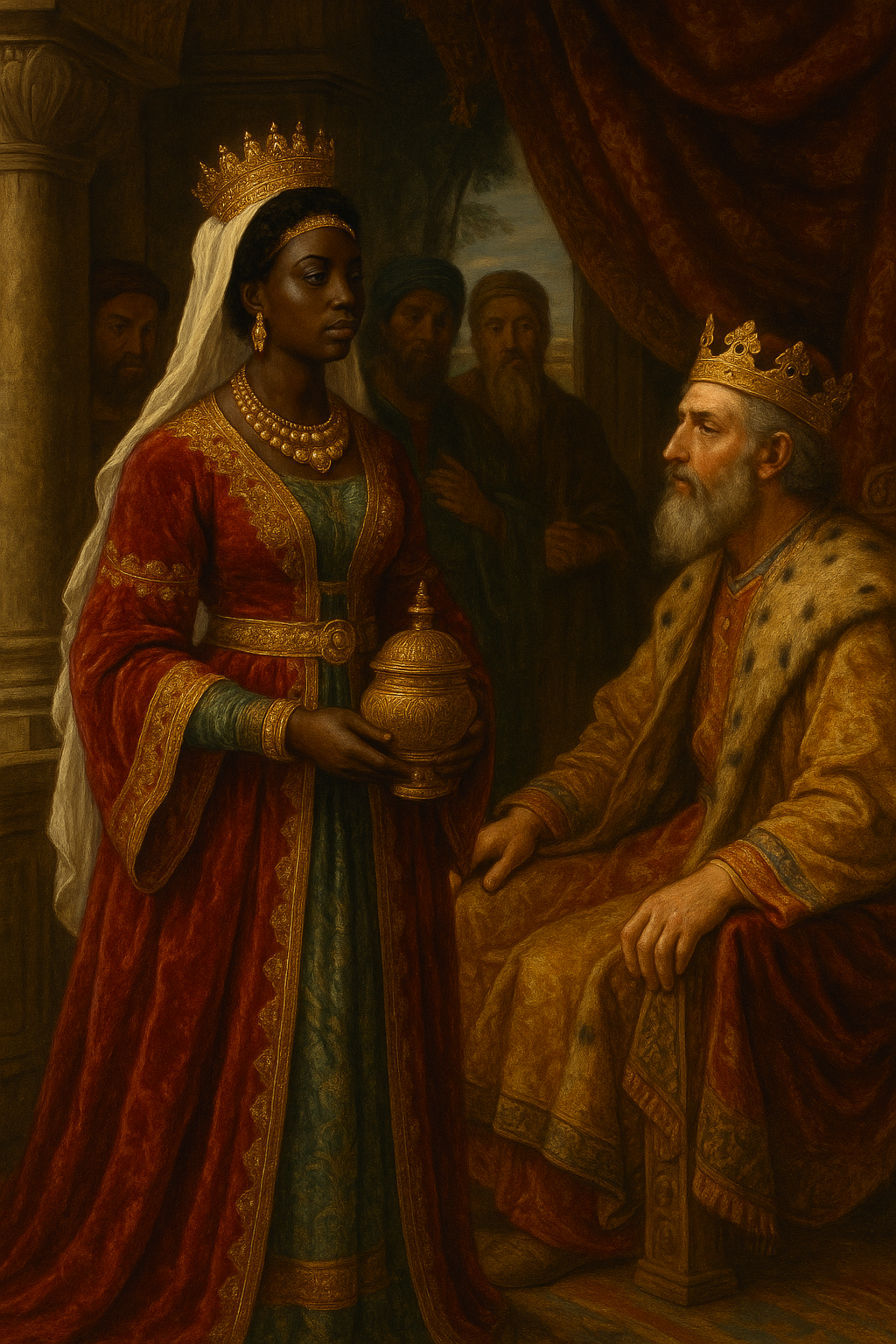
The Queen of Sheba with King Solomon

The Queen of Sheba

The outsider who tested Israel’s wisdom

Bible Verses: 1 Kings 10:1–13; 2 Chronicles 9

What She Did: The Queen of Sheba traveled to Jerusalem to test King Solomon with riddles, questions and wealth. She left impressed by his wisdom and court — but not before making a striking impression herself.

Modern Take: She represents global intrigue, cross-cultural exchange and intellectual power. Historically, she may have been a South Arabian or Ethiopian ruler, and her story reflects real trade networks between Israel and Africa. In some traditions, she and Solomon have a child together, starting royal lines across Africa. Her visit challenges the idea that all wisdom flows from men or from Israel. She’s the rare woman in scripture who isn’t a wife, widow or mother, but a sovereign in her own right.
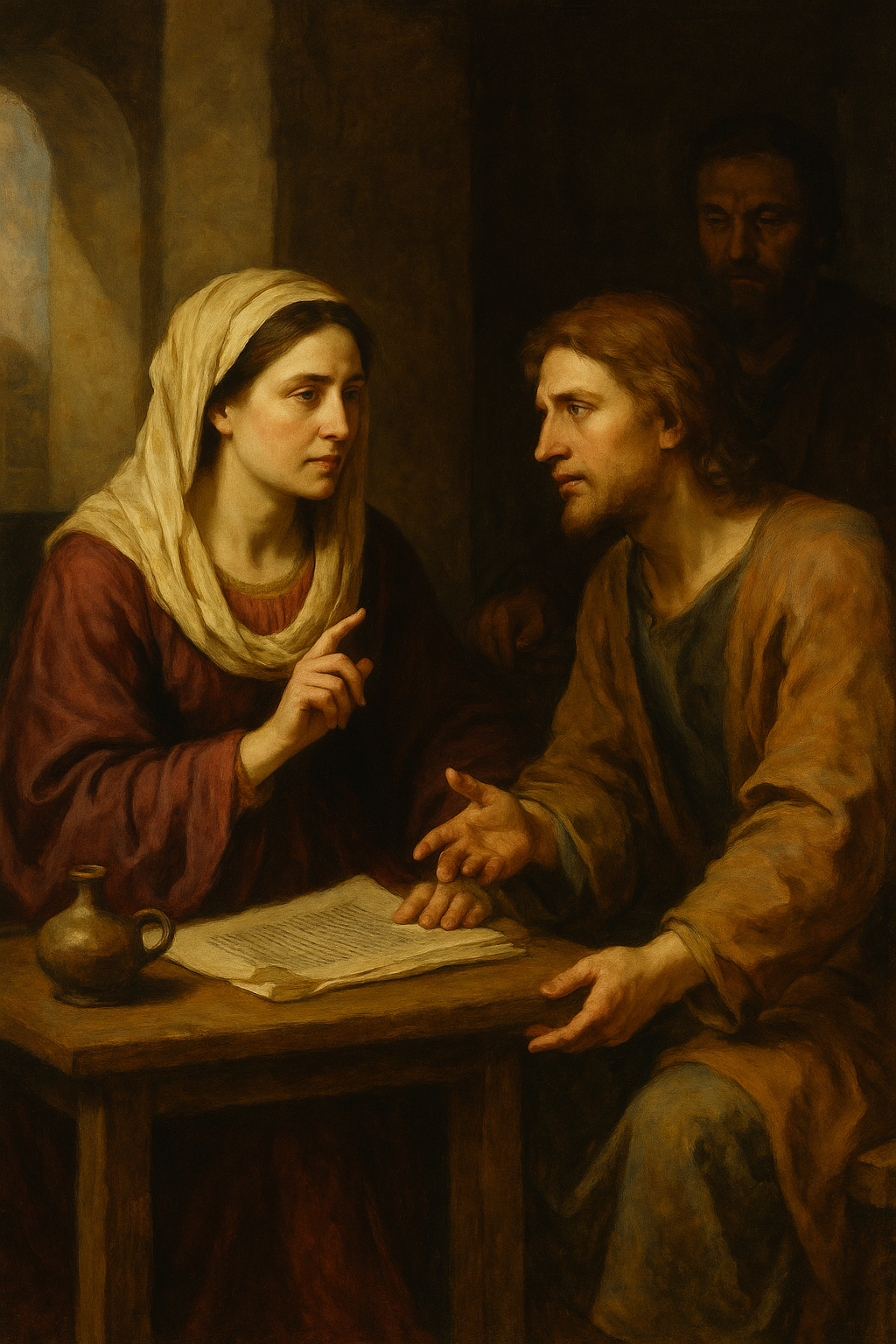
Priscilla and the preacher Apollos debate theology at a table

Priscilla

The teacher who quietly shaped Christian theology

Bible Verses: Acts 18:24–26; Romans 16:3

What She Did: Priscilla, along with her husband, Aquila, took the eloquent preacher Apollos aside and corrected his theology — offering deeper instruction in “the way of God.” She is often listed before her husband, suggesting she may have been the more prominent teacher.

Modern Take: In the early Church, Priscilla stands out as a female intellectual. Not reduced to the common status of helper or hostess, she was a theological mentor. Her presence shows that women were deeply involved in the formation of Christian doctrine. Some scholars even suggest she may have authored parts of the New Testament (like Hebrews), though that remains debated. She represents a model of collaborative leadership and quiet authority in a male-dominated movement.
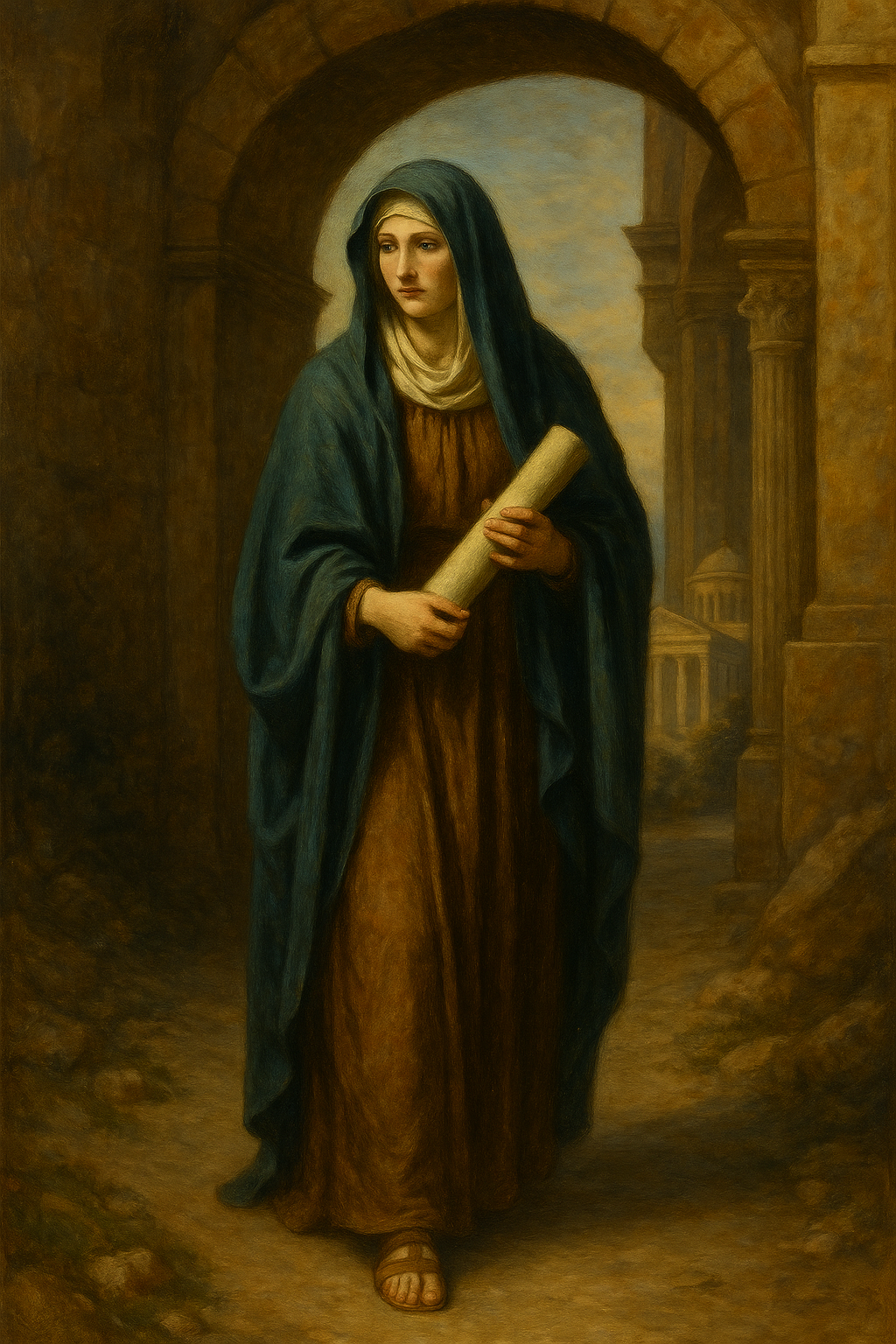
Phoebe holds Paul's letter to Rome

Phoebe

The deacon who carried Paul’s most important letter

Bible Verses: Romans 16:1–2

What She Did: Paul introduces Phoebe as a deacon and benefactor (or patron), and entrusts her to deliver his letter to the Church in Rome. That means she didn’t just drop it off; she likely read and explained it.

Modern Take: Phoebe’s title, diakonos, is the same word used for male deacons. She’s the first named Church leader in Romans 16, and one of the few explicitly praised for her work. She reflects a Church still forming its structures, where women had space to lead. This makes us challenge assumptions about who held knowledge and who spread it — especially given how misogynistic the Church has become. 

Divine, Symbolic and Mysterious

These women act as symbols, archetypes and cosmic forces that stretch beyond history into myth, theology and metaphor.
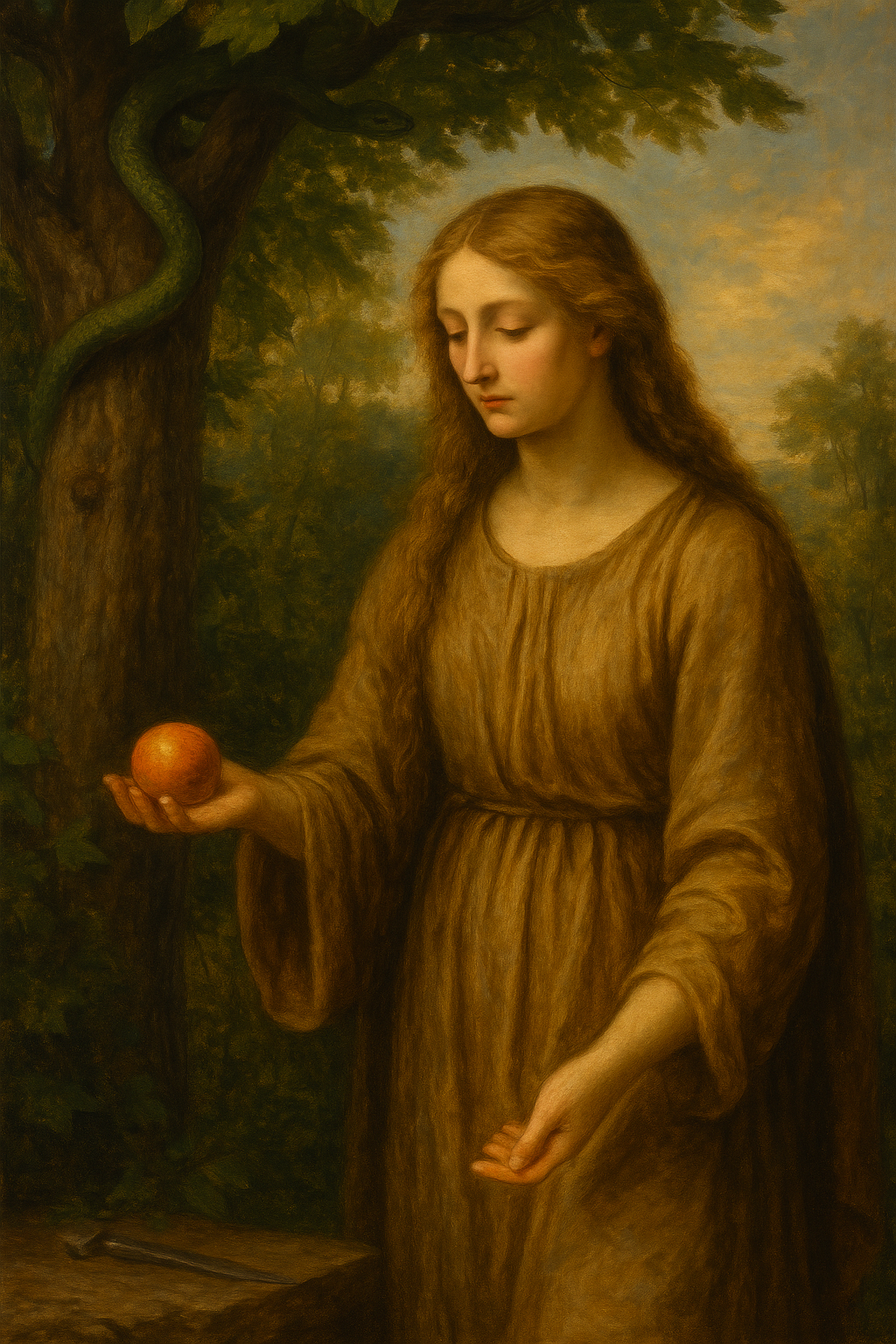
Eve holds the fruit from the Tree of Knowledge, which the Serpent writhes down

Eve

The first woman — and the first to reach for knowledge

Bible Verses: Genesis 2–4

What She Did: Eve was formed from Adam’s side and placed in the Garden of Eden. She listened to the serpent, ate from the Tree of Knowledge of Good and Evil, and gave some to Adam. The result? Consciousness, shame, exile — and, for better or worse, the birth of humanity as we know it.

Modern Take: Often blamed for “the Fall,” Eve has been scapegoated for millennia. But some see her not as wicked, but curious and courageous — a seeker of wisdom. Historically, her story has justified everything from patriarchy to childbirth pain. But reread through feminist or psychological lenses, Eve becomes a symbol of autonomy, awakening, and the cost of choosing freedom over obedience. The first to question. The first to act. And the first to pay the price.
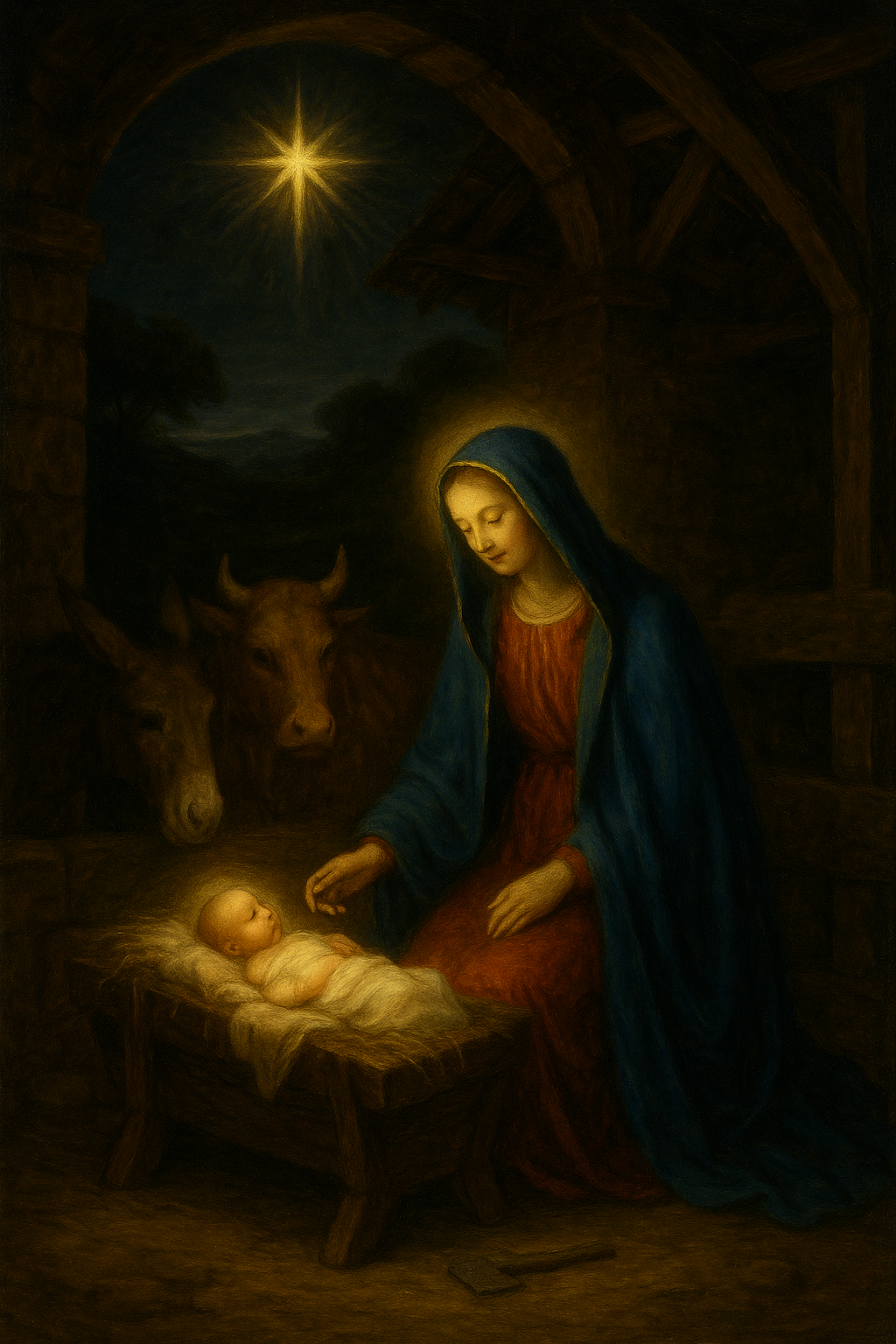
Mary looks down at the baby Jesus, lying in a manger, with cattle nearby and the Star of Bethlehem above

Mary, Mother of Jesus

The vessel of incarnation who sang a revolutionary song

Bible Verses: Luke 1–2; John 2; Acts 1

What She Did: Mary accepted the impossible: a miraculous pregnancy, divine purpose and certain scandal. After the angel Gabriel appeared and told her she would conceive a son by the Holy Spirit — without ever having been with a man — Mary didn’t panic, protest or faint. Instead, this young, unmarried girl in a patriarchal society said yes to a destiny that could get her shunned, divorced, or even stoned. She visited her cousin and sang the Magnificat — a bold hymn that shouted revolution. She predicted thrones would topple, the rich would go hungry, and the lowly would rise. Throughout the Gospels, the Virgin Mary stays close: from the wedding at Cana, to the cross, to the fledgling early Church.

Modern Take: Mary has long been framed as the pinnacle of passive femininity: meek and mild. But a closer reading reveals something far bolder. She’s a teenage girl who says yes to a life-threatening calling, sings a revolutionary anthem about overturning social hierarchies, and endures the trauma of watching her son executed by the state. In many cultures, she has become a mother, queen, even goddess — a figure claimed by liberation theologians, artists, mystics and mothers alike. She’s a paradox: virgin and mother, humble and exalted, human and divine vessel. Mary holds the sacred tension between idealized womanhood and radical spiritual agency. She doesn’t just bear the Word; she becomes a voice in her own right, whispering comfort, roaring justice and outlasting empires.
RELATED: Artistic Depictions of the Virgin Mary

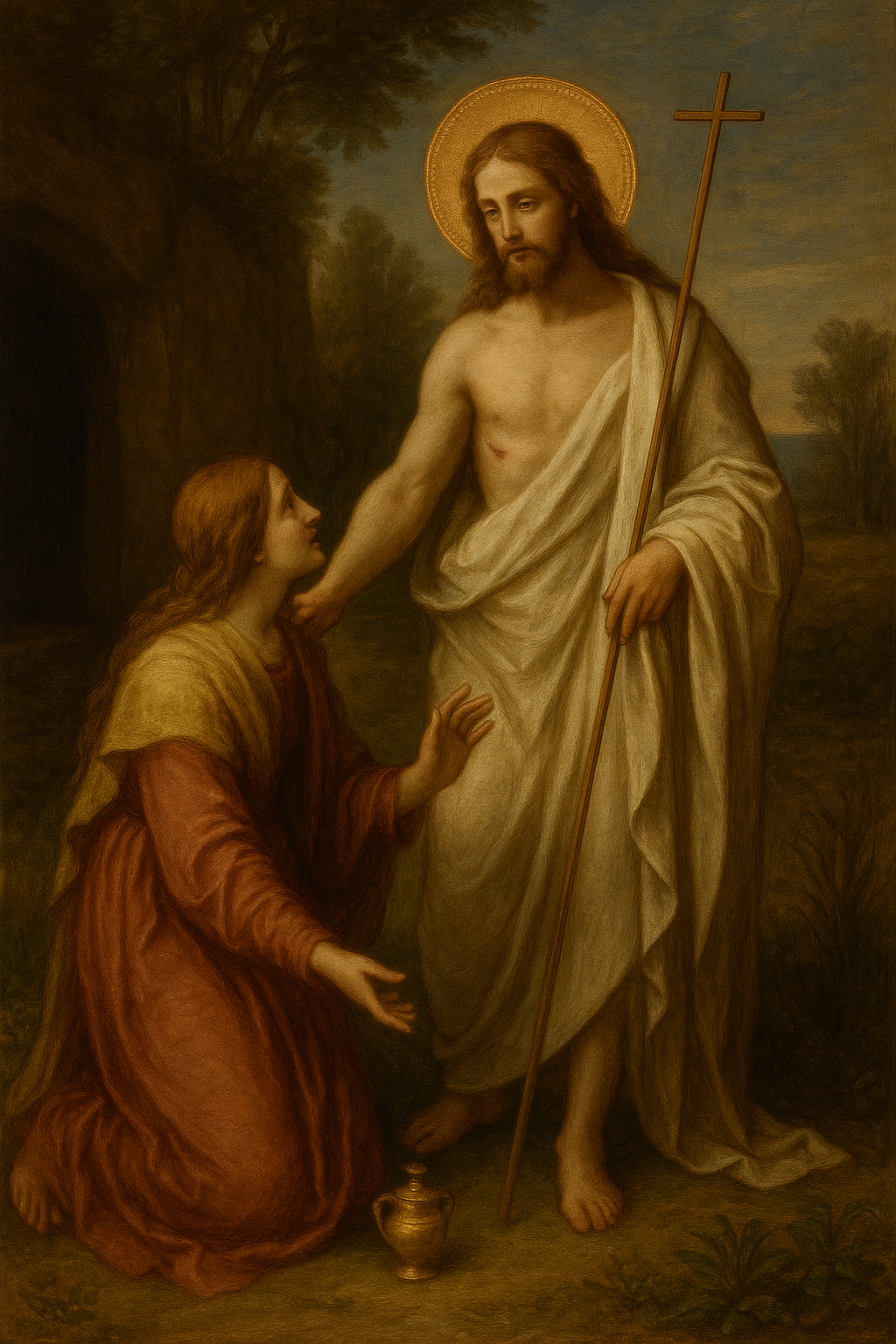
Mary Magdalene kneels in front of the resurrected Jesus

Mary Magdalene

The much-maligned apostle to the apostles

Bible Verses: Luke 8:1–3; John 20:1–18

What She Did: Mary Magdalene followed Jesus, supported his ministry financially, witnessed the crucifixion, and was the first to see him resurrected. Jesus called her by name — and sent her to tell the others.

Modern Take: Long confused with a prostitute (a smear introduced centuries later), Mary Magdalene was actually one of Jesus’ most loyal followers. She’s the only person mentioned in all four Gospels as witnessing the resurrection. Historically, her demotion from leader to fallen woman reflects the Church’s discomfort with powerful women. But in recent decades, she’s been reclaimed as a true apostle — equal in faith and insight. She was the first to preach the risen Christ. That’s not just symbolic. That’s canon.

RELATED: What Did Early Christians Believe?
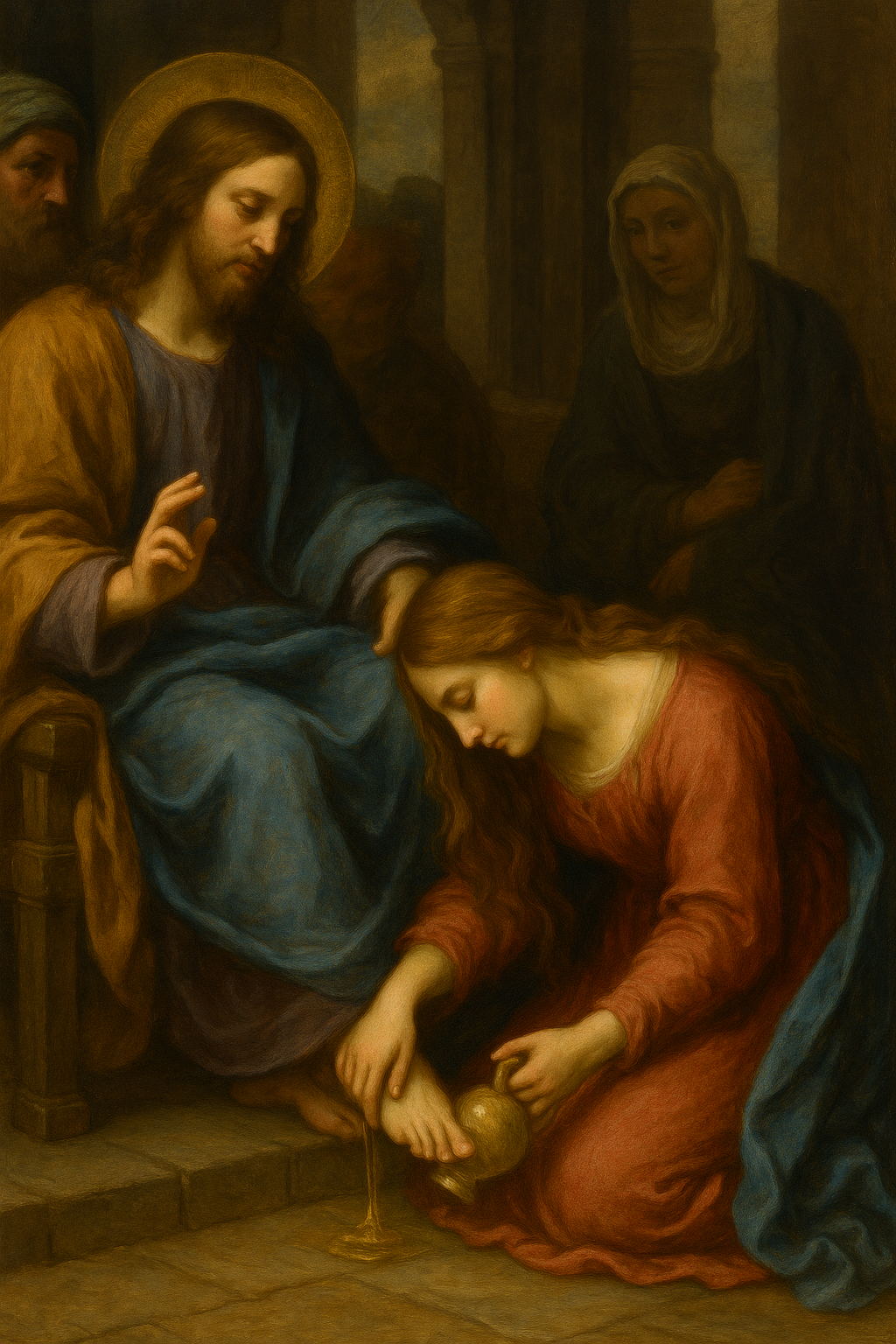
The woman with the alabaster jar anoints the feet of Jesus

The Woman With the Alabaster Jar

The one who poured it all out

Bible Verses: Mark 14:3–9; Luke 7:36–50; Matthew 26:6–13

What She Did: She broke an alabaster jar of expensive perfume and anointed Jesus, either on his head or feet, depending on the Gospel. Some bystanders called it wasteful. Jesus called it beautiful — and said her act would be remembered wherever the Gospel was preached.

Modern Take: This unnamed woman breaks every rule of decorum: She touches a man, pours out wealth, and interrupts a meal. But Jesus praises her more than almost anyone else in the room. Her story blends sensuality, sorrow and sacrifice. Historically, she’s been confused with other women or moralized into irrelevance. But she embodies a kind of devotion: extravagant, intuitive and unapologetic.
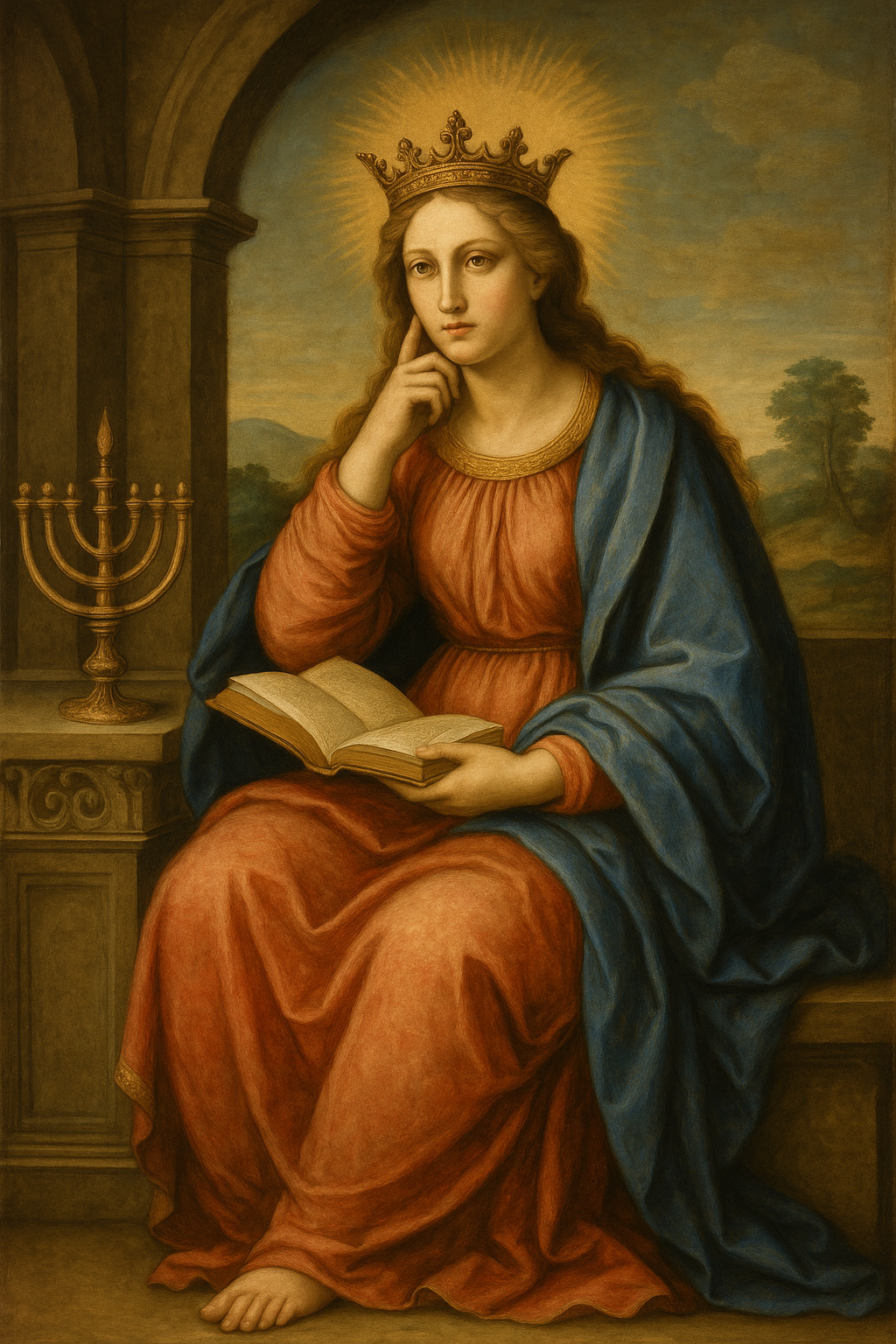
The goddess Sophia, or Wisdom, sits with a crown, halo, book and menorah

Wisdom (Sophia)

She who was with God before the beginning

Bible Verses: Proverbs 8–9; Sirach 24

What She Did: Wisdom is personified as a woman calling out in the streets, standing at the gates, and present at the creation of the world. She builds her own house and prepares a feast, inviting the simple to come and learn.

Modern Take: Sophia is both symbol and spirit — seen by some as a feminine aspect of God, by others as a poetic device. Her presence in Proverbs is striking: She’s active, vocal and cosmic, present at the dawn of creation. In Christian mysticism, she becomes a bridge between human reason and divine truth. For many, Sophia also offers a sacred feminine within traditions that often silence it. She echoes the ancient mother goddesses — not in open defiance of monotheism, but woven quietly into it. In this way, she becomes a goddess in disguise, allowing vestiges of female divinity to survive under the name of wisdom. Across Orthodox icons, Gnostic texts and mystical visions, she whispers of a God who speaks not only with thunder — but with intuition, mystery and grace.
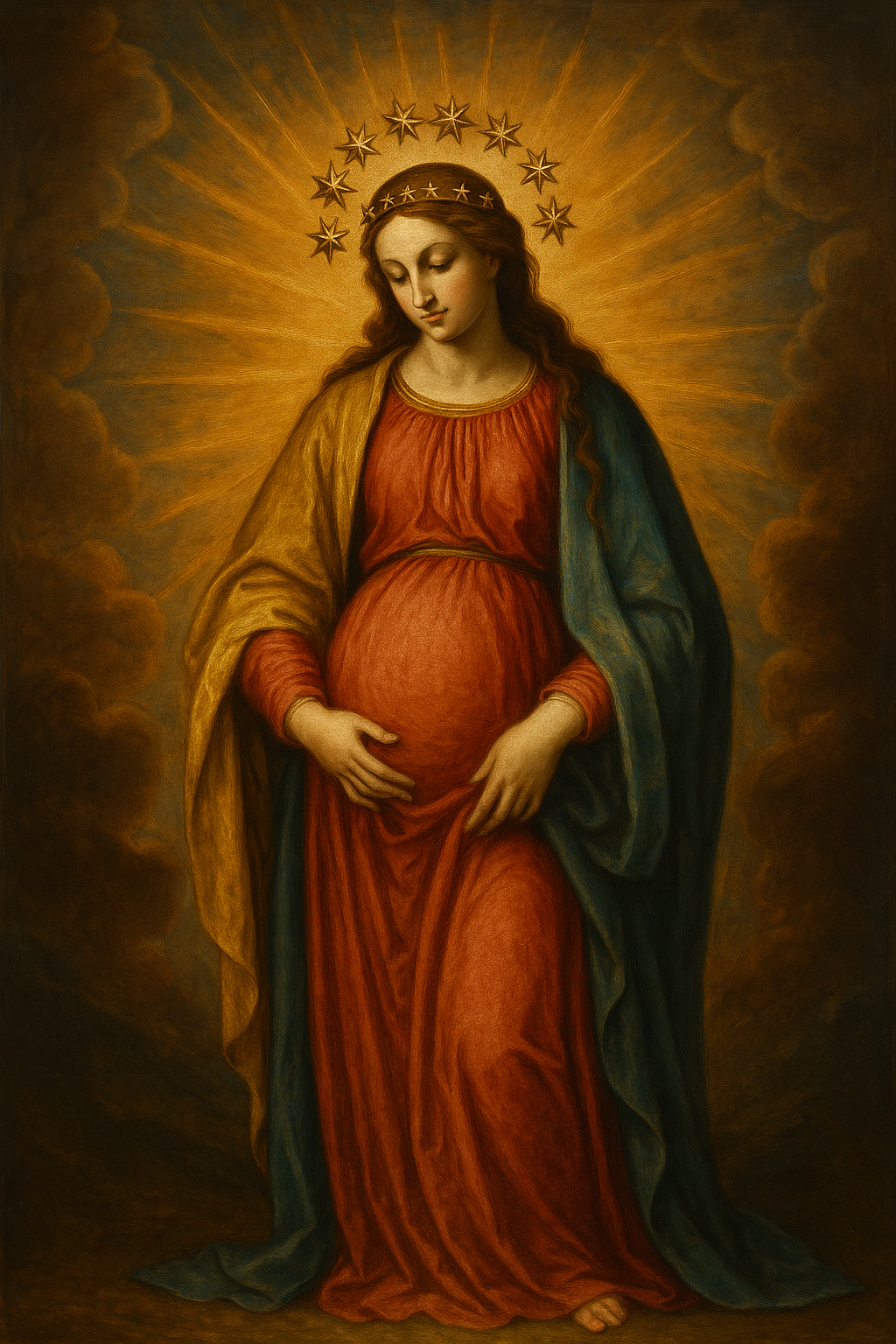
The pregant "woman clothed with the sun" from the book of Revelation

The Woman Clothed With the Sun

A radiant sign of pain, power and apocalypse

Bible Verses: Revelation 12

What She Did: In a vision, John sees a woman “clothed with the sun,” crowned with stars and pregnant. As she gives birth, a dragon waits to devour the child. She escapes into the wilderness as war breaks out in heaven.

Modern Take: Interpretations vary wildly: sometimes Mary, Israel, the Church or divine femininity itself. But whatever she symbolizes, her imagery is intense. She labors while cosmic forces collide. She’s both vulnerable and protected, chased and exalted. Historically, she reflects ancient mythic tropes of the mother goddess and the serpent. Psychologically, she represents transformation: pain that brings new creation, radiance born of struggle. She’s the centerpiece of a celestial showdown.
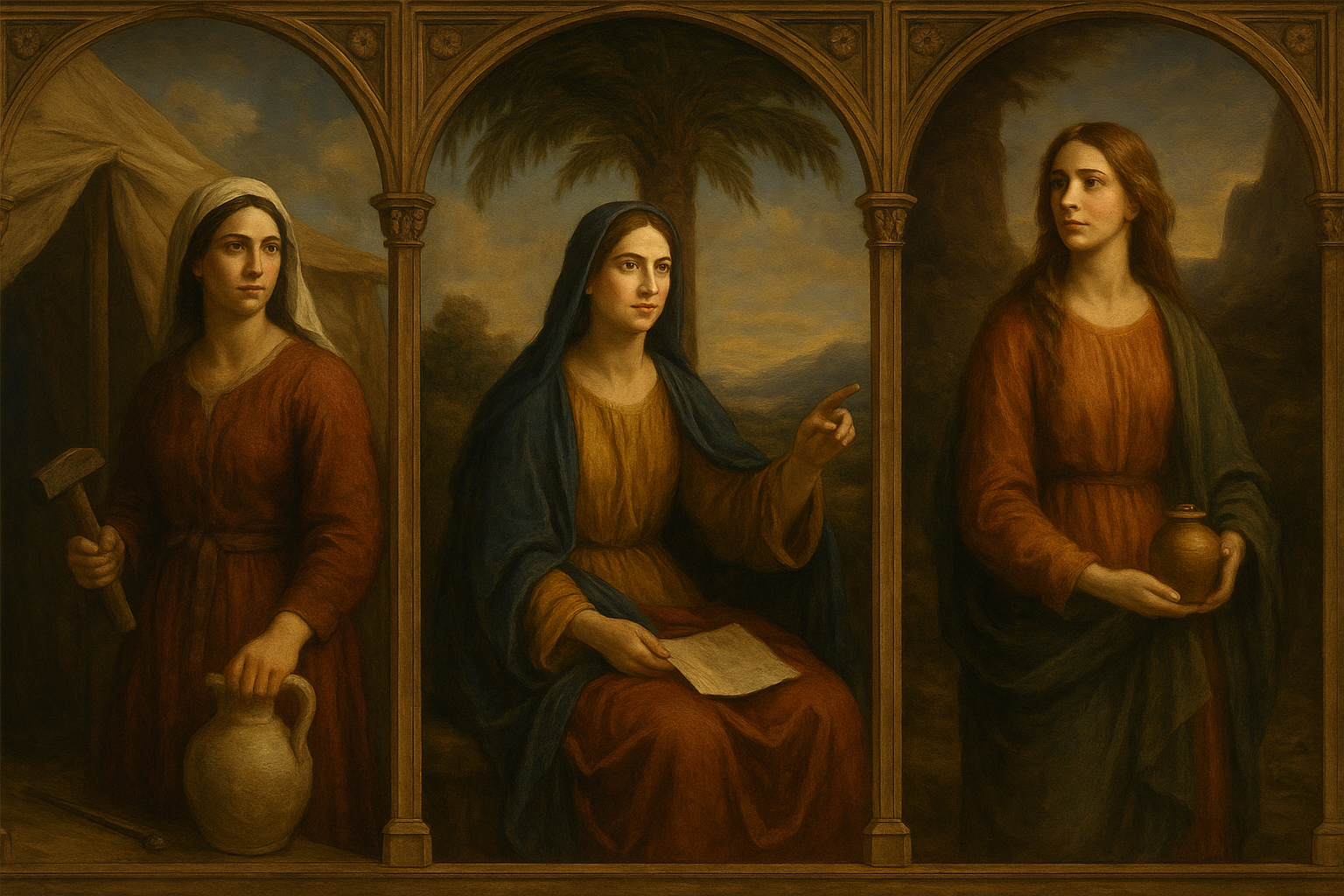
A triptych of three women from the Bible

Bible Study, but Make It Subversive

Sunday school left a lot out. It’s time to shine the spotlight on the women who flipped the script. These women weren’t just background characters. They were prophets, plotters, protectors and provocateurs. Some were praised. Others were punished. All of them left a mark.

Their stories remind us that the Bible is a wild, ancient tapestry of human ambition, courage, desperation and wit. And at the heart of that chaos? Women who dared to act.

So go ahead. Read between the (patriarchal) lines. Ask the uncomfortable questions. If you relate more to the bold, subversive, and violent women of the Bible (like Jael, who literally nailed a Canaanite general to the ground with a tent peg) than to the idealized, domestic “virtuous woman” described in Proverbs 31 — you’re not alone. –Wally
Artistic Depictions of the Virgin Mary: The Surprising Origins of Marian Iconography

The enigmatic allure of the Virgin Mary: From divine purity to unsettling symbolism, we explore the captivating myths and enduring appeal of the original Madonna. 

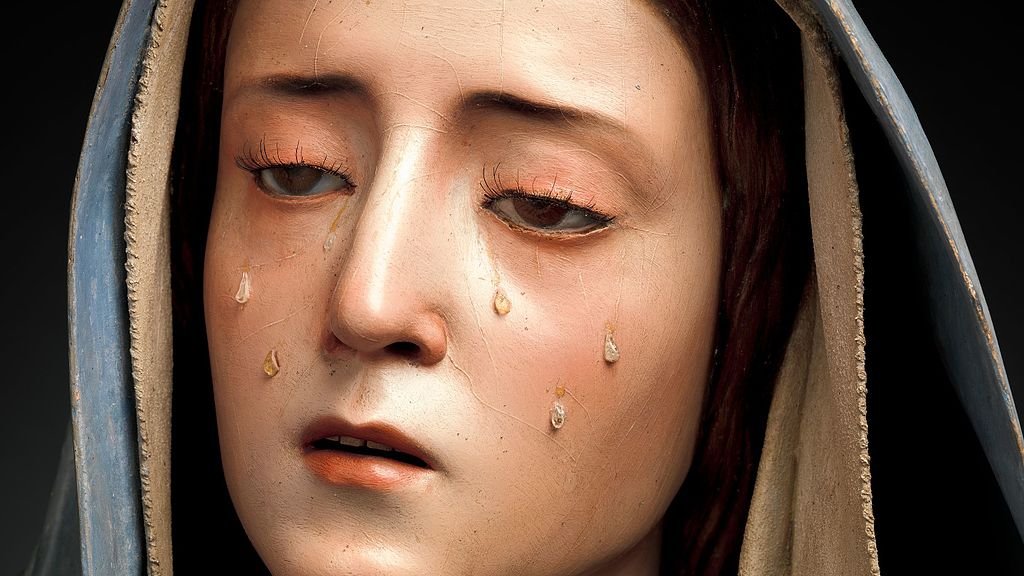
Closeup of the face of a statue of the Virgin Mary with tears

The Virgin Mary takes many guises in art over the centuries, from Queen of Heaven to the Sorrowful Mother whose tears have miraculous properities.

In art, God is often portrayed as an ancient, white-bearded man in flowing robes, a benevolent figure who watches over humanity from on high. Jesus, meanwhile, is typically depicted in various key moments from his life, such as his birth, crucifixion and resurrection. He walks on water and performs other miracles and has his Last Supper. 

But the Virgin Mary is a complex and enigmatic figure who wears many guises. Often cloaked in modesty, she’s seen as a symbol of hope, love and sacrifice. She’s portrayed as the ultimate role model for Christian women, the daughter of God, the bride of her own son and a regal queen. Her story is a richly woven tapestry of myths and symbols, each thread imbued with meanings that have been interpreted in countless ways throughout history.

As we delve into the realm of religious art and symbolism, we find her as a fertility goddess known as the Black Madonna, along with a loving mother whose tears and breast milk have magical healing powers. Amid the varied representations through the centuries, one thing remains certain: Mary’s enduring appeal as a divine figure. 

Mary, Queen of Heaven by the Master of the Saint Lucy Legend, showing the Virgin Mary surrounded by colorful angels

Mary, Queen of Heaven by the Master of the Saint Lucy Legend, circa 1495

Maria Regina: Queen of Heaven

Mary, the paragon of purity, couldn’t be left to rot in the grave like a mere mortal. So, the early Church fathers devised a bold solution: They declared that she had been taken up to Heaven in an event known as the Assumption, where she now reigns as a celestial queen. 

Popes viewed the Virgin Mary as a powerful propaganda tool. With their ties to the Queen of Heaven, they could legitimize their authority on earth and cemented the strong tie between Mary and Catholicism, centered in Rome: “The more the papacy gained control of the city, the more veneration of the mother of the emperor in heaven, by whose right the Church ruled, increased,” explains Marina Warner in her 1976 book Alone of All Her Sex: The Myth and the Cult of the Virgin Mary

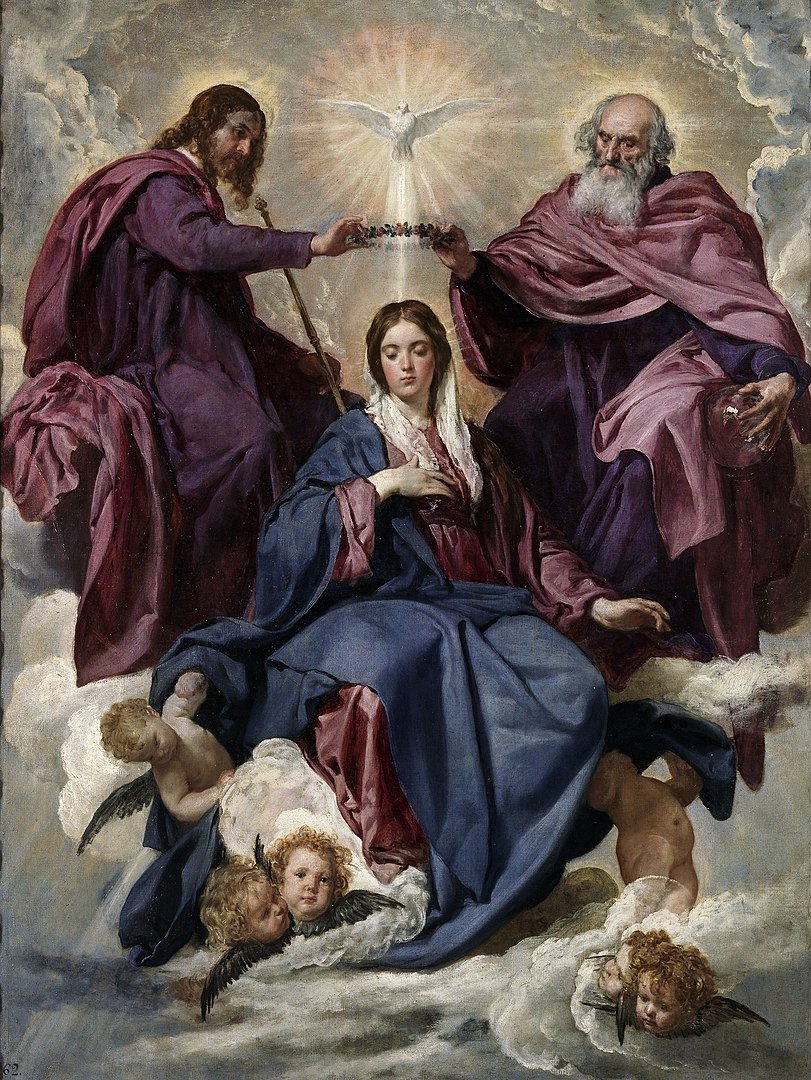
The Coronation of the Virgin by Diego Velázquez, showing Mary being crowned in the clouds by Jesus and God, with cherubs below

The Coronation of the Virgin by Diego Velázquez, 1636

John VII was the first pope to have himself painted in prostration at the feet of the Virgin, in the basilica of Santa Maria in Trastevere in Rome. 

Icon of Virgin Mary as Maria Regina, Queen of Heaven, with angels, baby Jesus and Pope John VII prostrating himself from the church of Santa Maria in Trastevere in Rome

Madonna della Clemenza icon from the church of Santa Maria in Trastevere in Rome, 8th century. It’s the first to show a pope, John VII, prostrating himself at her feet (though it’s hard to make out now).

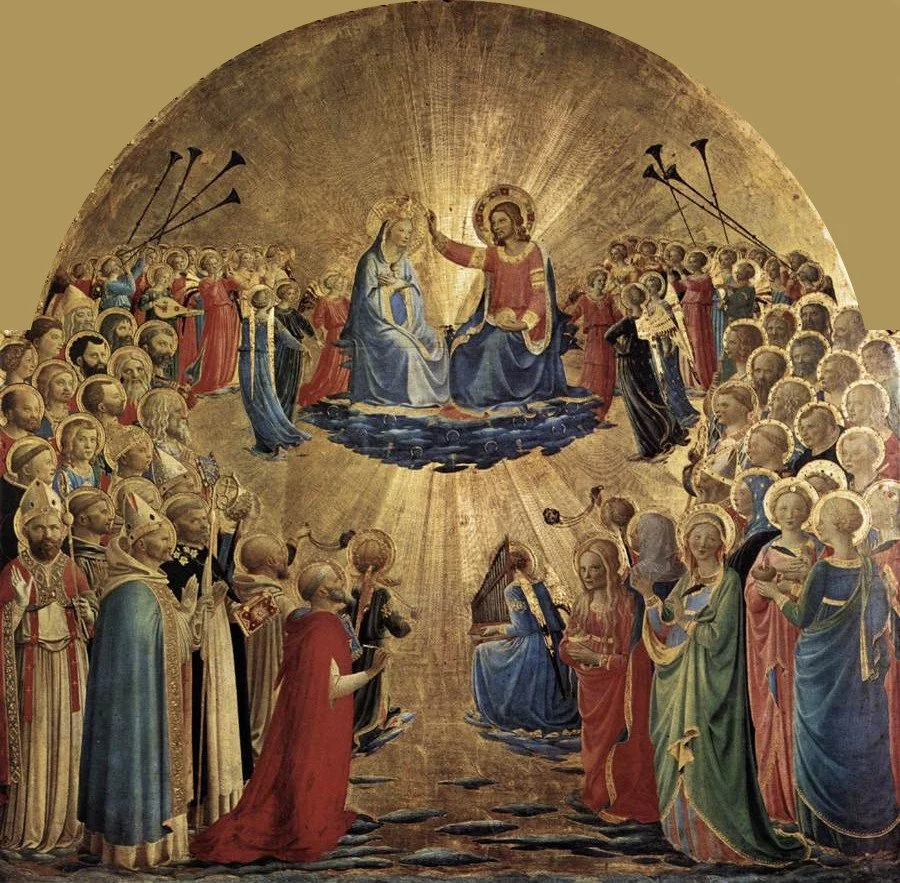
The coronation of Mary was first depicted in the 12th century, from an apse mosaic at Santa Maria to niches of French cathedrals, and became a favorite theme of Christendom. Christ is shown crowning his mother, switching the moment of her triumph from the Incarnation (when she conceived the son of God) to the Assumption (when she was taken up to Heaven). 

Coronation of the Virgin by Fra Angelico, showing people watching Jesus put a crown on the Virgin Mary as they float on a cloud

Coronation of the Virgin by Fra Angelico, 1435

The imagery of a divine queen worked well to legitimize not only popes but royalty and its system of inequality as well. “For by projecting the hierarchy of the world onto heaven, that hierarchy — be it ecclesiastical or lay — appears to be ratified by divinely reflected approval; and the lessons of the Gospel about the poor inheriting the earth are wholly ignored,” Warner writes. 

“It would be difficult to concoct a greater perversion of the Sermon on the Mount [Christ’s ethical code, focusing on compassion, selflessness, etc.] than the sovereignty of Mary and its cult, which has been used over the centuries by different princes to stake out their spheres of influence in the temporal realm,” Warner continues, “to fly a flag for their ambitions like any Maoist poster or political broadcast; and equally difficult to imagine a greater distortion of Christ’s idealism than this identification of the rich and powerful with the good.”

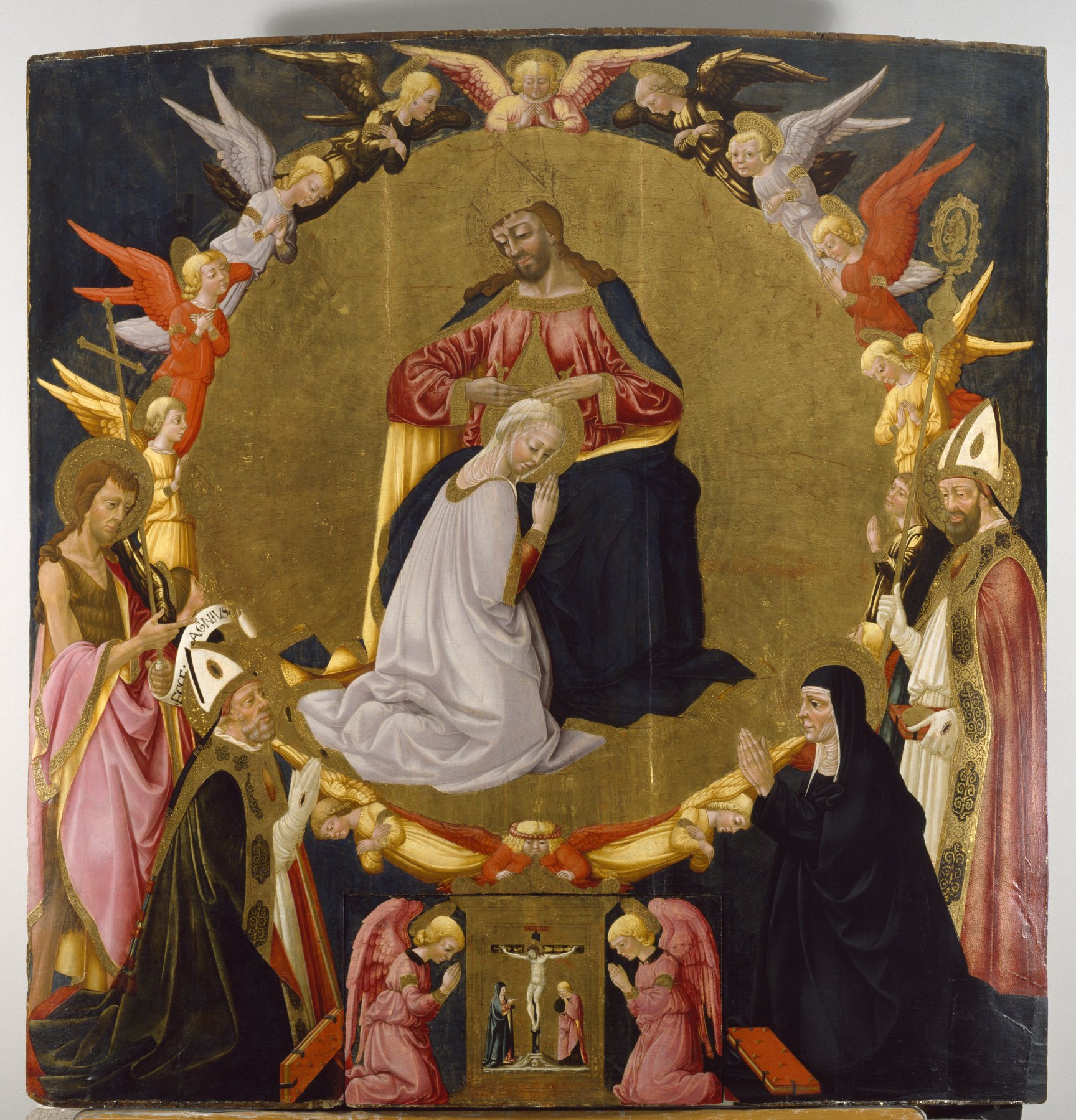
The Coronation of the Virgin With Angels and Four Saints by Neri di Bicci, showing Mary kneeling by Jesus as he crowns her while they're surrounded by angels and holy men

The Coronation of the Virgin With Angels and Four Saints by Neri di Bicci, circa 1470

The Bride of Christ: Incest Is Best?

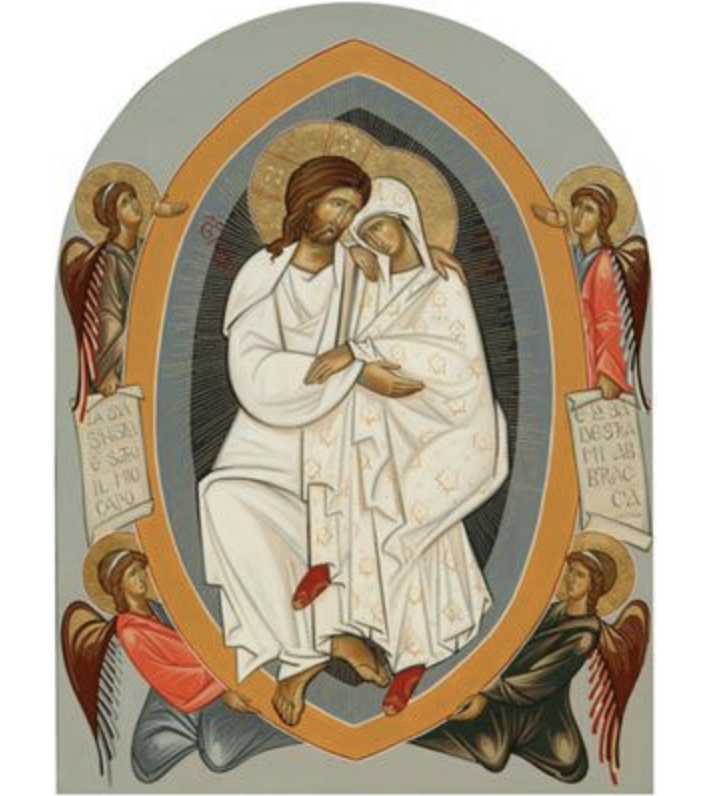
As shocking as it may seem, the Virgin Mary was, for a while, depicted as the bride of her own son, Jesus. 

How could this have come about? Warner suggests the influence of Middle Eastern mystery religions, which played up males forming unions with females. The Canaanite god Baal coupled with his sister, Anat. In Syria, the shepherd Tammuz became the lover of the sky goddess Ishtar. The Phrygian cult featured Cybele and Attis, who died castrated under a tree. And Egyptian mythology tells the tale of Osiris, the god of the dead, who was chopped into pieces and put back together by his sister-wife, Isis. 


RELATED: A pictorial glossary of the so-called pagan gods of the Old Testament


The nuptials of these divine beings mirrored the joining of earth and sky at the dawn of creation.

Jesus puts his arm around his mother, the Virgin Mary, who is also his bride, with angels around them

You wouldn’t marry your mother, would you — even if she was the Virgin Mary?!

“Thus marriage was the pivotal symbol on which turned the cosmology of most of the religions that pressed on Jewish society, jeopardizing its unique monotheism,” Warner writes. “It is a symptom of their struggle to maintain their distinctiveness that the Jews, while absorbing this pagan symbol, reversed the ranks of the celestial pair to make the bride God’s servant and possession, from whom he ferociously exacts absolute submission.”

From this foundation, Cyprian of Carthage, in the 3rd century, accused virgins who flirted of committing adultery against their true husband, Christ.  

And then, of course, there are nuns, whose consecration ceremony includes getting a ring that designates them as a bride of Christ. Talk about polygamy on a mass scale!

But it wasn’t really until 1153, when Bernard of Clairvaux gave multiple sermons on the Old Testament’s Song of Songs — “that most languorous and amorous of poems,” as Warner calls it. In one of these, Bernard preached, speaking of Christ and the Virgin Mary:

But surely will we not deem much happier those kisses which in blessed greeting she receives today from the mouth of him who sits on the right hand of the Father, when she ascends to the throne of glory, singing a nuptial hymn and saying: “Let him kiss me with the kisses of his mouth.”

Pagan influences aside, I’m puzzled as to how this incestuous idea ever caught on among Christians.

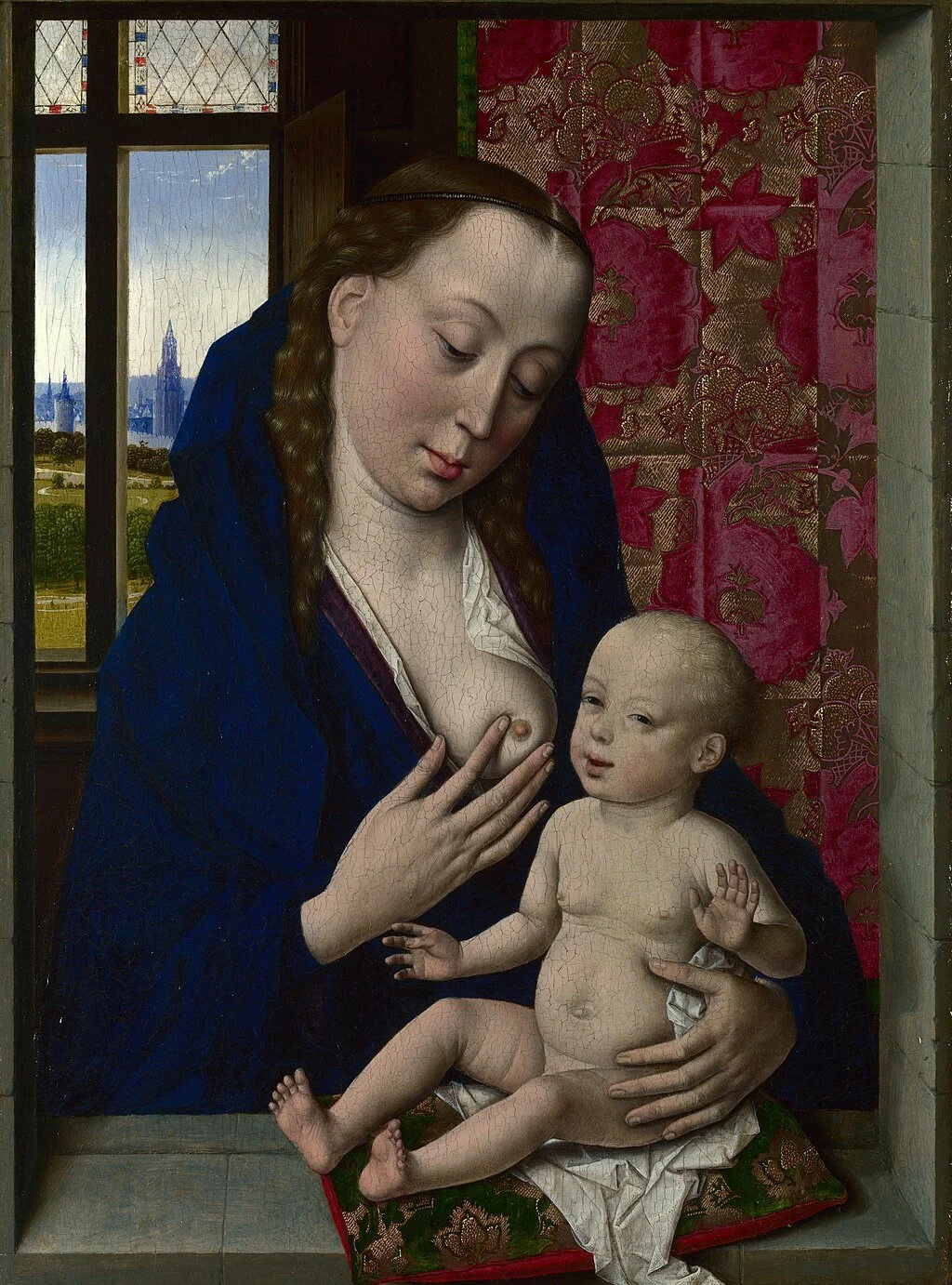
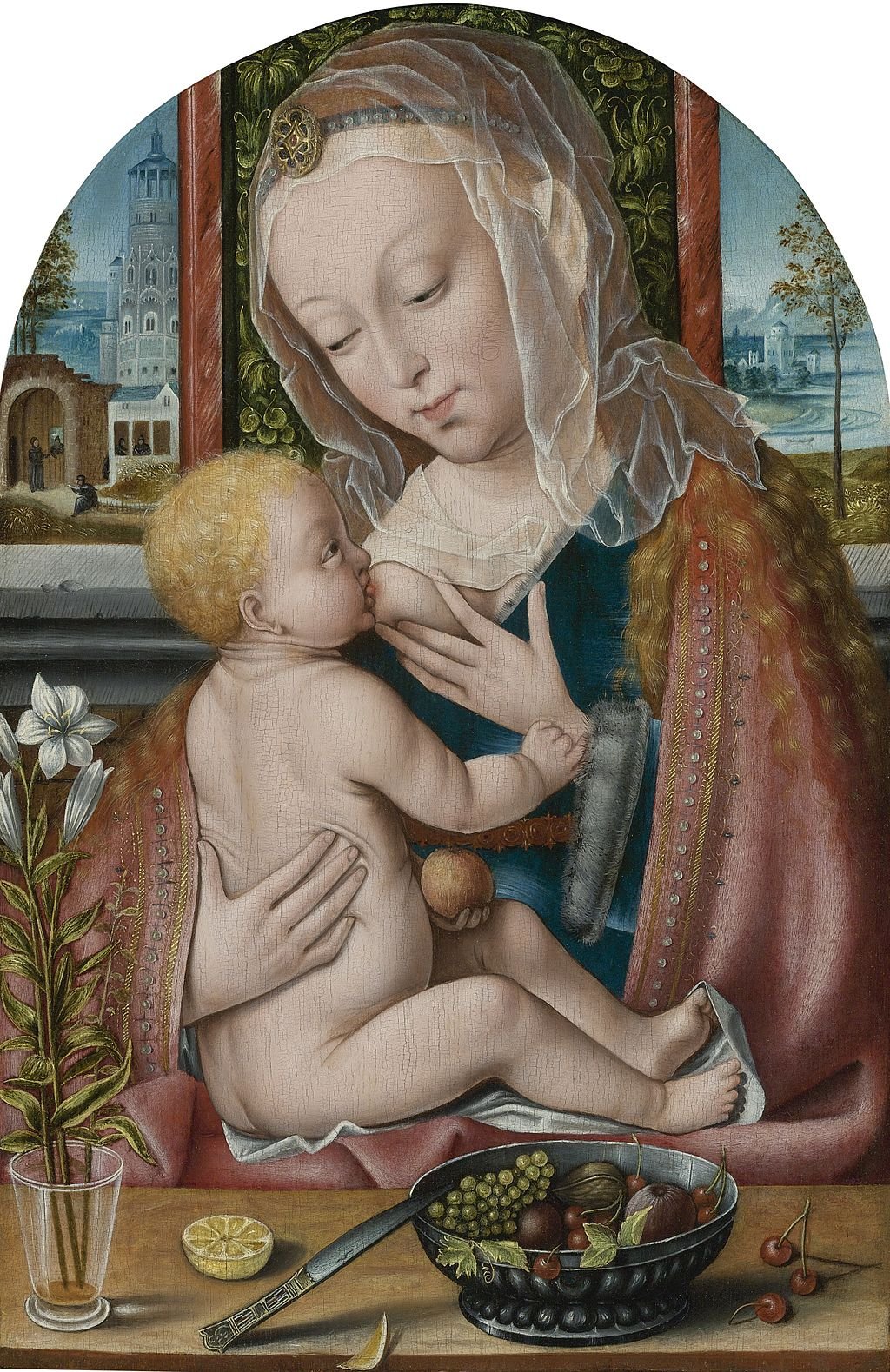
The Virgin and Child by Dirk Bouts, showing Mary offering her breast to baby Jesus in a medieval room

The Virgin and Child by Dirk Bouts, circa 1465

Maria Lactans: The Milk-Squirting Mary

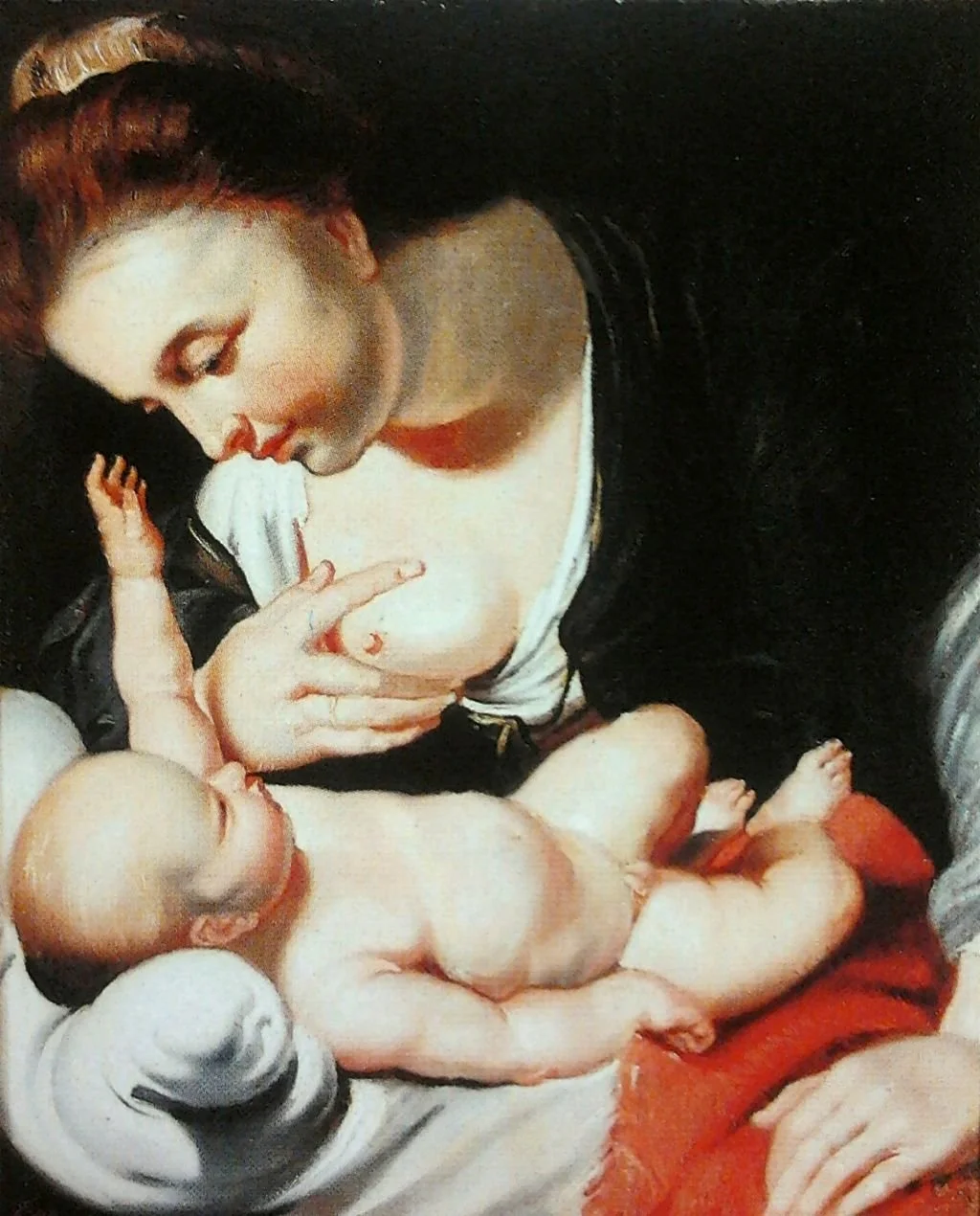
While Mary was exempt from Eve’s punishment of bearing children in pain, there was one biological function allowed her: breastfeeding. “From her earliest images onwards, the mother of God has been represented as nursing her child,” Warner says. 

The Virgin Mary depicted with squirting breasts?! This is one iconography I’ve got to milk for all its worth.

Where did this idea come from? “The theme of the nursing Virgin, Maria Lactans, probably originated in Egypt, where the goddess Isis had been portrayed suckling the infant Horus for over a thousand years before Christ,” Warner explains. 


RELATED: In the New Testament, Mary wasn’t mentioned as being a virgin. Find out why early Christians insisted upon Mary being pure.


Madonna Nursing the Child (Maria Lactans) by Erasmus Quellinus the Younger, with the Virgin Mary leaning down to offer her exposed breast to a reclining Baby Jesus

Madonna Nursing the Child (Maria Lactans) by Erasmus Quellinus the Younger, circa 1614

Part of this symbolism derives from a mother providing much-needed nourishment: “For milk was a crucial metaphor of the gift of life,” Warner continues. “Without it, a child had little or no chance of survival before the days of baby foods, and its almost miraculous appearance seemed as providential as the conception and birth of the child itself.”

And, not surprisingly, Mary’s milk was miraculous. A favorite medieval tale, including a version in French by Gautier de Coincy, tells how a faithful monk was dying of a putrid mouth filled with ulcers. He reproached the Madonna for neglecting him, and chastened, she appears at his bedside: 

With much sweetness and much delight,
From her sweet bosom she drew forth her breast, 
That is so sweet, so soft, so beautiful,
And placed it in his mouth, 
Gently touched him all about,
And sprinkled him with her sweet milk.

As Warner writes, “Needless to say, the monk was rendered whole again.”

The Virgin Mary holds baby Jesus on her lap while she squirts milk from her breast into St. Bernard's mouth in an illuminated manuscript

According to a 14th century legend, Saint Bernard prayed before a statue of Mary. It came to life, and the Virgin placed her breast in Bernard’s mouth, nursing him as she did the baby Jesus.

The Madonna’s miracle milk became a nearly ubiquitous relic in Europe. “From the thirteenth century, phials in which her milk was preserved were venerated all over Christendom in shrines that attracted pilgrims by the thousands. Walsingham, Chartres, Genoa, Rome, Venice, Avignon, Padua, Aix-en-Provence, Toulon, Paris, Naples, all possessed the precious and efficacious substance,” Warner says.

John Calvin, the church reformer, had a scathing opinion about these claims. “There is no town so small, nor convent … so mean that it does not display some of the Virgin’s milk,” he wrote in his Treatise on Relics. “There is so much that if the holy Virgin had been a cow, or a wet nurse all her life she would have been hard put to it to yield such a great quantity.”

The idea of a breastfeeding mother of God waned in the Renaissance, when high-born women found it indecent to do the job themselves and outsourced the task to wetnurses. Plus, it was deemed indecorous to depict Mary with her breast exposed with the increasing idea that a woman’s body was shameful. Mary, with the Immaculate Conception, was born without original sin and therefore avoided Eve’s curse — and by the 16th century, that included being exempt from suckling the Christ child.

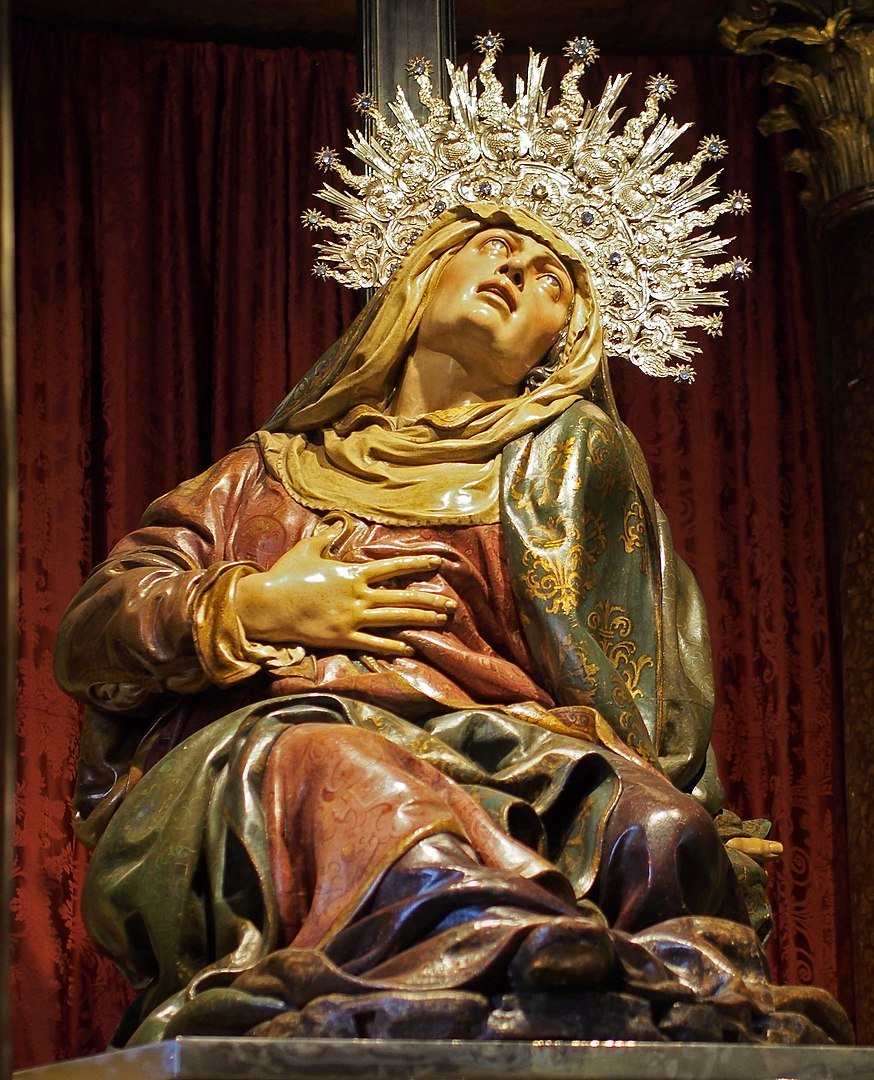
Madonna in Sorrow by Juan de Juni, a colorful statue of the Virgin Mary leaning back on her knees, clutching her breast and looking heavenward, with a silver nimbus around her head

Madonna in Sorrow by Juan de Juni, 1571

Mater Dolorosa: The Sorrowful Mother

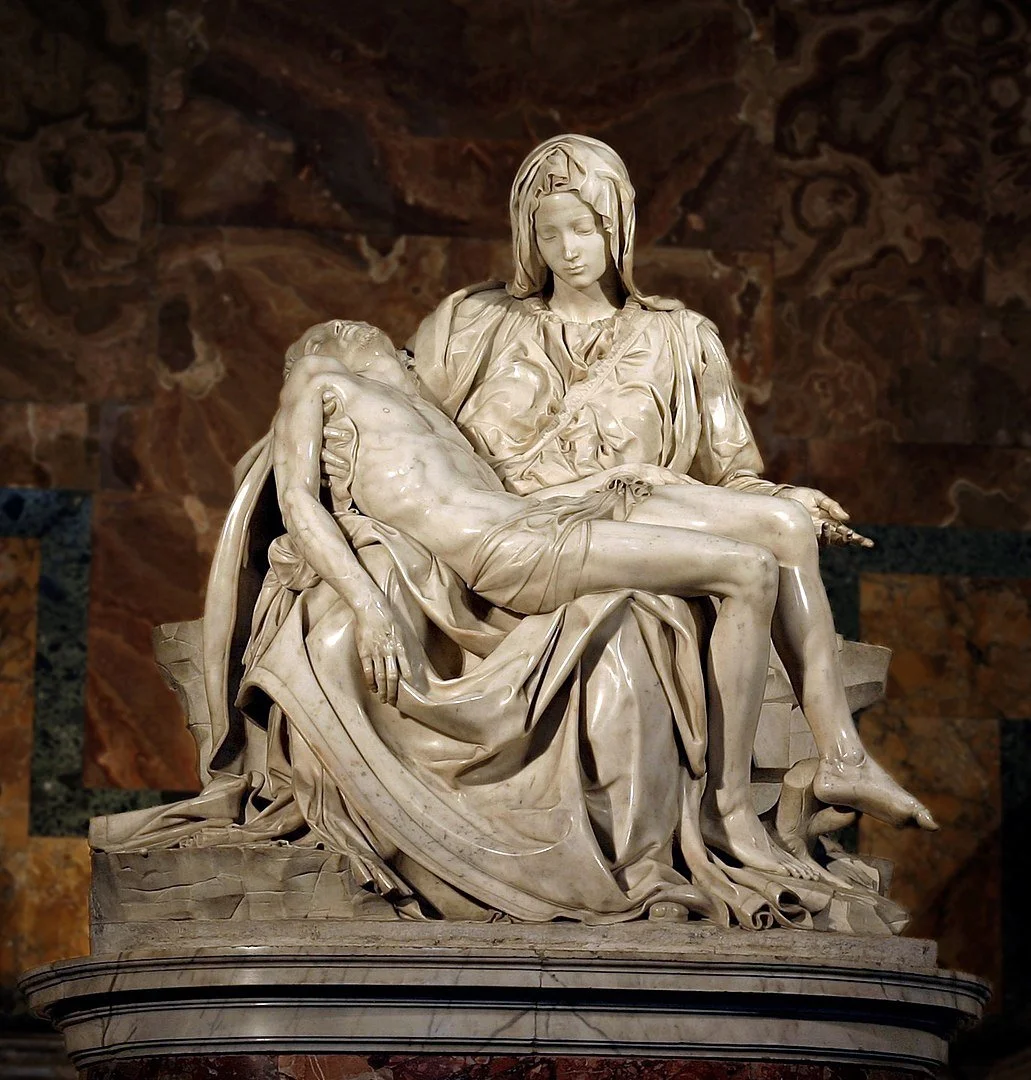
The caregiving image of Mary gave way to a mother mourning her dead son, what’s known as the Mater Dolorosa. The cult began in the 11th century, reaching full fruition in the 14th century in Italy, France, England, the Netherlands and Spain. The culmination of this iconography? Michelangelo’s La Pietà.

La Pietà by Michelangelo, the famous statue of Mary holding the dead body of Christ

La Pietà by Michelangelo, 1499

Again, we have Ancient Egypt, and the surrounding region’s myths, to thank for this representation. The Egyptian goddess Isis sorrowfully wandered the land, collecting the pieces of her dismembered brother-husband, Osiris. When she finds his coffin, she caresses Osiris’ face and weeps. 

And she’s not the only weeping woman of the ancient Middle East. Dumuzi, the shepherd and “true son” of Sumerian myth, was sacrificed to the underworld, tortured by demons (much like Christ later, during his Passion and descent into Hell). The goddess Inanna, the Queen of Heaven, weeps for him.

It seems likely that Christians picked up this iconography — spurred on by the horrors of the Black Death, when the bubonic plague swept the continent, wiping out one-fifth of the entire population. “It aroused penitential fever in a way never seen before, and gave the image of the Mater Dolorosa weighty contemporary significance,” Warner points out. 

Madonna in Sorrow by Titian, a painting showing the Virgin Mary crying, her hands up, palms facing each other

Madonna in Sorrow by Titian, 1554

Once again, Mary’s bodily fluids have healing properties. “The tears she sheds are charged with the magic of her precious, incorruptible, undying body and have the power to give life and make whole,” Warner explains. 

This cult has lasted to the present day. Many of us have heard stories of statues of the Virgin that miraculously weep. 

“Contemporary prudishness has tabooed the Virgin’s milk, but her tears have still escaped the category of forbidden symbols, and are collected as one of the most efficacious and holy relics of Christendom,” Warner says. “They course down her cheeks as a symbol of the purifying sacrifice of the Cross, which washes sinners of all stain and gives them new life, just as the tears of Inanna over Dumuzi fell on the parched Sumerian soil and quickened it into flower.” 

The Virgin of Greater Pain and Transfer of Great Power closeup of the Virgin's face with lace headdress and tears, on a statue from Spain

The Virgin of Greater Pain and Transfer of Great Power


The Black Madonna of Monserrat, a statue of the Virgin Mary and Jesus with dark skin and gold robes and crowns, with Mary holding an orb

The Black Madonna of Monserrat

The Black Madonna: Our Lady of Montserrat

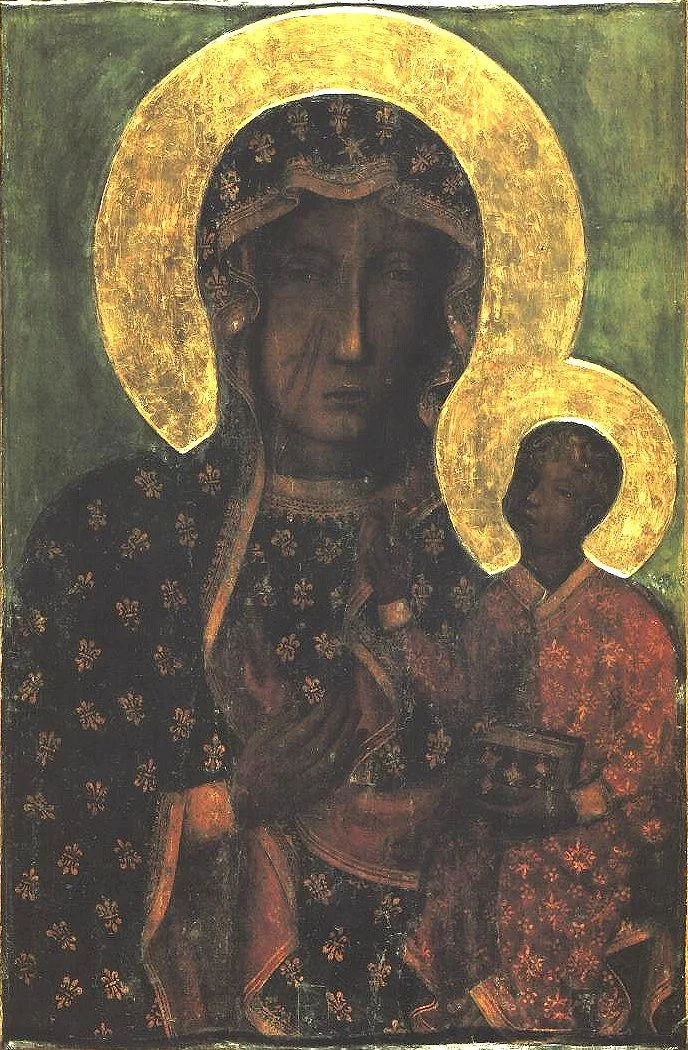
Most Western depictions of Mary present her skin as lily-white, untouched by corruption, despite the fact that she is undeniably Middle Eastern. So it’s all the more surprising to see the emergence of the Black Madonna, a dark-skinned version that became popular among the medieval Benedictine monks in Montserrat, Spain. 

The monks saw the lushness of their mountain as a mirror of Mary. As such, her icon took on aspects of a fertility goddess. 

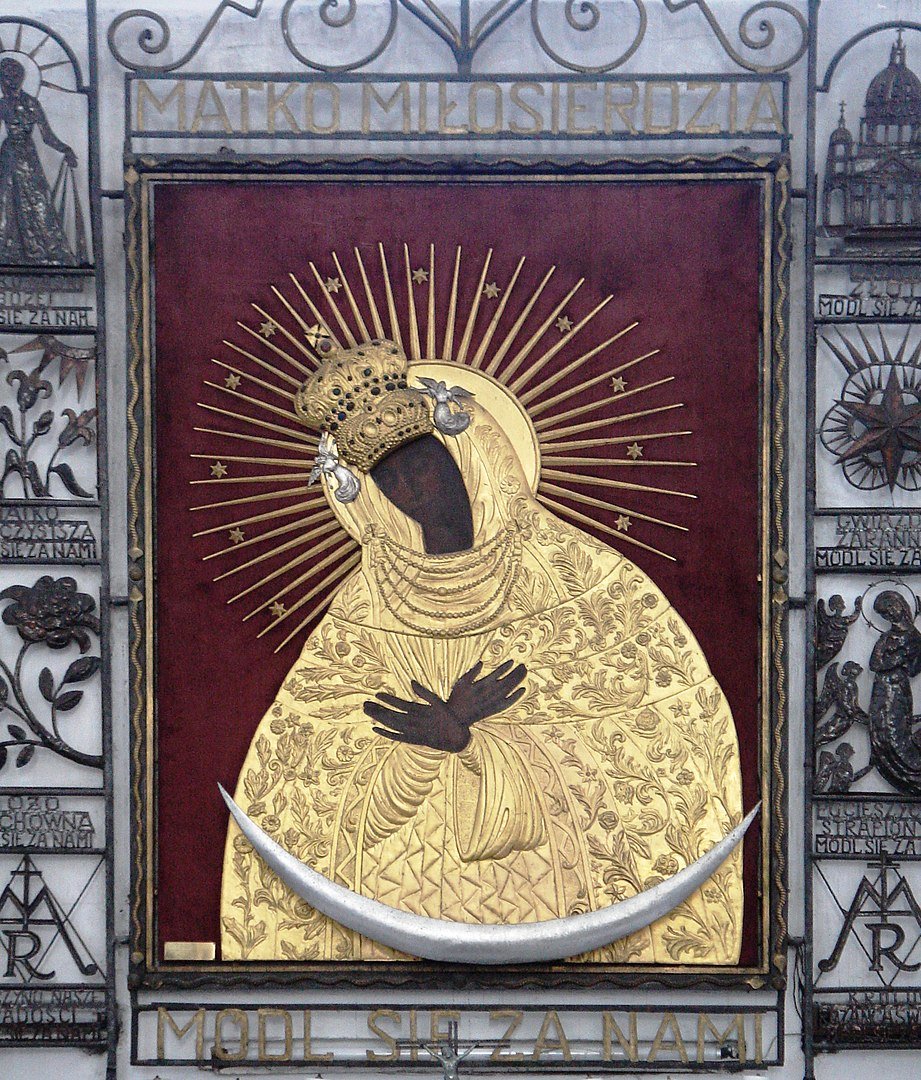
But in a bizarre twist (or perhaps not, given that Mary was a Jew from Judea), the Virgin had dark skin, which led to her being known as the Black Madonna. In fact, she’s known locally as La Moreneta, the Little Dark One. The depiction spread to other places of worship, among them Chartres, Orléans, Rome and Poland. 

The Black Madonna of Częstochowa, Poland, with baby Jesus

The Black Madonna of Częstochowa, Poland

“The Church often explains their blackness in allegorical terms from the Song of Songs: ‘I am black, but comely, O ye daughters of Jerusalem’ (Song of Solomon 1:5),” Warner writes. “[B]ut another theory about their color is even more prosaic: that the smoke of votive candles for centuries has blackened the wood or the pigment, and when artists restored the images, they repainted the robes and jewels that clothe the Madonna and Child but out of awe left their faces black.”

The shrine at Montserrat is one of the longest continuous cults of Mary, especially popular with newly married couples. Here she has dominion over marriage, sex, pregnancy and childbirth — odd for a virgin but not for a fertility goddess. 

The Black Madonna at St. Mary’s Church in Gdansk, Poland

The Black Madonna at St. Mary’s Church in Gdansk, Poland

A gruesome legend illustrates Mary’s power. A woman gives birth to a lump of dead flesh. But when she prays to Our Lady of Montserrat, it begins to move and is transformed into a beautiful baby boy. 

Madonna della Misericordia by Benedetto Bonfigli, showing the Virgin spreading her cloak to protect masses of people, while holy figures surround her, including weapon-wielding angels

Madonna della Misericordia by Benedetto Bonfigli, circa 1470

Madonna della Misericordia: Our Lady of Mercy

In a merging of her roles as mother and queen, a new depiction of Mary emerged in Umbria, Italy at the end of the 13th century. The Virgin was given a massive cloak which she wrapped over the poor souls gathered at her feet. Towering over them and offering protection, this was the Madonna della Misericordia, Our Lady of Mercy. 

Madonna of Mercy by Sano di Pietro, showing the Virgin Mary towering above a group of praying nuns as she envelops them with her green-lined robe

Madonna of Mercy by Sano di Pietro, circa 1440s

After the desolation of the Black Death in the late 1340s, this iconography of Mary became the most popular. Monks and laypeople alike would pray to this aspect of the Virgin, asking her to keep them safe from harm. 

The Virgin of the Caves by Francisco de Zurbarán showing the Virgin Mary in a red dress touching the heads of two kneeling monks from a group covered by her blue cloak, held up by cherubs

The Virgin of the Caves by Francisco de Zurbarán, circa 1655

This Mary is often preternaturally large — and her son, Christ, isn’t anywhere to be found, “suggesting that her mercy, directly given, could save sinners,” Warner writes. But that cuts God and Jesus out of the equation and makes the Virgin a goddess in her own right. 

So while Our Lady of Mercy spread throughout Europe in the 14th and 15th centuries, it was officially declared heterodox (not in accordance with the accepted Catholic doctrine) and banned by the Council of Trent in the mid-1500s.

Dormition of the Virgin fresco by Frangos Katelanos, showing the Virgin Mary dead with Jesus and other holy figures around her

Dormition of the Virgin fresco by Frangos Katelanos, 1548

Divine Dominion Over Death 

The Virgin Mary has worn many guises over the years, from a gentle breastfeeding mother to imperial queen to tutelary goddess. 

“If travelers from another planet were to enter churches, as far flung as the National Shrine of the Immaculate Conception in Washington, D.C., or the Catholic cathedral in Saigon, or the rococo phantasmagoria of New World churches, and see the Virgin’s image on the altar, it would be exceedingly difficult for them to understand that she was only an intercessor and not a divinity in her own right,” Warner points out. 

There are surely many factors that have led to Mary’s enduring appeal, starting with her co-opting of ancient mythology like the Egyptian goddess Isis. Many cultures find it fitting to worship the female spirit — something glaringly missing in the often-misogynistic views of Christianity. 

Detail from Assumption of Mary by Peter Paul Rubens showing the Virgin Mary in red dress and blue cloak flying up to Heaven surrounded by cherubs

Detail from Assumption of Mary by Peter Paul Rubens, circa 1617

But Warner has a theory: “For although the Virgin is a healer, a midwife, a peacemaker, the protectress of virgins, and the patroness of monks and nuns in this world; although her polymorphous myth has myriad uses and functions for the living, it is the jurisdiction over her death accorded her in popular belief that gives her such widespread supremacy.”

She could be on to something. Think of the final words of the Hail Mary, the best-loved prayer in Catholicism: “Holy Mary, Mother of God, pray for us sinners now and at the hour of our death.” –Wally

Why Did Christ Have to Be Born of the Virgin Mary?

Virgin births weren’t unusual in pagan times — just in the Judeo-Christian tradition. Here’s how sex got tangled up with the idea of sin, and by extension, chastity became the ultimate sign of virtue. 

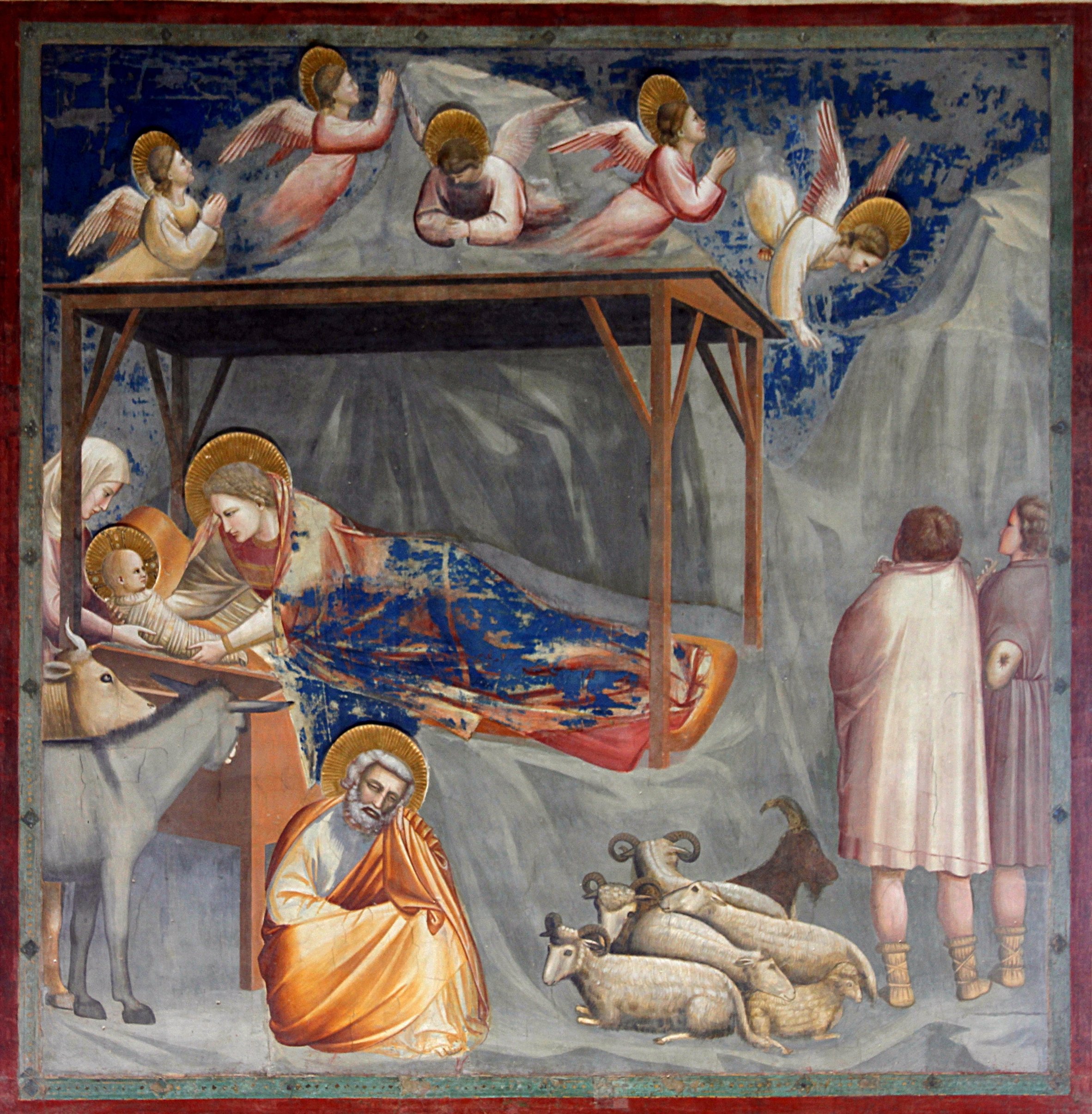
The Nativity by Giotto, a faded painting of the birth of Christ, with Mary lying by him in the manger, with rams and Joseph below and angels above

Nativity, Birth of Jesus by Giotto, circa 1305

Early Christians needed their savior to have been born of a woman without sin, and that included the act of fornication. Greek myths could have influenced their theology.

Mary, the mother of Christ, is held up as one of a kind among humans for getting pregnant and giving birth without ever having sex. 

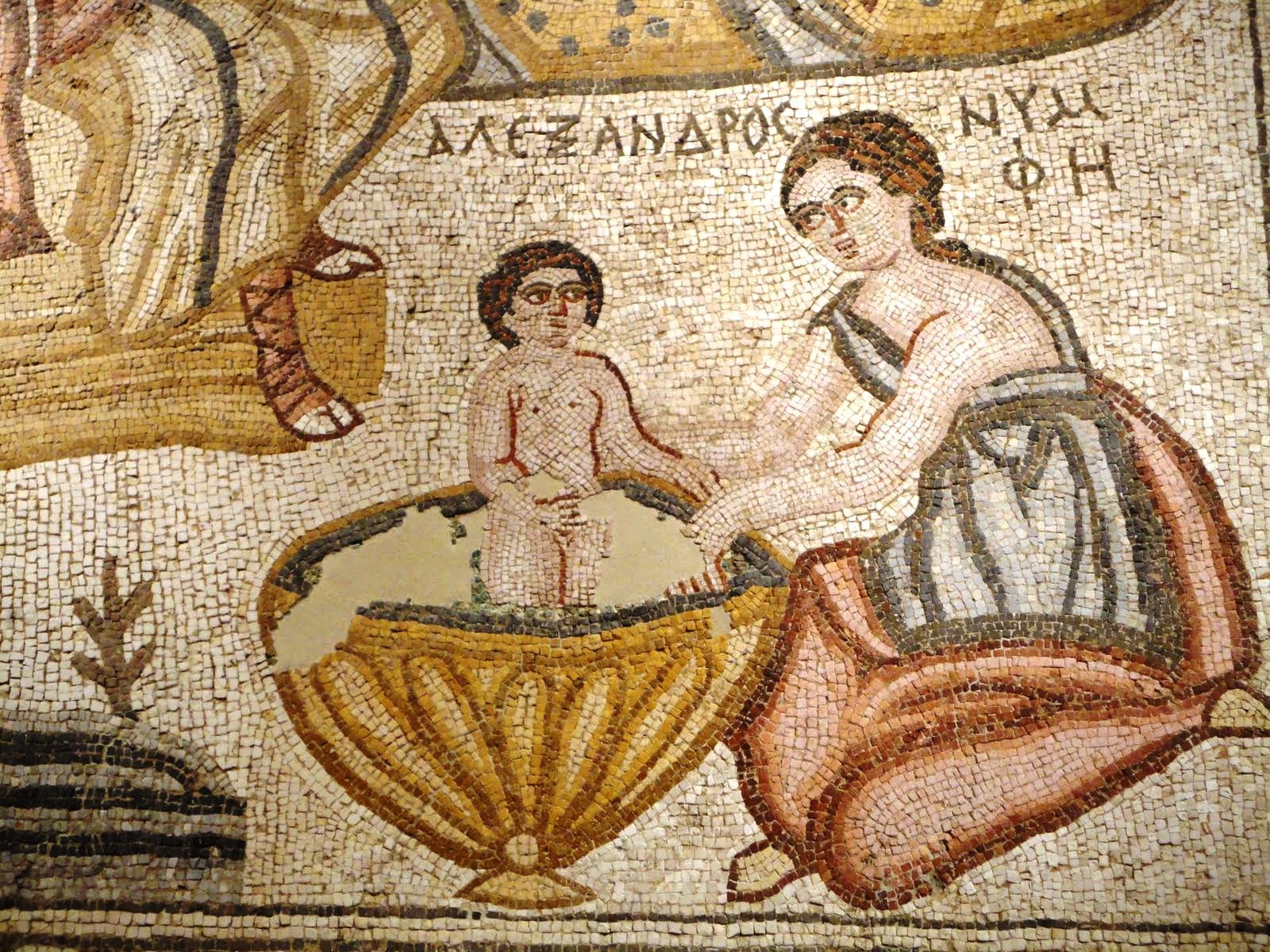
But believe it or not, so-called virgin births weren’t uncommon in the pagan world. Pythagorus, Plato and Alexander the Great were all said to have been born of virgins by the power of a holy spirit. 

Alexander the Great’s mom dreamed of a lightning bolt striking her vagina — and lo and behold! She became pregnant with the future king of Macedon. In antiquity, “virgin” births weren’t all that uncommon.

“Christians, aware of the antique pantheon, are still worried by the parallel between Christ’s story and the dozens of virgin births of classical mythology,” Maria Warner wrote in her 1976 work Alone of All Her Sex: The Myth and the Cult of the Virgin Mary.

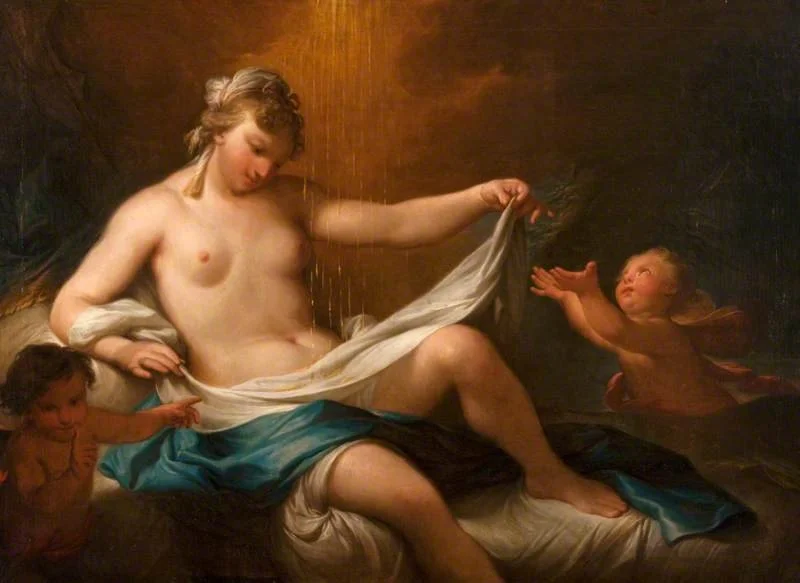
So how exactly does one conceive without fornication? We can turn once again to paganism. In Greek mythology, the closest parallel seems to be when Zeus turned himself into a shower of gold and impregnated Danae, who gave birth to the hero Perseus.   

Andrea Casali's painting Danae and the Golden Shower, which shows a nude woman lifting her dress to receive Zeus in the form of a golden downpour, with a cherub on either side

Danaë and the Golden Shower by Andrea Casali, circa 1750

The Greek myth of Zeus impregnating a woman in the form of a golden rain could have inspired the form the Holy Ghost took with the Virgin Mary.

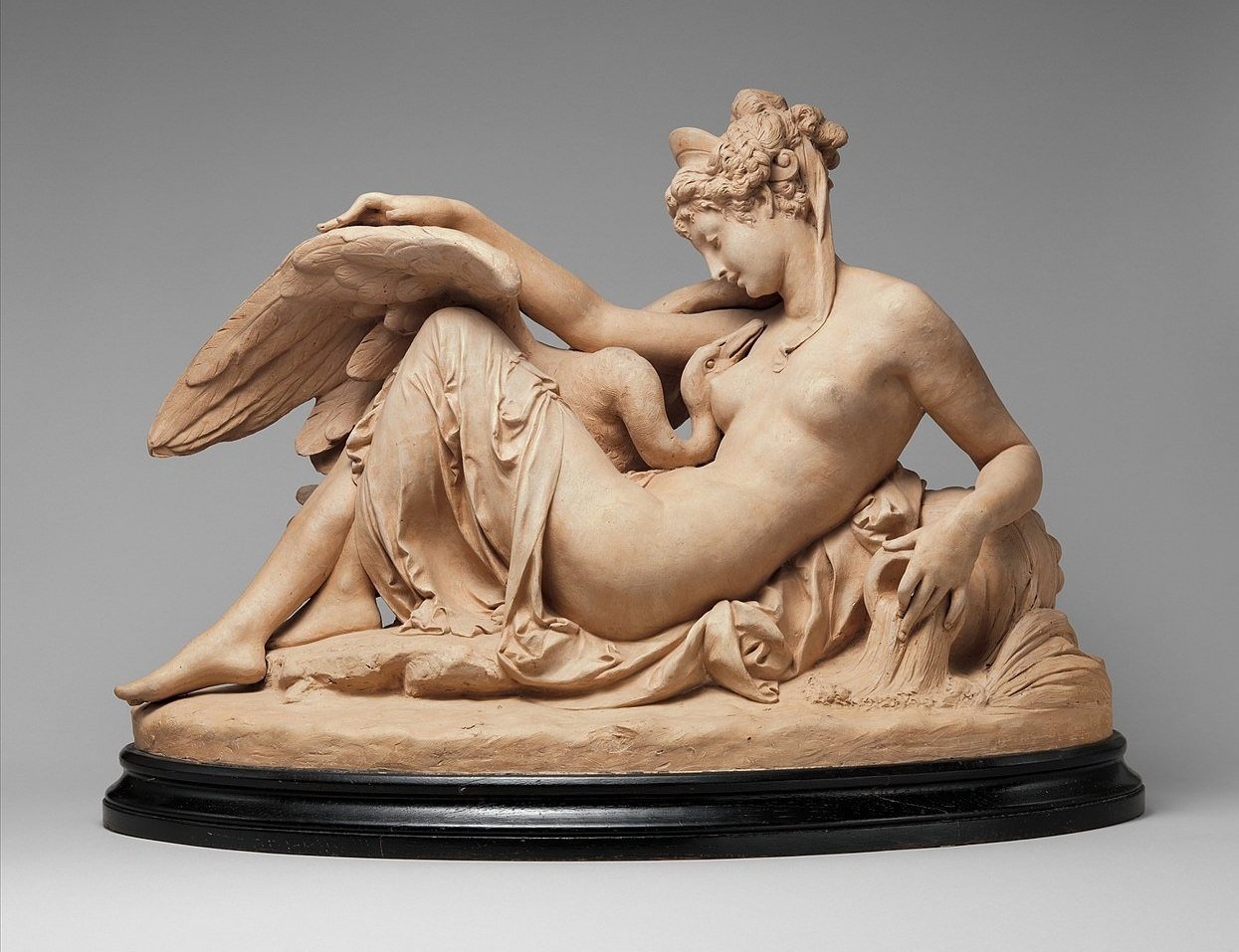
Sculpture of Leda and the Swan, with the nude woman reclining as Zeus, in the form of a swan, rests its head upon her breast as she touches its wing

The Greek god Zeus metamorphosed into a swan to couple with Leda. Did this bird imagery inspire the Holy Ghost’s representatoin as a dove?

Then again, the Holy Ghost is often depicted as a dove, and in another encounter, Zeus, that shapeshifting, lecherous cad, adopted the form a bird as well: He became a swan to seduce (or, perhaps, rape) Leda, mother of Helen of Troy, the twins Castor and Pollux, and another daughter, Clytemnestra.

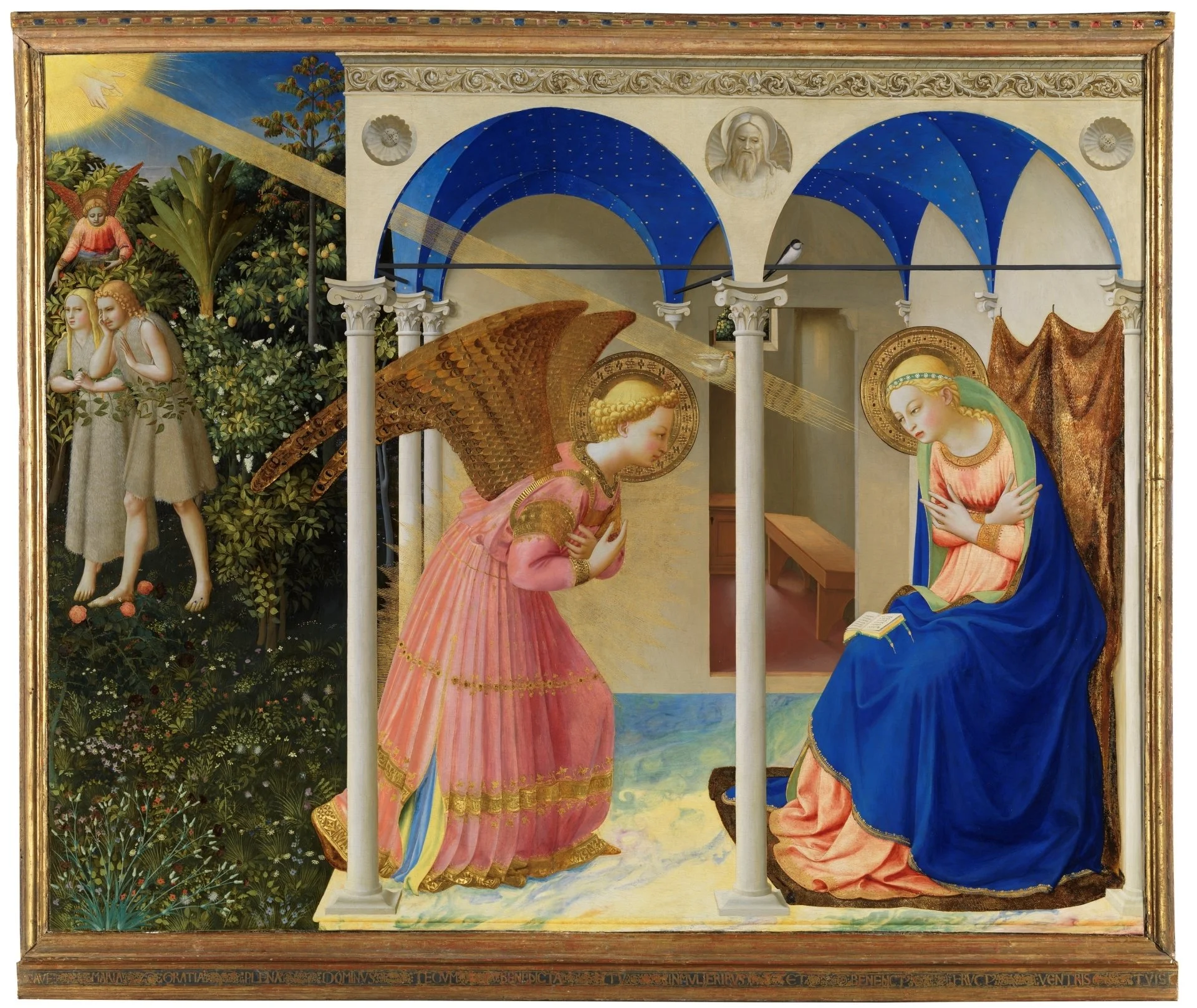
Fra Angelico's The Annunciation, where the Virgin Mary, in a colonnade, is told by the Angel Gabriel that she'll give birth the the Son of God while a shaft of light falls upon her face, and Adam and Eve as seen banished from the Garden of Eden

The Annunciation by Fra Angelico, 1445

The shaft of light symbolizing the Holy Ghost isn’t too different from Danae’s shower of gold. Notice the contrast of the Virgin with Adam and Eve being expelled from the Garden of Eden to the left.

Connecting Sex With Sin

Of course in these cases, Zeus is copulating with the women. It’s an act of lust, and, at least for the god, one of pleasure. That’s in stark contrast to the Christian idea of Mary’s conception of Jesus: She remains a virgin, her maidenhead unbroken, and there’s no animal-like rutting. 

This was an essential part of the Christ story. The fathers of the Christian church connected sex with sin early on, taking their cue from Genesis and the Garden of Eden: Fornication becomes necessary for reproduction, and the pain of childbirth a curse that Eve, and all women to follow, must bear. 

Sex was seen as the ultimate sin. Saint Augustine wrote in City of God, in 426, that the passion aroused by lovemaking was sinful — though the holy act of propagation was not. In a similar vein, he added, “We ought not to condemn marriage because of the evil of lust, nor must we praise lust because of the good of marriage.”

“[I]n this battle between the flesh and the spirit, the female sex was firmly placed on the side of the flesh,” Warner wrote. “For as childbirth was woman’s special function, and its pangs the special penalty decreed by God after the Fall, and as the child she bore in her womb was stained by sin from the moment of its conception, the evils of sex were particularly identified with the female. Woman was womb and womb was evil.”

Painting of The Annunciation from the high altar of St. Peter's in Hamburg, Germany, known as the Grabower Altar

The Annunciation from the Grabower Altar in St. Peter’s in Hamburg, Germany, 1383

Saint Ephrem the Syrian wrote, “Perfectly God, he entered the womb through her ear.” The idea was that by conceiving via her ear, Mary remained a virgin.

The Virgin Mary: Not Your Typical (Sinful) Woman

Mary’s impregnation is, in contrast, a serene, holy act. It’s possibly tied to the very words of the Angel Gabriel when he announces her role in bringing forth the Savior. In ancient times, some people actually believed pregnancy could come about through the ear. (It gives a whole new meaning to Iggy Pop’s lyric “Of course I’ve had it in the ear before.”)

A sixth century hymn that’s still sung today goes:

The centuries marvel therefore 
that the angel bore the seed,
the virgin conceived through her ear, 
and believing in her heart, became fruitful.

The son of God chose to be born of a virgin, according to Augustine, because it was the only way to enter the world without sin. So, “Let us love chastity above all things,” he wrote, “for it was to show that this was pleasing to Him that Christ chose the modesty of a virgin womb.”

A Byzantine depiction of the Fall, where an angel points a sword and forces Adam and Eve, wrapped in cloaks, out of the Garden of Eden

Painful births were one of God’s punishments for Eve eating the fruit of the Tree of Knowledge of Good and Evil. But Jesus’ mother couldn’t be connected with anything so sinful, so she was said to be a virgin, pure and intact.

Slandering the Virgin Mary

The early Christian church had to defend itself against rumors that painted Mary in a negative light. Jews and pagans in Alexandria, for example, were saying that Jesus wasn’t conceived by God — instead, he was the bastard child of an incestuous union of Mary and her brother. 

It doesn’t seem far-fetched nowadays to question a scientific impossibility — but at the dawn of Christianity, virgin births wouldn’t have been too big of a surprise. For early Christians, anything to do with female bodily functions was dirty and sinful. So they would have insisted their savior had to have come from an inviolate womb. And, despite evidence to the contrary, Mary became a virgin. –Wally


Shocking Revelations About the Virgin Mary in the Bible

The Gospels barely mention Mary. They get her name wrong. They show Jesus being rude to her. And they make us question if she was even a virgin.

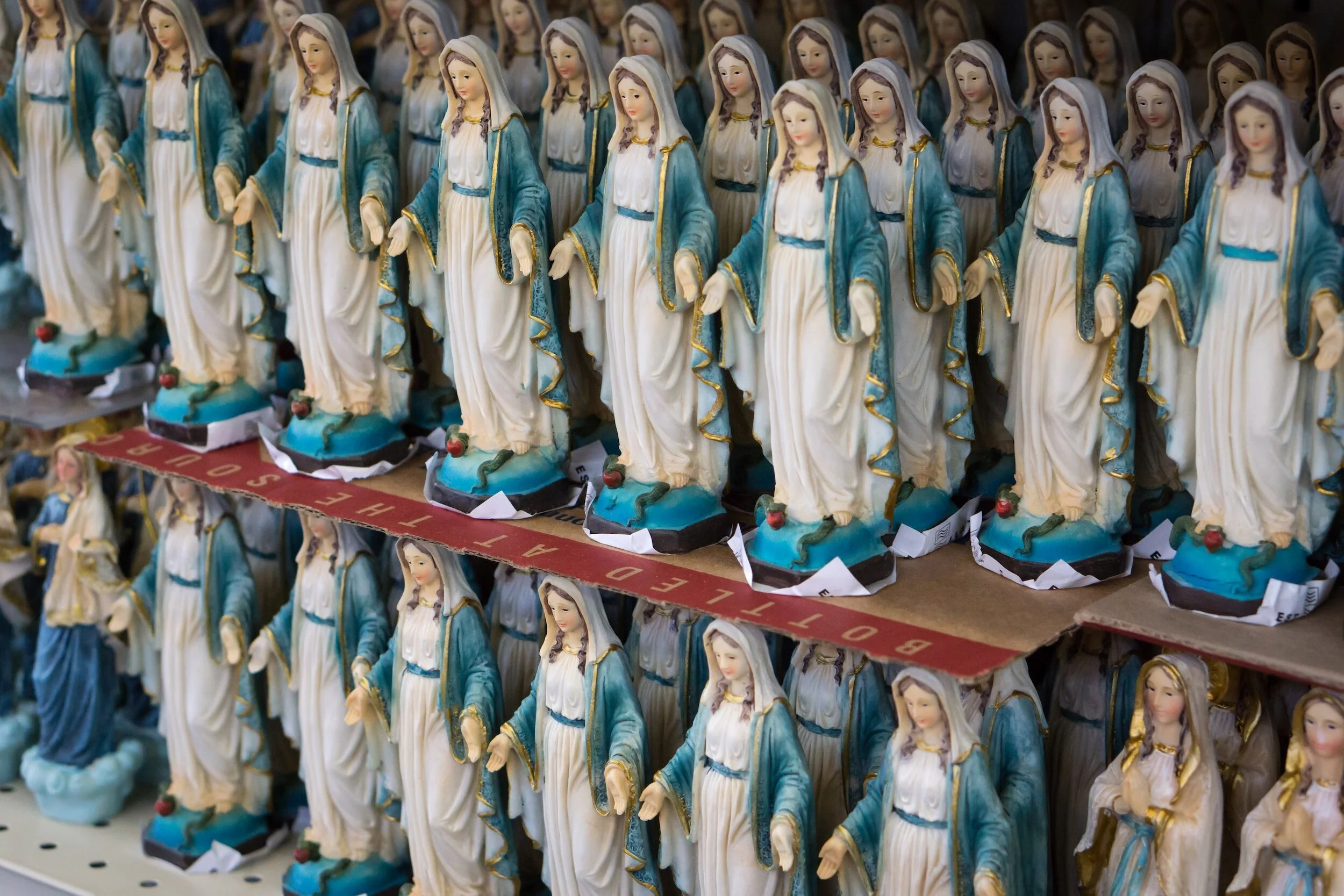
Rows upon rows of small Virgin Mary statues for sale, showing her in a white dress and head covering and blue robe and sash

The worship of Mary has taken over Catholicism. But there’s a surprisingly scant amount of appearances by her in the New Testament — and those that are there can be problematic.

The figure of the Virgin Mary holds a place of honor in Christian theology and devotion, where she’s revered as the mother of Jesus and an embodiment of purity and divinity. And for Catholics, she’s essentially a goddess in her own right — and some would argue, perhaps more revered than Jesus himself.

However, a closer examination of the biblical texts reveals a series of astonishing revelations that challenge commonly held beliefs about Mary. In her book Alone of All Her Sex: The Myth and the Cult of the Virgin Mary, Marina Warner presents a compelling analysis of the Gospel accounts, shedding light on the limited mentions of Mary, discrepancies in her portrayal and even doubts about her virginity. Published in 1976, Warner’s research continues to shock almost 50 years later.

The amount of historical information about the Virgin is negligible. Her birth, her death, her appearance, her age are never mentioned.

Of the four declared dogmas about the Virgin Mary — her divine motherhood, her virginity, her immaculate conception and her assumption into heaven — only the first can unequivocally be traced to Scripture.
— Maria Warner, "Alone of All Her Sex"
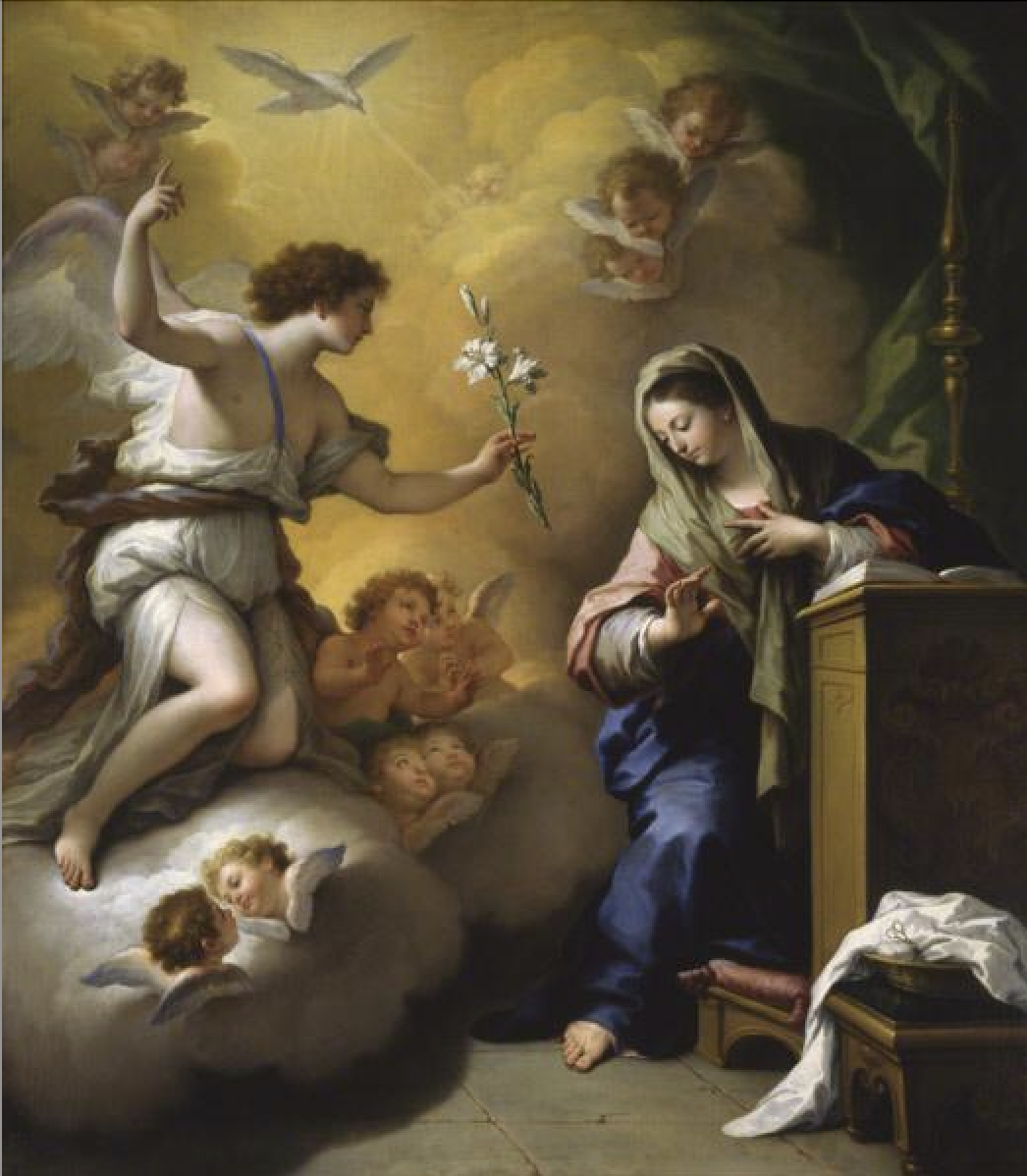
The Annunciation by Paolo de Matteis showing the Angel Gabriel appearing to the Virgin Mary telling her that she'll give birth to Jesus

The Annunciation by Paolo de Matteis, 1712

There’s a lot of beliefs about Mary that don’t come from the Bible. But one story that does is the Angel Gabriel telling her she’ll get pregnant by the Holy Spirit and will give birth to the Son of God.

1. Mary is hardly mentioned in the Gospels.

“The amount of historical information about the Virgin is negligible,” Warner writes. “Her birth, her death, her appearance, her age are never mentioned.” 

Warner explains that “the sum total of the Virgin’s appearances in the New Testament is startlingly small plunder on which to build the great riches of Mariology,” the part of Christian theology devoted to Mary. “Of the four declared dogmas about the Virgin Mary — her divine motherhood, her virginity, her immaculate conception and her assumption into heaven — only the first can unequivocally be traced to Scripture,” Warner continues.

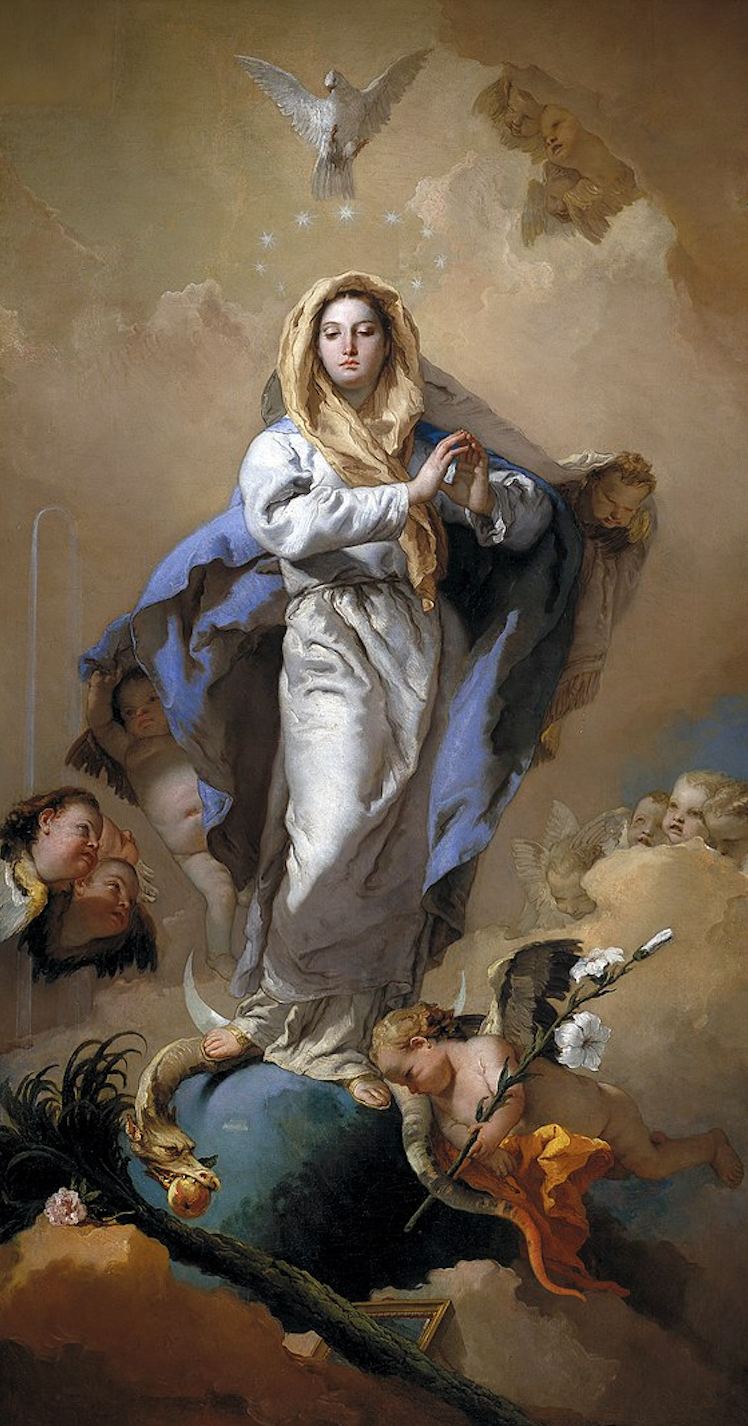
The Immaculate Conception by Tiepolo, showing the Virgin Mary in a white robe with blue cloak, her hands together, cherubs around her in the clouds and a white dove above and a crown of stars

The Immaculate Conception by Giovanni Battista Tiepolo, 1769

The idea that Mary was born without sin like the rest of us can’t be found anywhere in the New Testament.

In the Bible, the Angel Gabriel appears to Mary of Nazareth. At first she’s troubled and confused, but Gabriel prophesizes Jesus’ birth, to which Mary answers (“her most precious speech in Mariology,” Warner states), “How shall this be, seeing I know not a man?” (Luke 1:34). 

Gabriel explains, “The Holy Ghost shall come upon thee, and the power of the Highest shall overshadow thee: therefore also that holy thing which shall be born of thee shall be called the Son of God” (Luke 1:38).

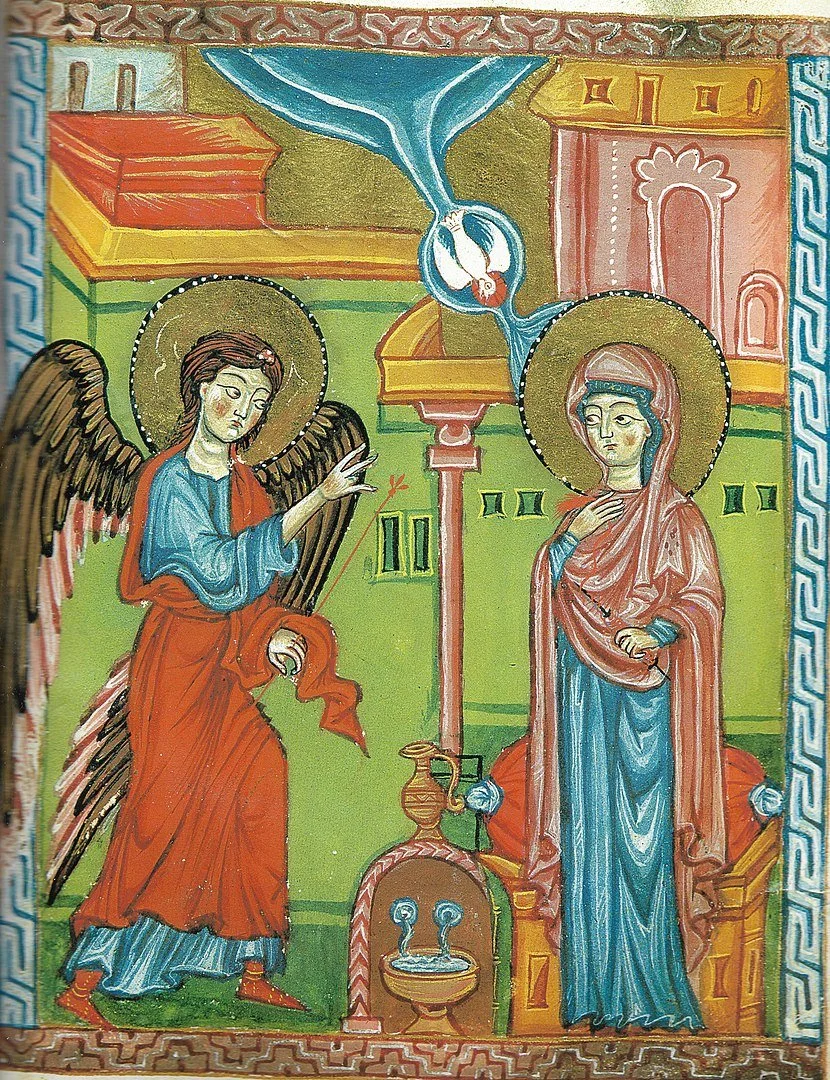
Byzantine depiction of the Annunciation by Gladzor, when the Angel Gabriel announces to Mary of Nazareth that she will give birth to the Savior

The Annunciation, from an illuminated manuscript created at Gladzor Monastery in Armenia by Toros Taronatsi in 1323

Strangely enough, though, the Gospel writers can’t even get her name right: She’s called Mariám 12 times and Maria seven times, according to Warner. 

Only Luke hits the major moments in what has become our understanding of the Virgin Mary. Even so, in Luke’s Gospel, Mary speaks a mere four times. 

In Matthew, she is silent. After the account of Jesus’ birth, Matthew mentions Mary only one more time.

Mark has a single mention of Mary (and it’s hardly flattering as you’ll see). 

John’s Gospel was written after the other three, “and it differs so considerably from them that for a time even its inclusion in the canon was at risk,” Warner writes. In it, the mother of Jesus is never mentioned by name, and it doesn’t repeat any of the incidents concerning her from the other Gospels. 

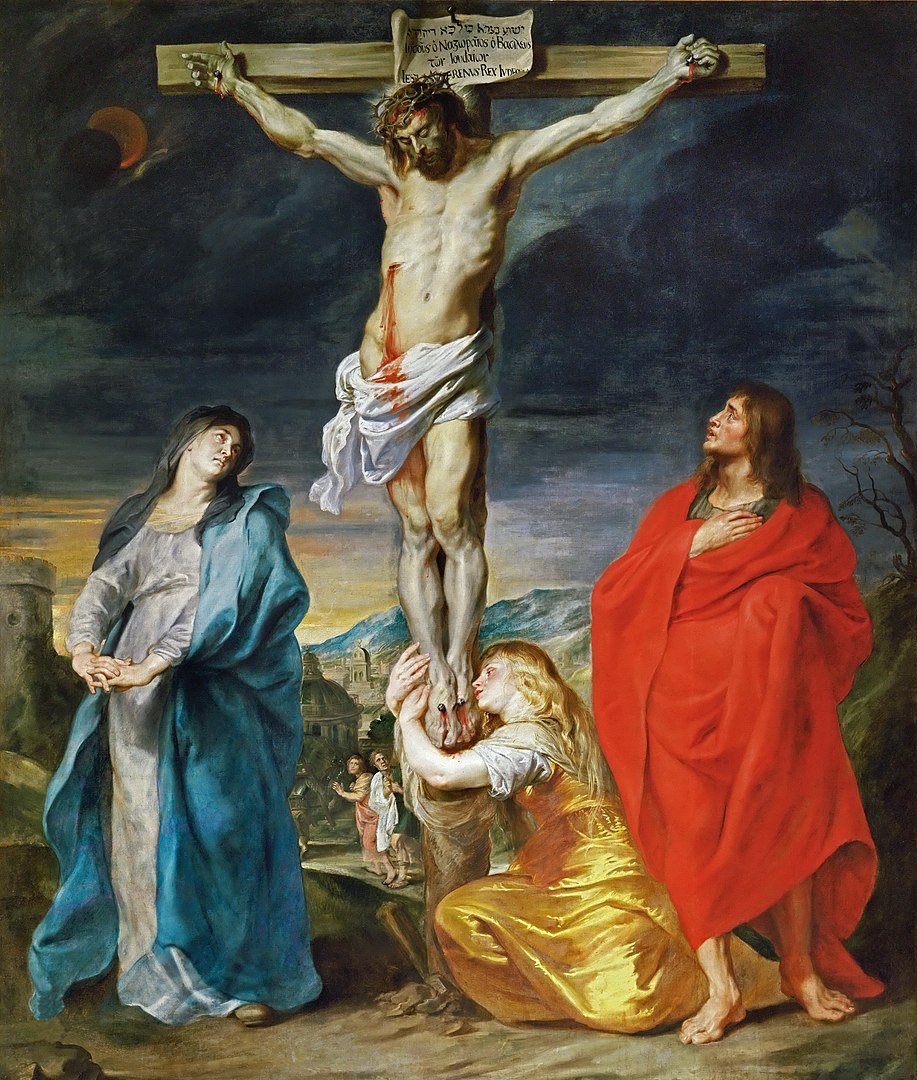
The Crucifixion by Van Dyck, with Virgin Mary on the left, Mary Magdalene holding his feet, and John in a red cloak on the right, with Jesus dying on the Cross in the center, a wound bleeding from his torso

Christ Crucified With the Virgin, Saint John and Mary Magdalene by Anthony van Dyck, 1619

Jesus wanted to make sure Mary and John viewed each other as family — and then he was able to die.

She’s shown, perhaps, in the best light in John at the Crucifixion. As Jesus is dying on the cross, he sees his mother and “the disciple standing by, whom he loved” (i.e., John) and calls out, “Mother behold thy son!” and “Son behold thy mother!” John takes Mary into his home from that time on, the Gospel says. And Jesus, “knowing that all things were now accomplished,” drank vinegar and hyssop, and said, “It is finished” — “and he bowed his head, and gave up the ghost” (John 19:26-30). 

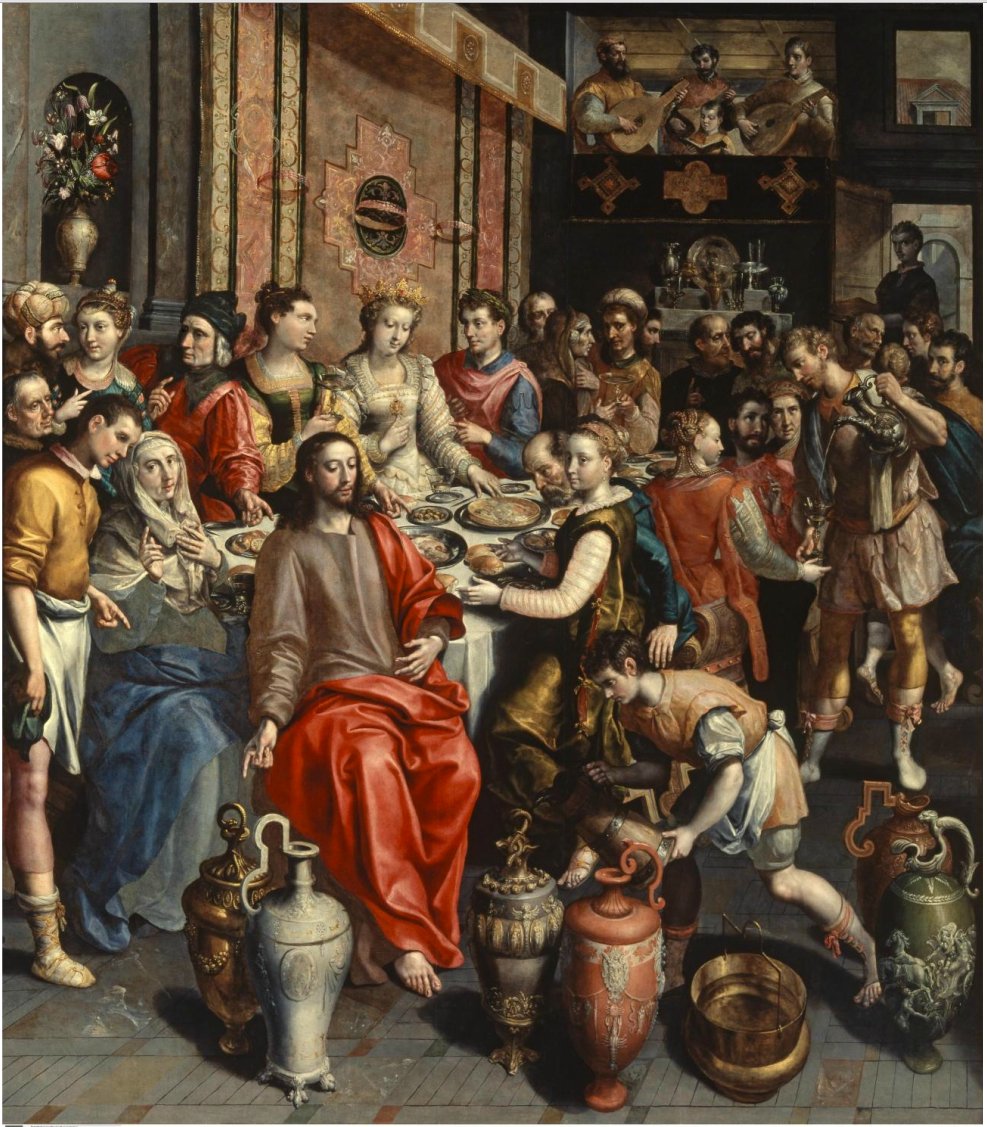
The marriage at Cana by Marten de Vos, a painting showing a crowd around a table with Jesus in a red robe, Mary his mother next to him in blue and white

The Marriage at Cana by Marten de Vos, 1597

Jesus is snippy with Mary at the event where he turns water into wine — a biblical passage that makes many a Catholic cringe.

2. Jesus is surprisingly rude to his mother.

In Mark’s recounting, Jesus has been preaching and attracting crowds, but his friends decide he has lost his mind, and his charisma is the work of the Devil (Mark 3:21). They call upon Jesus’ mother and brethren for help. Jesus asks, “Who is my mother or my brethren?” Then, looking around at those who have gathered to hear him, he declares, “Behold my mother and my brethren! For whosever shall do the will of God, the same is my brother, and my sister, and my mother” (Mark 3: 34-5). “Thus Jesus rebuffs his earthly family to embrace the larger family of his spiritual fellowship,” Warner writes. 

Matthew and Luke feature the same story — but by the time Luke tells it, he’s defending Mary and the rest of the family, stating that they “could not come at him for the press” of the crowd (Luke 8:19). 

The episode is paralleled later in Luke. A woman in a crowd calls out, “Blessed is the womb that bare thee, and the paps which thou hast sucked.” Jesus states, “Yea rather, blessed are they that hear the word of God, and keep it” (Luke 11:7-8). “Mary is not necessarily excluded from Jesus’ reply, but it certainly rings harshly,” Warner writes, adding, “The Catholic Church has consistently overlooked the hard-heartedness in Jesus’ words.”

John tells of the miracle at Cana, one of two conversations between Jesus and his mother (John 2:3-5):

Mother: They have no wine.

Jesus: Woman, what have I to do with thee? Mine hour is not yet come.

Mother [to the servants]: Whatsoever he saith unto you, do it. 

Jesus goes on to turn water into wine. “Mary, apparently rebuffed quite brutally by her son, understands that he will nevertheless perform a miracle,” Warner explains. 

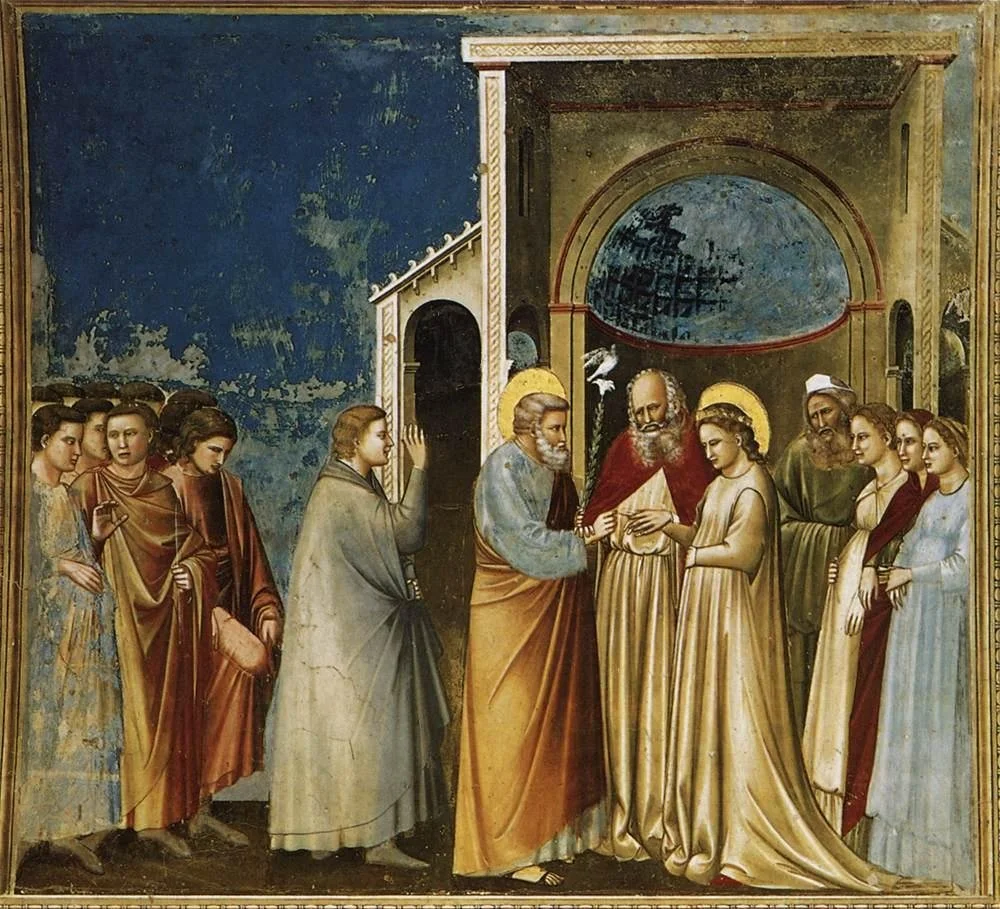
Giotto di Bondone's painting Marriage of the Virgin, showing Joseph and Mary getting married

The Marriage of the Virgin by Giotto, 1306

The big question is: Did Joseph and Mary have sex after she gave birth? It’s the most likely explanation for Jesus’ brothers and sisters.

3. Her very virginity is at question.

For many Christians, it’s unfathomable to imagine that the Virgin Mary, whose moniker is tied to her purity, might be the result of a poor translation. “[A]s for her virginity,” Warner writes, “the evangelists, far from asserting it, raise a number of doubts.” 

Of all the Gospels, only Matthew makes a clear statement about the virgin birth. He says that Jesus was conceived by the power of the Holy Ghost before Mary and Joseph “came together” (Matthew 7:20). 

But Matthew’s writer was using the Greek Septuagint translation of the Bible, where the Hebrew word “almah,” meaning a young girl of marriageable age, became “parthenos” in Greek — a word that carries a strong connotation of virginity.

Catholics “hold (not as an article of faith, but as a cherished and ancient belief) that Mary was virgo intacta post partum, that by special privilege of God she, who was spared sex, was preserved also through childbirth in her full bodily integrity,” Warner explains. Which, one has to imagine, means her hymen was intact. 

But Matthew’s language seems to suggest that Mary and Joseph had sex after the birth of Jesus: “Then Joseph … took unto him his wife: and knew her not till she had brought forth her first born son” (Matthew 1:24-5). Yes, that’s “knew” in the biblical sense. It’s basically saying Joseph and Mary didn’t have sex until after Jesus was born. But they did eventually do so — Mary didn’t remain a virgin. 

Th painting Darstellung Christi im Tempel by Hans Holbein, showing Mary in white holding up a tiny baby Jesus, presenting him in the Temple to a bearded priest

The Presentation of Christ in the Temple by Hans Holbein the Elder, 1501

If Mary was so pure, why did she have to undergo a period of cleansing before she could present Jesus in the temple?

Also problematic: Mary gives birth to Jesus and enters the temple only after the time for her purification has elapsed. Under Mosaic law, a woman must be cleansed of the impurity incurred at childbirth. But why would that be necessary if Mary was, miraculously, still a virgin?

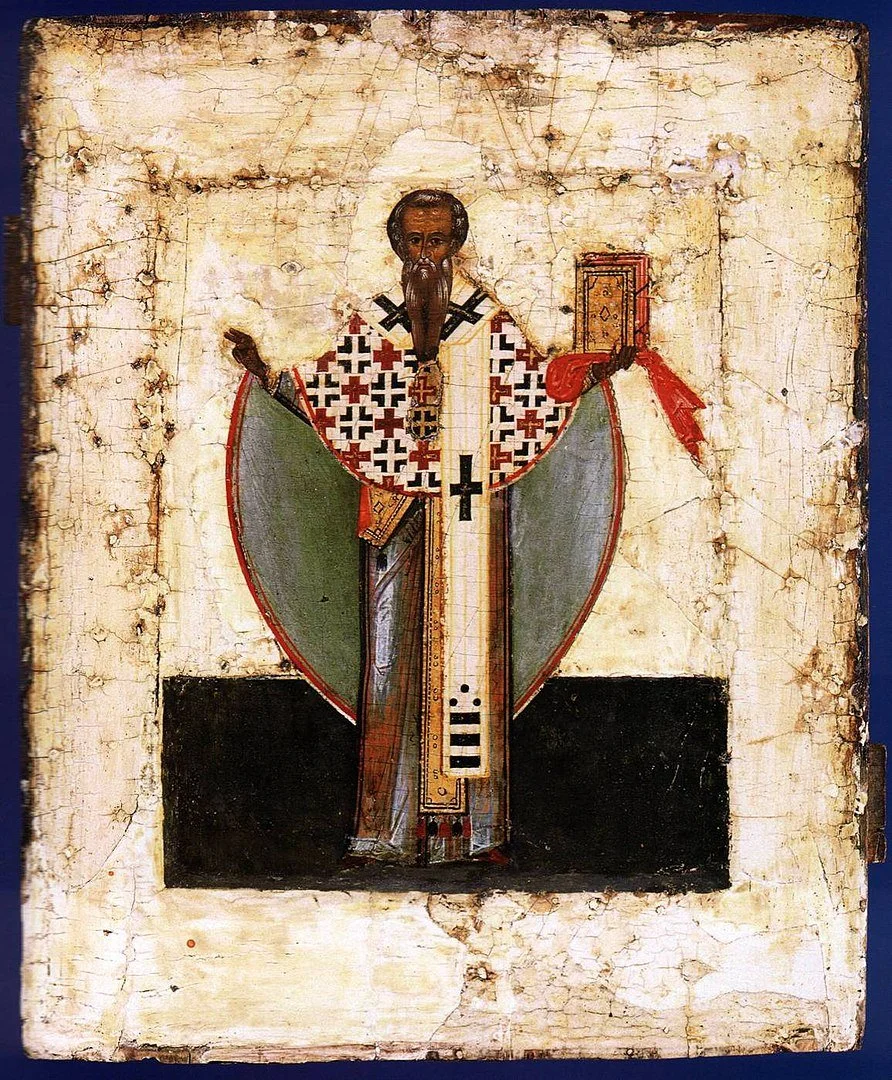
James the Just icon showing him with a long beard and cross-covered clothes, holding up a book

A 16th century Russian icon of James the Just, one of Jesus’ siblings

And then there’s the issue of Jesus’ siblings, mentioned in Matthew, Mark and Luke. Some early thinkers of the Greek church came up with a solution that has no proof in the Bible: Joseph was a widower, and those children were from an earlier marriage. 

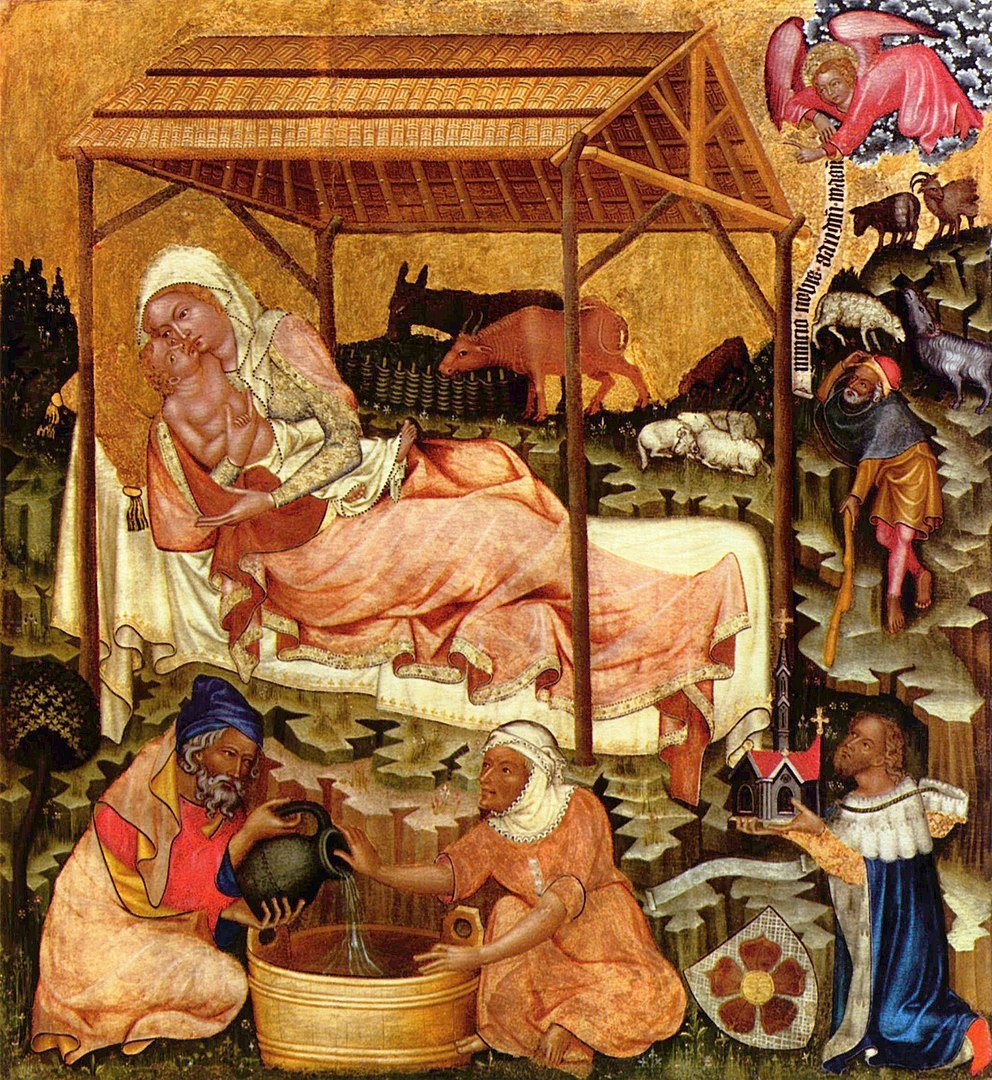
The birth of Christ by Meister von Hohenfurth, showing Mary kissing baby Jesus in a makeshift bed in an open-aired manger, livestock in the background, and a man and woman pouring water in the foreground

The Birth of Christ by Meister von Hohenfurth, circa 1350

Rethinking the Virgin Mary

Warner’s groundbreaking work Alone of All Her Sex challenges conventional beliefs surrounding the Virgin Mary, drawing attention to the limited scriptural references, Jesus’ puzzlingly brusque behavior to his mother and the ambiguity surrounding her virginity. These shocking revelations prompt a reevaluation of deeply ingrained perceptions and invite further exploration of the complex figure at the heart of the Christian and Catholic faiths. –Wally