lammas

6 Lammas and Lughnasadh Spells for Protection, Truth and Finishing What You Started

Mark the first harvest with Lammas spells for love, luck, protection and clarity — and learn how to cut, keep and sweeten what’s actually working.
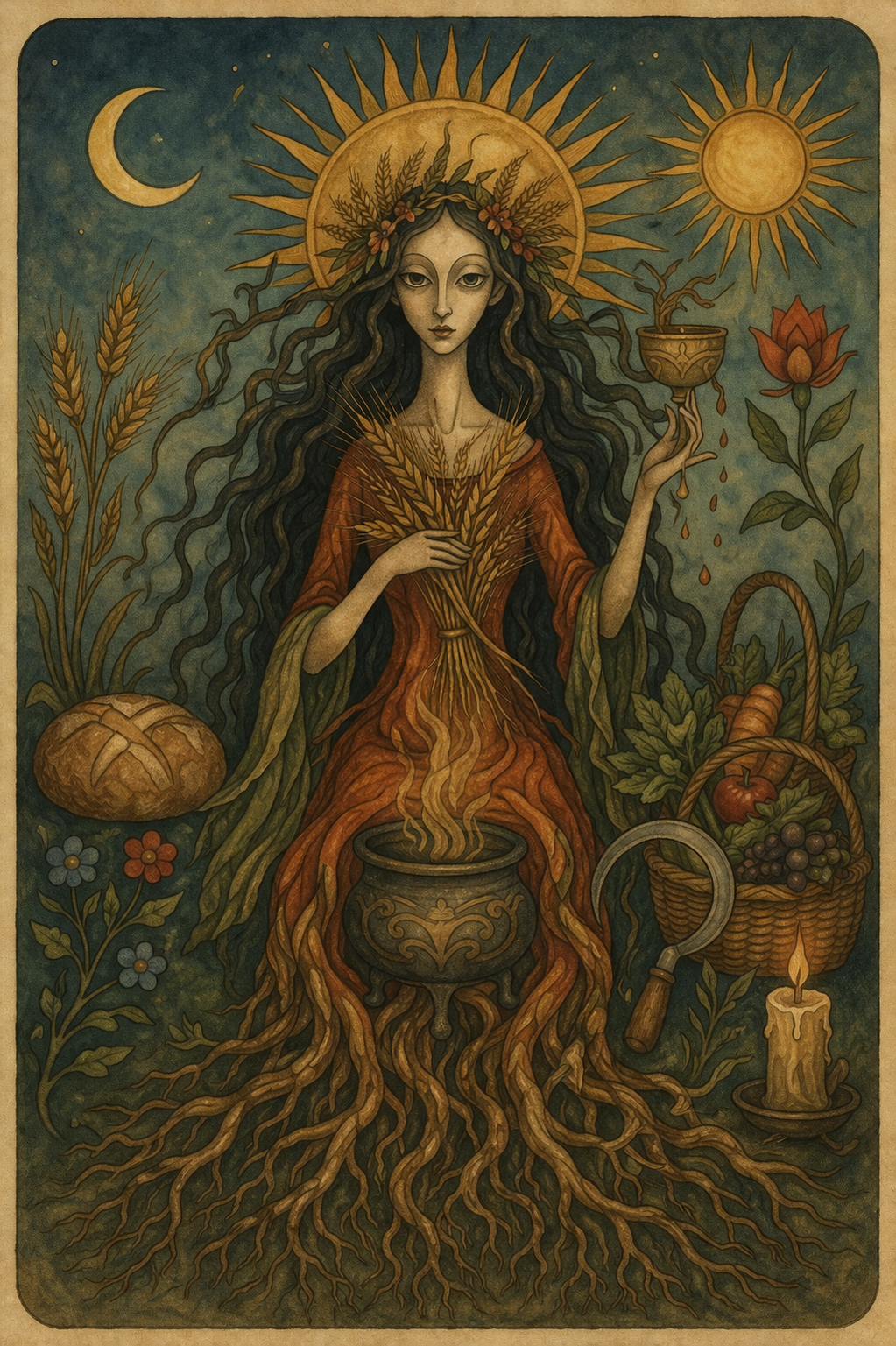
A Wiccan woman casting spells at Lammas, with the moon, sun, wheat, a chalice, flowers, bread, a basket of food, as her dress becomes tree roots around a flaming cauldron

By the time Lammas — also known as Lughnasadh (pronounced Lou-nuh-sah) — arrives, energy has shifted. The heat of Litha hasn’t disappeared, exactly, but it’s no longer reckless. The days are still long, the sun still strong, but something underneath it all has started to tighten, to narrow, to ask a quieter question: What, exactly, was all of that for?

Lammas is the first answer.

This is the moment of the first harvest, when what you planted back at Ostara — and pushed into full bloom through Litha — finally has to show up as something real. Something usable. Something you can hold in your hands. 

Not everything makes it. Some things were never going to. And Lammas doesn’t pretend otherwise.

That’s why the magic here feels different.

It’s about choosing what to keep. What to cut. What to protect. What to sweeten, strengthen or walk away from entirely.

Because the Wheel keeps turning. After Lammas comes Mabon, when balance returns and the full harvest arrives. By then, the decisions you make now will already be in motion. What you save will grow. What you cut will be gone. What you ignore might quietly shape itself anyway.

These spells lean into that energy directly. They’re built around the tools of the season — grain, honey, thread, simple objects you can hold, cut, bind or transform — and each one asks you to do something very Lammas: Decide what matters — and act on it.

Lammas Spellbook

  1. Spell to Attract Love That Sticks

  2. Spell to Protect What You’ve Built

  3. Spell to Discover the Truth About Something

  4. Spell to Find the Motivation to Finish What You Started

  5. Spell to Sweeten a Situation in Your Favor

  6. Spell to Cut Out a Negative Influence

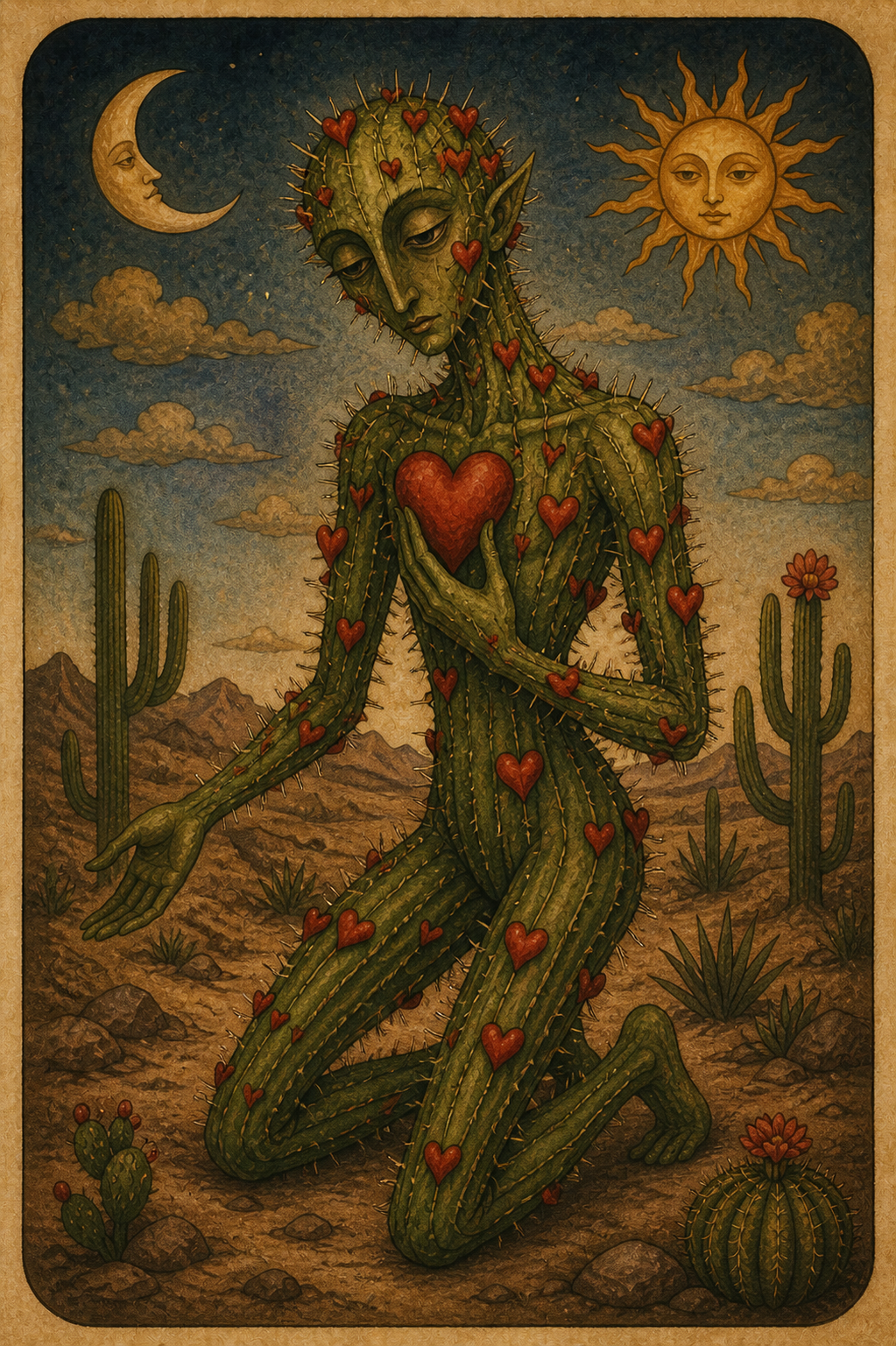
A cactus man knels in the desert under the moon and sun, with hearts stuck onto his needles

1. Spell to Attract Love That Sticks

For drawing in real connection — and making it last

Lammas doesn’t deal in fleeting things.

This isn’t a spell for sparks or passing attention. It’s for the kind of love that stays.

You’ll need:

  • a magnet

  • a handful of small metal objects (paper clips, pins, nails — mixed is better)

  • a slip of paper

  • a pen

  • a piece of bread

  • a red sachet

Sit down and write what you want — not a person, not a fantasy, but the qualities that would actually nourish you. Be specific.

Fold the paper and place it in front of you.

Now scatter the metal objects loosely in front of the paper.

Hold the magnet in your hand and pause for a moment before moving it.

Say:

Draw what’s real and draw what’s true,
Not what fades, but what comes through.
Hold it close and let it stay. 
What is meant won’t slip away.

Now bring the magnet down and drag it slowly through the metal pieces, letting them jump, cling and follow.

Watch what happens. Some pieces will attach immediately. Some will resist, then snap into place. Some won’t come at all.

Do this a few times, slowly, deliberately — not rushing the moment.

Then stop. Look at what’s actually attached to the magnet.

Take only those pieces — the ones that chose to hold — and place them on top of the folded paper.

Push the rest aside.

Now take the piece of bread and tear it in half.

Eat one half slowly.

Place the other half on top of the paper and metal pieces.

Say, quietly:

What holds stays. 
What feeds remains.

Leave everything in place overnight.

In the morning, remove the bread and bury it under a tree.

Keep the paper and the metal pieces that stuck inside a red sachet.
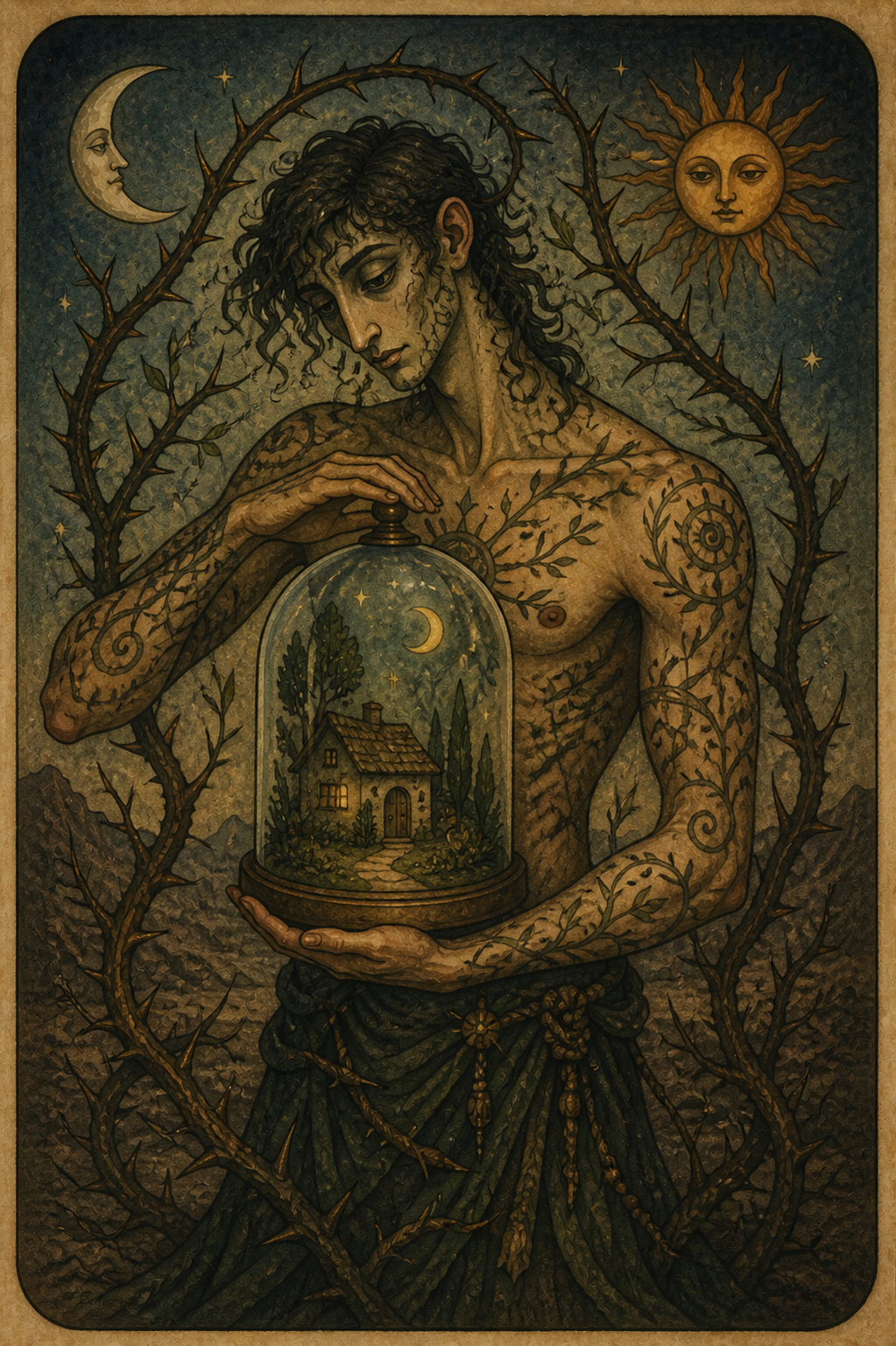
A tattooed man stands under thorny vines as the moon and sun look down as he holds a cloche with a house inside

2. Spell to Protect What You’ve Built

For guarding your work, your relationships and your energy from being undone

You’ve put in the effort. You’ve grown something real. And now the work shifts — not to building more, but to keeping what matters from being worn down, drained or taken apart.

This spell is about creating a boundary you can actually feel.

You’ll need:

  • a small object that represents what you’ve built (a coin, key or something personal)

  • a length of thread or twine

  • a small piece of gold or green cloth

  • a jar or container with a lid

Hold the object in your hand for a moment.

Be clear about what it stands for: your work, your progress, a relationship, your energy. Don’t generalize it. Name it.

Place it in the center of the cloth.

Now begin to wrap it slowly.

As you wrap, say:

What I’ve built, I choose to keep,
Bound and held, not worn or weak.
Closed to harm and closed to drain,
Only what’s mine will here remain.

Once fully wrapped, take the thread and begin to bind it with the thread or twine. Make it secure. Turn the object as you go, layering the thread in different directions — crossing over itself, reinforcing it.

When it feels tight and contained, tie it off with a firm knot.

Hold it in both hands and pause.

Then place it inside the container.

Before closing it, say three times:

Held in place and sealed with care,
What I’ve made stays guarded there.

Close the lid.

Place it somewhere safe.
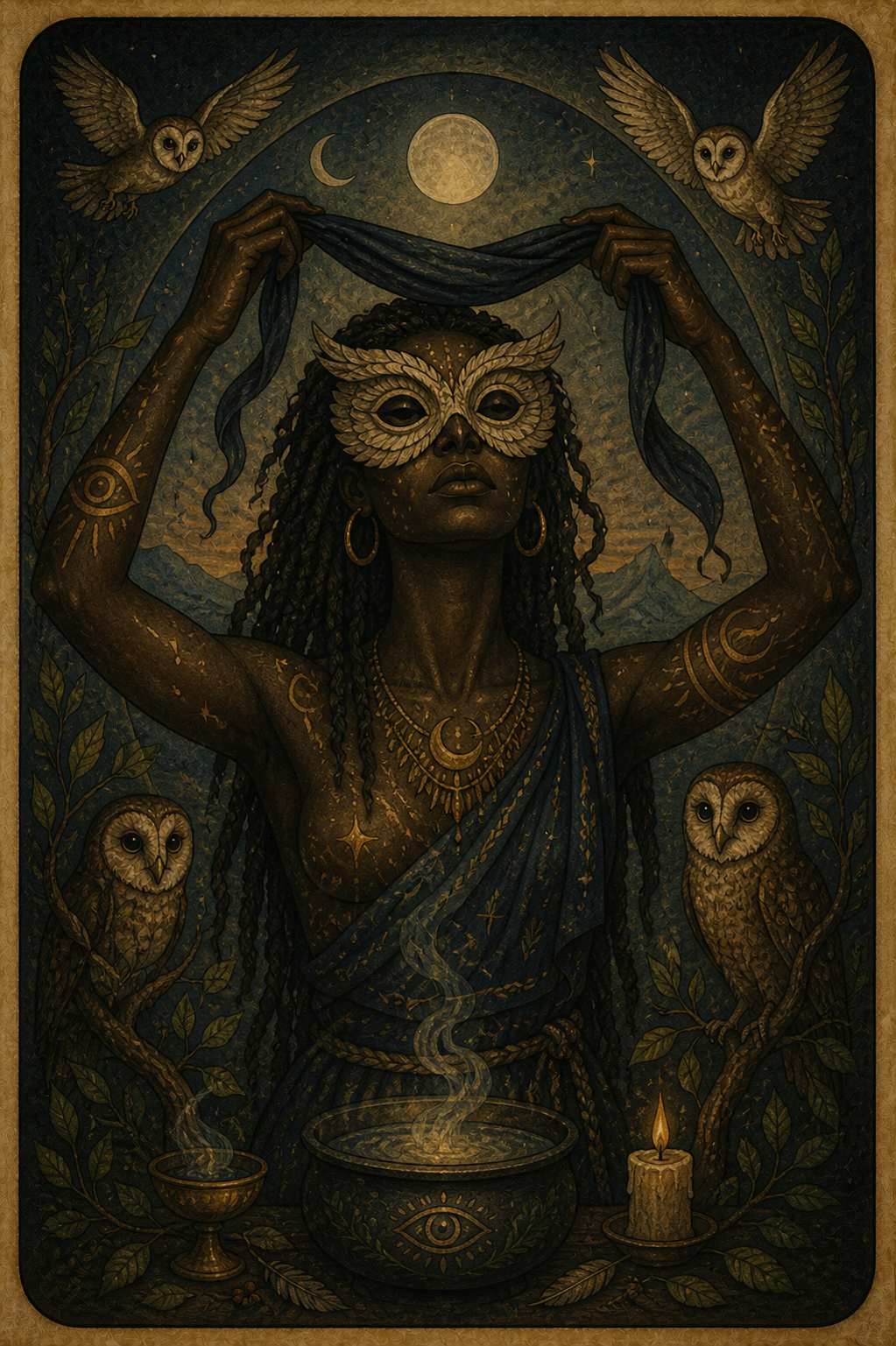
A woman with symbols painted all over her in gold wearing an owl mask as she casts a Lammas spell with a cauldron, chalice and candles as owls watch

3. Spell to Discover the Truth About Something

For seeing clearly — and knowing what’s real without second-guessing

Lammas is where illusions start to fall apart. It’s the time of year when you can see what actually grew, and what shriveled on the vine.

This spell is about revealing what’s been hidden or unclear. 

You’ll need:

  • a small bowl

  • water

  • a spoonful of flour

  • a slip of paper

  • a pen

  • a necklace or pendulum 

Write your question clearly on the paper. Be direct.

Fold it and place it beneath the bowl.

Fill the bowl with water and set it directly over the paper.

Now take the flour in your hand and pause.

Say:

What is hidden, come to light,
Show me clearly, wrong or right.
No more guessing, no disguise,
Truth revealed before my eyes.

Repeat it two more times.

Now sprinkle the flour gently across the surface of the water. But don’t stir it. Just watch.

At first it will sit on top — scattered, soft, undefined. Then slowly, it will begin to shift, gather and form patterns.

After a minute or two, take the spoon and give the water one slow, deliberate stir — just enough to disrupt what’s formed.

Watch again. What remains clear? What disappears? What becomes heavier, more obvious?

Now hold the pendulum or necklace over the center of the bowl.

Think of a yes or no question related to what you wrote on the paper. 

Say:

If the path is true, swing straight.
If concealed, turn and rotate.

Hold your hand still.

Watch carefully.

If the pendulum swings:

  • back and forth: The answer is yes, true or open

  • in circles: The answer is no, blocked, false or being concealed

When you have your answer, touch the surface of the water lightly with two fingers. Then touch your temple.

Say with finality:

What is true remains.
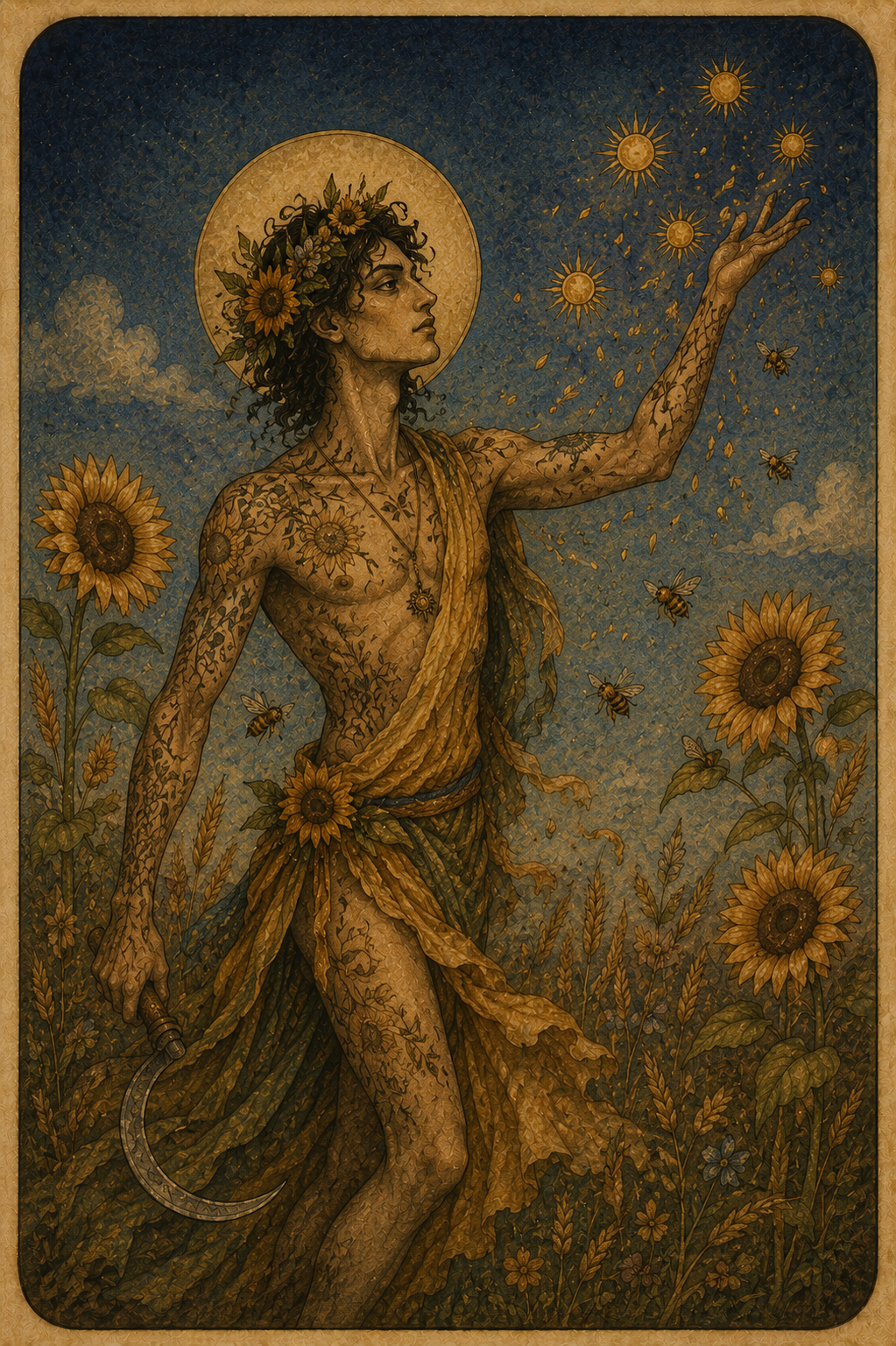
A tattooed man in a tunic holds a sickle, stands in a field of sunflowers, wheat and bees, and casts a spell at Lammas

4. Spell to Find the Motivation to Finish What You Started

For pushing through resistance and actually getting it done

Lammas is the season where effort becomes outcome — or doesn’t. Where the difference between started and finished suddenly matters. If you’ve been circling something, avoiding it, losing steam halfway through… this is where you deal with it.

You’ll need:

  • a length of thread or twine

  • a handful of dried pasta with holes (penne or rigatoni, perhaps)

  • a bowl

Sit down with everything in front of you.

Take the thread in your hand and look at the pasta. Each piece represents a step. A task. A part of something you haven’t finished.

Drop all the pasta into the bowl.

Now take one piece. Thread it onto the string.

Say:

What I start, I carry through,
Step by step, I see it through.

Take another piece. Thread it.

Repeat the chant.

Continue like this — one piece at a time, one repetition at a time.

If you feel resistance, good. That’s OK. Keep going.

The thread will begin to fill. The weight will shift in your hands. It will start to feel like something — not just an idea, but a thing you’re making.

When you reach the last piece, thread it slowly.

Say the chant one final time.

Then tie the ends of the thread together into a loop.

Hold it for a moment.

Then drape it somewhere you’ll see it often.
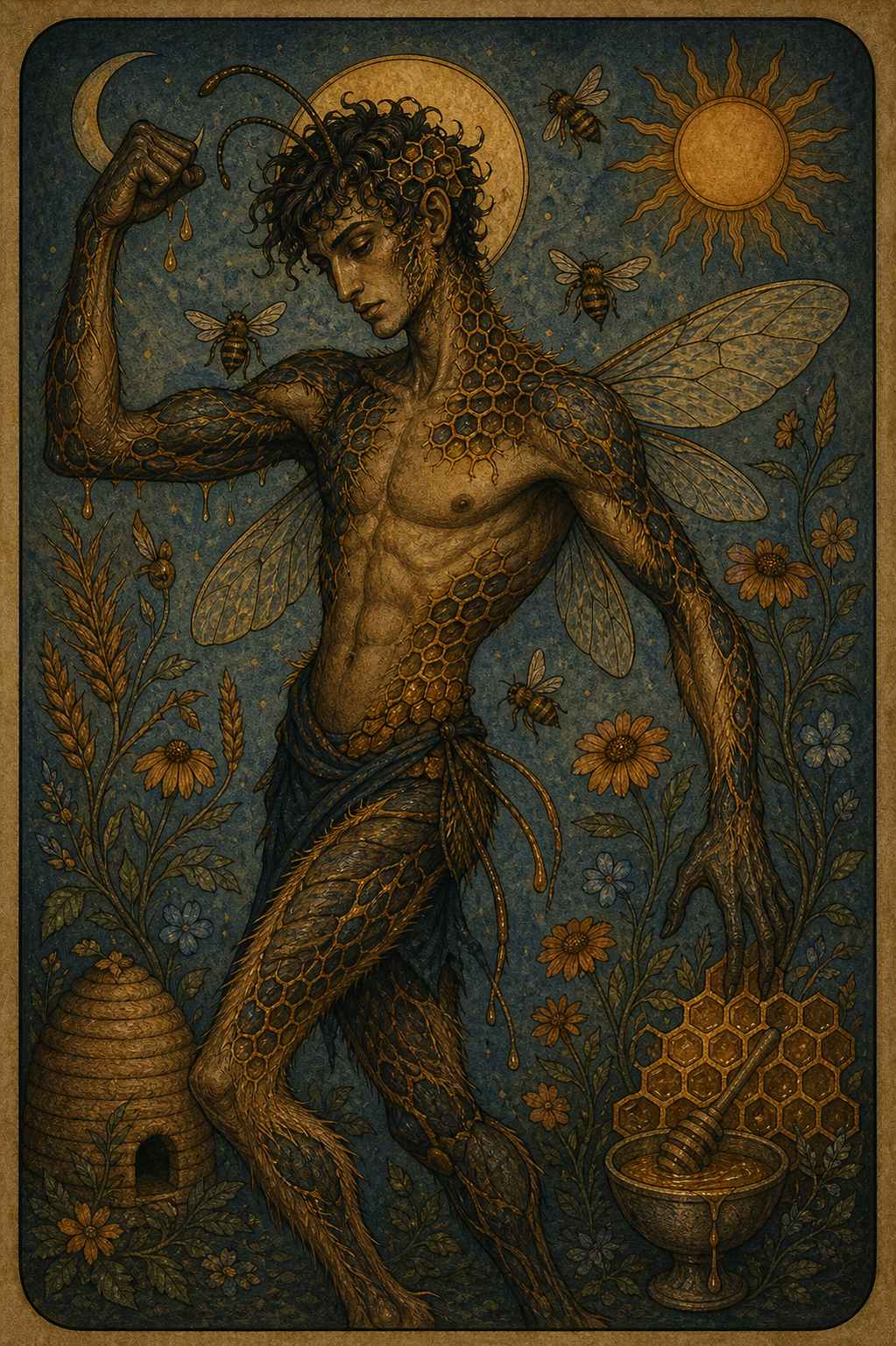
A creature half-man, half- bee flexes his muscles, surrounded by the moon, sun, bees, flowers, wheat, a hive and honey

5. Spell to Sweeten a Situation in Your Favor

For softening tension and nudging things your way

You’ll need:

  • bread or cracker

  • honey

Hold the bread in your hand.

Think clearly about the situation.

Dip your fingers into the honey.

Pause. Then say:

Bitter turns and sharpness fades,
What resists now softens and sways.

Repeat it three times.

Now slowly spread the honey across the bread or cracker with your fingers.

Visualize changing something.

As you spread, say quietly:

Shift and settle, smooth and slow.

Repeat it three times.

Bring the bread to your mouth.

Before you take a bite, say:

What was strained now bends my way.

Then eat it.
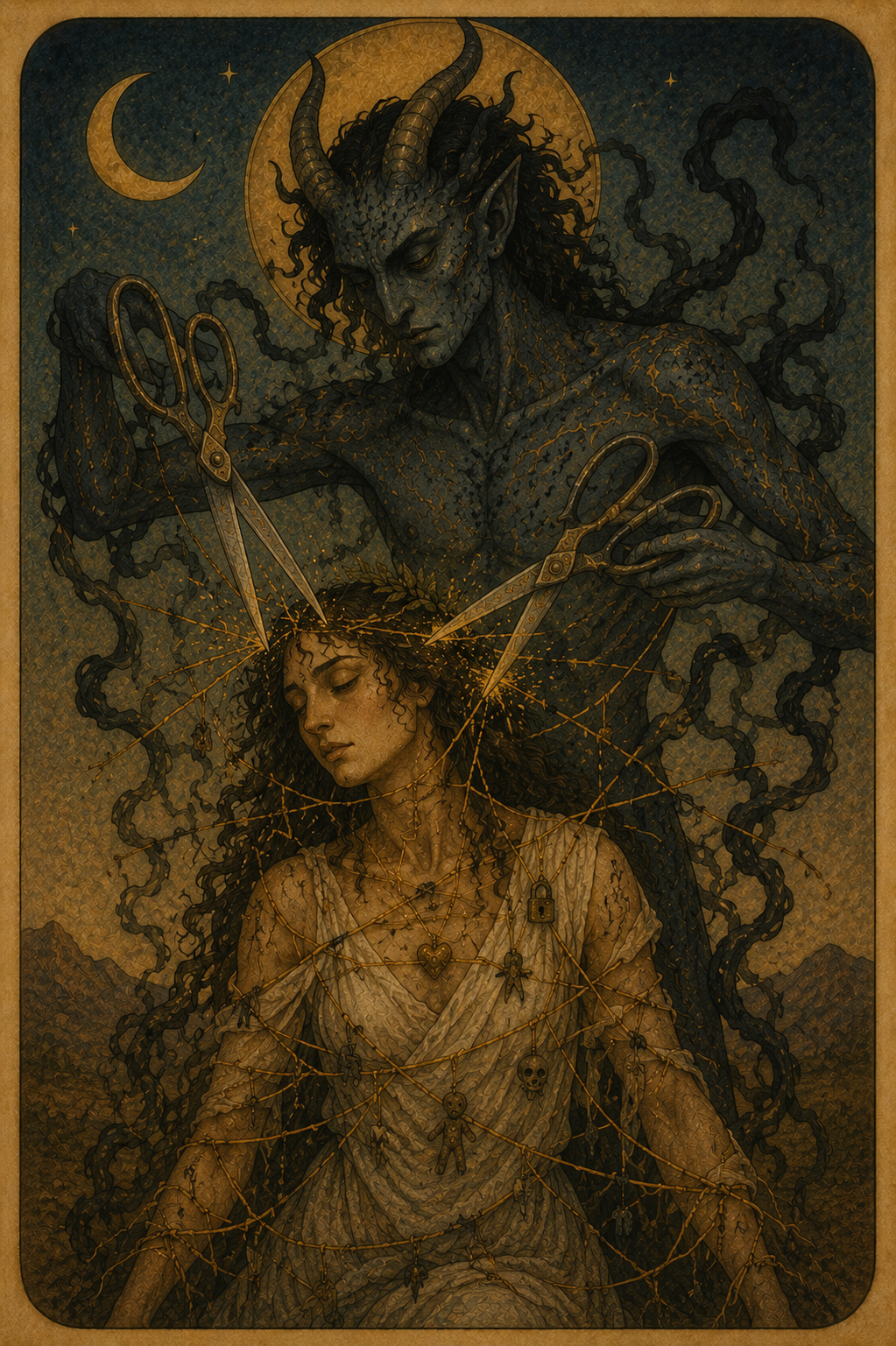
A blue-skinned demon with horns casts a Lammas spell, using two pairs of scissors to cut golden threads over a woman whose bound with rope and charms

6. Spell to Cut Out a Negative Influence

For removing something cleanly — and being done with it

Some things don’t need to be worked through. They need to be cut out.

You’ll need:

  • a length of black thread

  • scissors

  • an object connected to or that represents the person you want to banish

Take the thread and tightly wrap it around the object many times. With each pass, focus on what this thing has taken from you: your energy, your peace, your time, your confidence. Bind it with force, even aggression. 

When the object feels fully bound, hold it.

Say:

What clings now comes apart.

Pull the thread tight and tie a tight knot. 

Now take the scissors.

Pause for one breath.

Then do one deliberate cut. 

Say:

Cut it loose.
Cut it free.
No more hold on me.

When the final strand falls away, unwrap the loose thread from the object and drop it aside.

Hold the object again.

Notice the difference — uncovered, separated, no longer bound to you in the same way.

Then say:

Done is done.

Repeat that line three times.

Discard the thread.
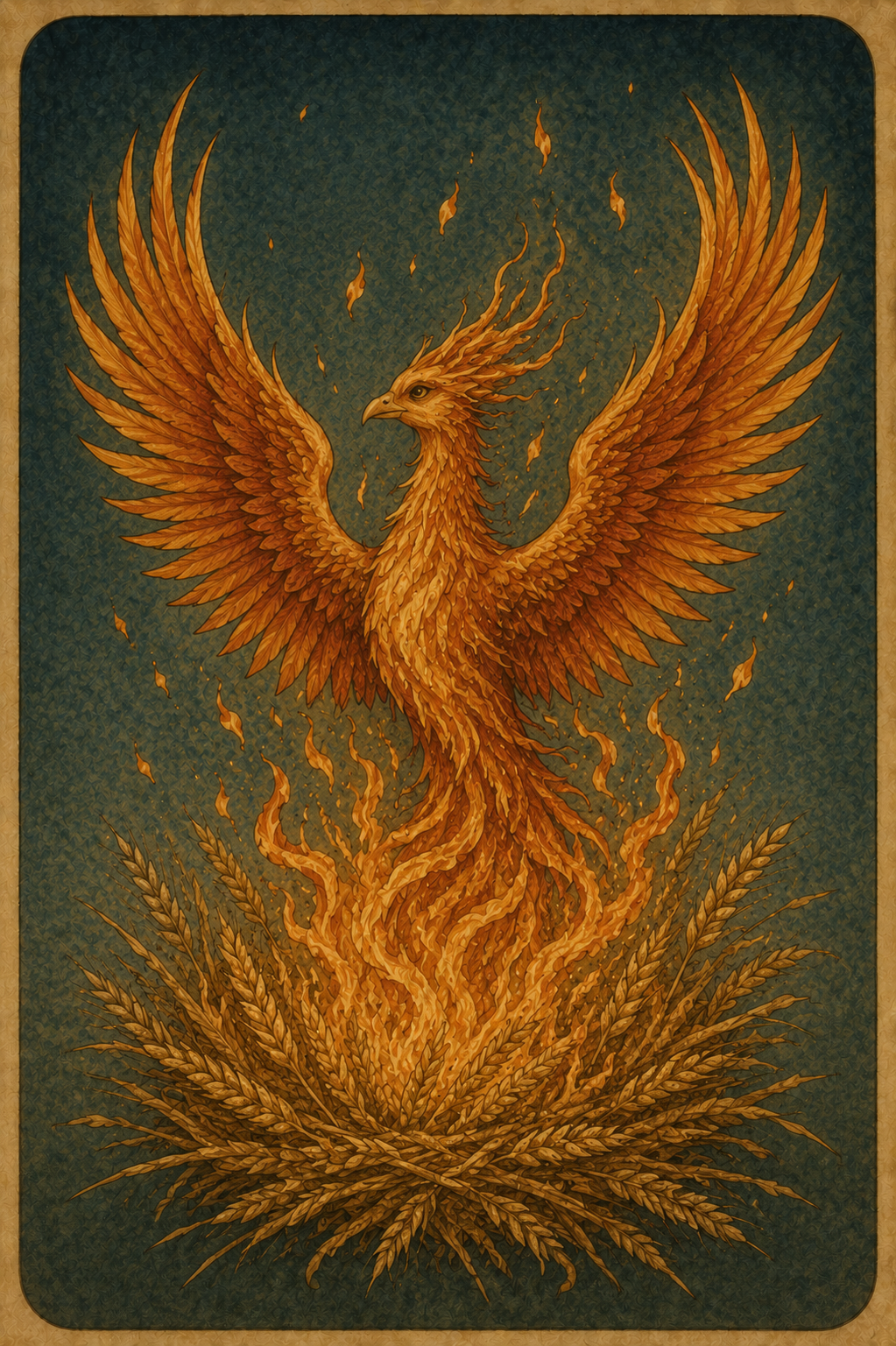
A phoenix rises from the flames of a nest made of wheat

Lammas Magic

Lammas reminds us that abundance isn't just about what we’ve harvested — it’s also about how we choose to use it. This season invites us to recognize our strengths, release what drains us and prepare for what comes next with gratitude and intention. Like the first grain gathered from the fields, the small actions you take now can nourish and sustain you long after summer fades. Every sabbat has its own gifts: Imbolc magic sparks possibility; Ostara spells nurture new beginnings; Beltane spells ignite passion and connection; and Litha magic amplifies courage and transformation. Lammas teaches us what to do with all that growth: gather it, honor it and let it sustain you for the journey ahead. –Wally
How to Celebrate Lammas and Lughnasadh: First Harvest Traditions, Ritual and Sun Magic

On August 1, Lammas — aka Lughnasadh — marks the first harvest on the pagan Wheel of the Year, with sun-drenched rituals honoring the Celtic god Lugh and bread. Lots of bread. 

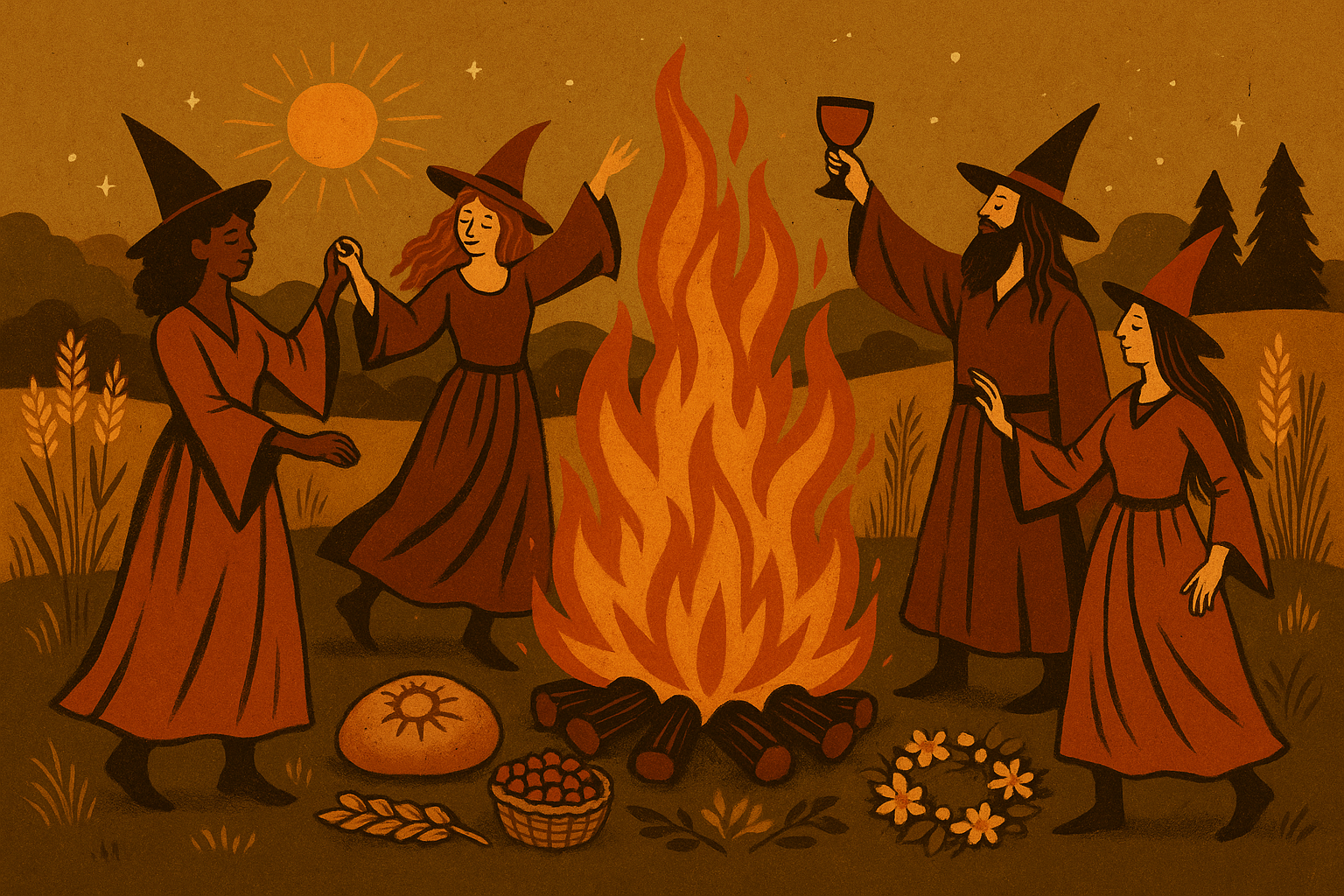
A group of witches dance around a bonfire to celebrate Lammas

It still feels like summer — the kind that clings. The air is thick, the gardens are bursting, and the sun hasn’t yet given up its post. But something’s shifting. It’s not quite autumn, and not quite high summer, either. Just that in-between hum that says: Harvest time has started.

This is Lammas, also called Lughnasadh (this mouthful is pronounced “Loo-nah-sah”) — the first harvest festival of the pagan year. A time to gather what’s grown, bake bread in gratitude, and honor both the work and the letting go. It’s the season of full fields, tired hands, and sacred thank-yous whispered into the grain.

You may have lit fires for Beltane in the spring and danced under the high sun at Litha, but now the Wheel turns again. Lammas is where the wild energy slows — where intention meets outcome, and we pause to ask: What have I grown? What do I carry forward? And what do I leave behind?

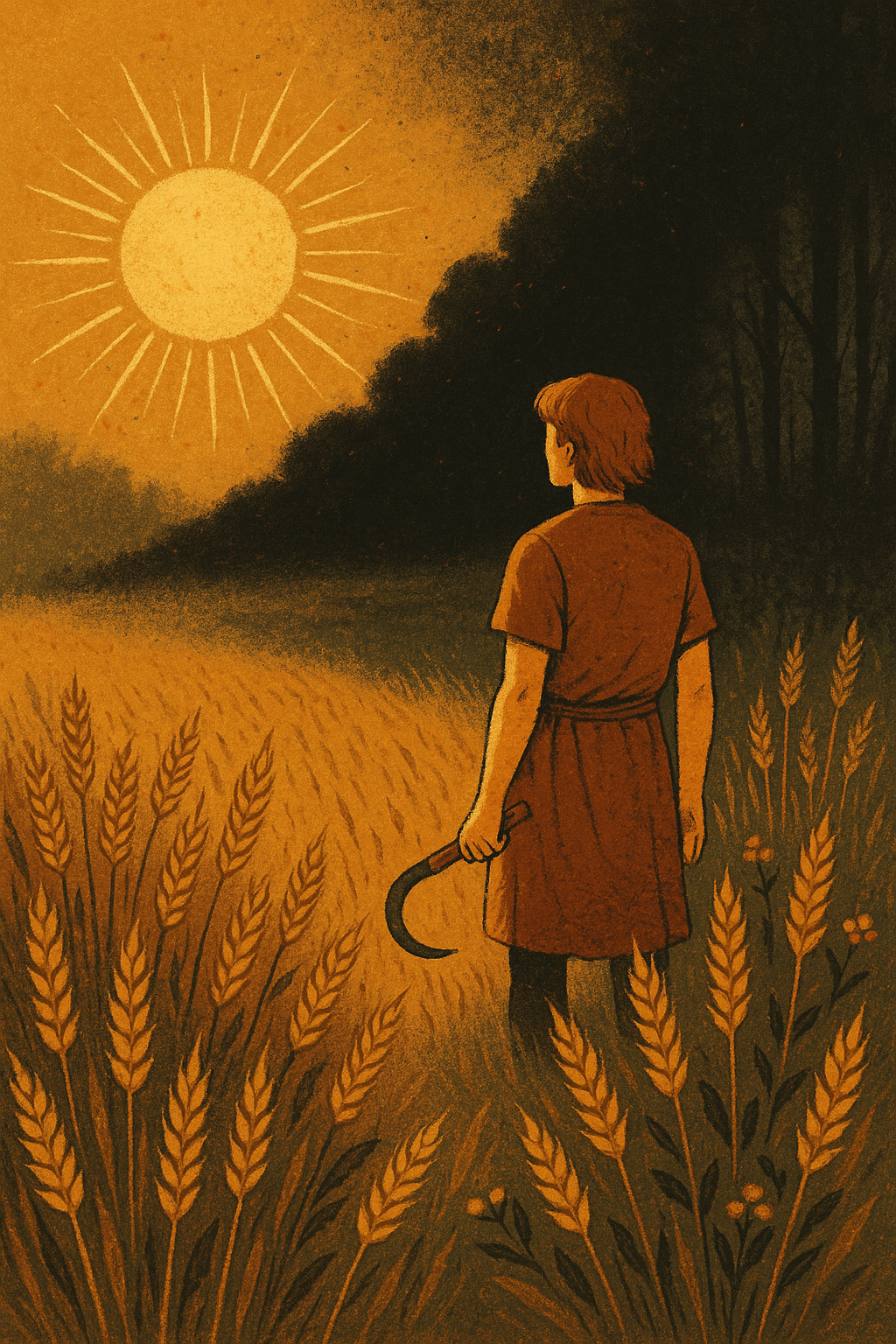
A man looks at the sun, holding a sickle in a field of wheat

What Is Lammas and Lughnasadh?

Lammas, celebrated on August 1, is the first of three harvest festivals in the pagan Wheel of the Year — followed by Mabon (the autumn equinox) and Samhain (the final harvest). The name Lammas comes from “Loaf Mass,” a Christian-era term marking the blessing of the first bread made from the grain harvest. But its roots run deeper.

Before Lammas, there was Lughnasadh, a Gaelic festival honoring the Celtic god Lugh (pronounced like Lou), patron of skill, craftsmanship and light. According to legend, Lugh created the holiday to honor his foster mother, Tailtiu, who died after clearing the land so crops could grow. Think of it as a celebration born from sacrifice, labor and love (more on this below). 

Both versions of the festival celebrate the same thing: gratitude for the first fruits of the land, and the subtle turning toward darker days. You bake bread because the grain has ripened. You give thanks because survival is never guaranteed. And you celebrate with fire, feasting, games and offerings — not in fear of winter, but in honor of what you’ve managed to grow before it comes.

Today, whether you’re harvesting wheat, creative work or personal growth, Lammas is the time to pause, reflect and say thank you — out loud, with your hands full.

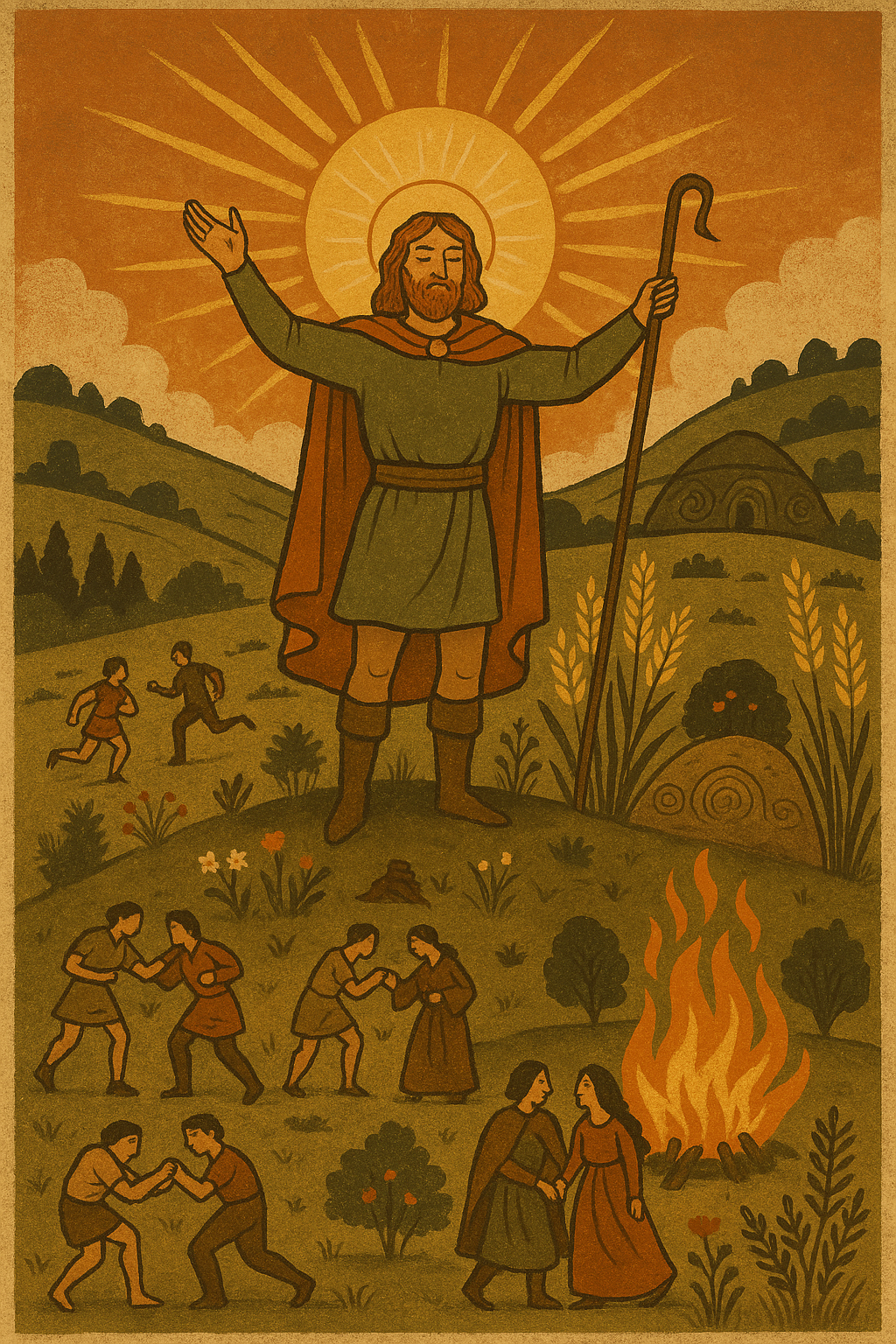
The Celtic god Lugh towers above people participating in the Tailteann Games

The Legend of Lugh

Long ago, when gods and giants still roamed Ireland, there was a queen named Tailtiu — a goddess of the earth, strong and steady, her hands always buried in the soil. She took one look at the wild, tangled forests of Ériu and saw potential. So she cleared the land. All of it. By hand.

For days and nights and then more days again, Tailtiu worked. She moved mountains. Pulled roots. Flattened fields. Until at last, the land was fertile, ready to feed a people who didn’t yet know how much they’d need it. Then she laid down, weary beyond words — and died.

But her foster son, Lugh, wouldn’t let her be forgotten.

Lugh was brilliant, golden, untouchable. A god of many talents: warrior, smith, poet, harpist, trickster, tactician. When the gods were recruiting for a battle against the monstrous Fomorians, they told him, “We already have someone for each skill.” So Lugh said, “Then find me someone who has all of them.” And the room went quiet.

It was Lugh — the sun-bright, many-skilled god — who declared a festival in Tailtiu’s honor. He called all the tribes together, not for mourning, but for celebration. He lit fires. He hosted games. He told stories and sang songs and held contests of strength, wit and beauty. Farmers brought their first grains. Poets spoke their sharpest lines. Lovers met in the tall grass. Oaths were sworn. Bread was broken.

This was Lughnasadh, the “Assembly of Lugh.” A wild, sun-drenched sendoff for a goddess who gave everything — and a reminder that nothing grows without effort or sacrifice.

The games were held at Tailtiu’s grave, where the grass grew thick and sweet over her resting place. 

And every August, when the sun ripens the wheat and the sickles gleam, Lugh’s voice echoes somewhere in the wind: “Honor her. Honor the harvest. Honor what it cost.”

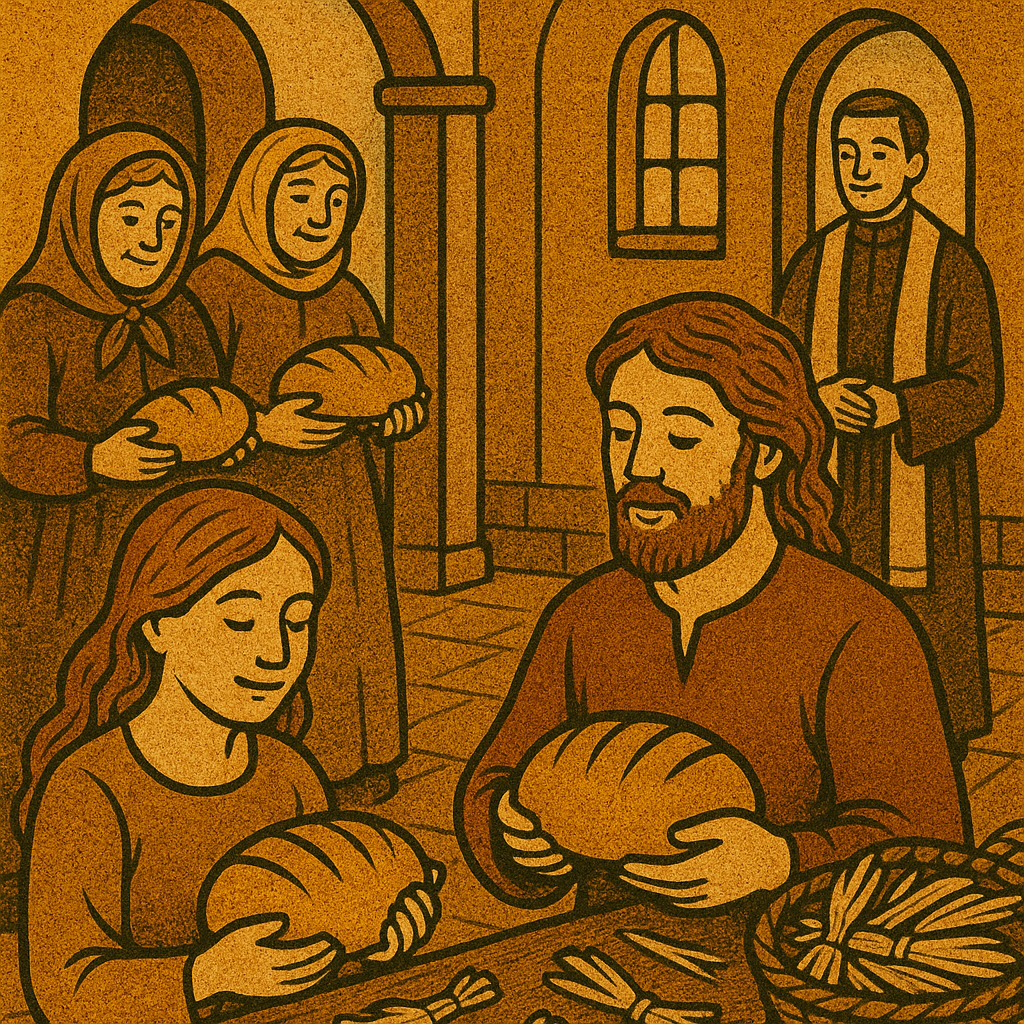
Parishioners bring loaves of bread to church to be blessed by a priest on Lammas

The Rise of Lammas

As the centuries turned and the old gods quieted — or were quieted — the Church stepped in, as it often did, with a rebrand.

Lughnasadh, with its bonfires and boasting, its hilltop games and grain offerings, was a little too loud, a little too wild, and way too pagan. But people weren’t about to stop marking the first harvest — not when the fields were full and the bread was fresh and the land still whispered Tailtiu’s name.

So the Church gave it a new name: Lammas, short for “Loaf Mass.”

Gone were the sacred games and sun gods. In their place: a more palatable ritual. You’d bring the first loaf of bread to church, fresh from the newly milled grain, and the priest would bless it. A holy thank you, wrapped in linen and incense. No druids required.

It was still a festival of gratitude — just with more psalms and fewer hilltop flings.

But even as Lammas was woven into the Christian calendar, the old ways clung. You’d still find tales of Lugh passed around fires. You’d still hear of sacred wells visited on August 1. And in rural corners, some folks secretly kept baking bread in his name.

Today, Lammas and Lughnasadh blur together — one dressed in church robes, the other in sun-gold and shadow. Whether you honor Lugh or the loaf (or both), you’re stepping into a very old current when you mark this day.

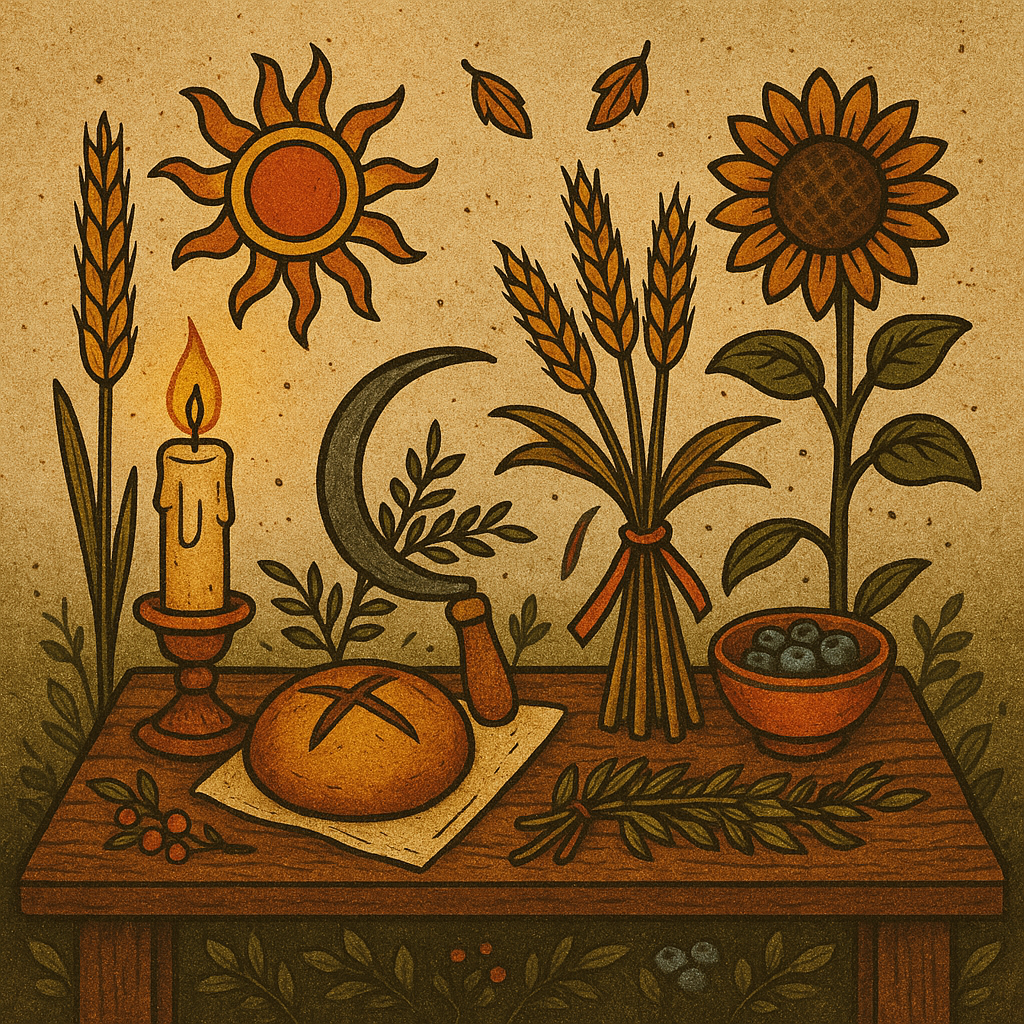
Symbols of Lammas: wheat, bread, sun, sickle, blueberries and sunflower

Traditions of Lammas and Lughnasadh

Lammas and Lughnasadh come with a spread of traditions equal parts sacred, social and symbolic. These rites once marked the height of summer’s bounty and the first sigh of the waning sun. Some remain intact, others were reinvented, but they all echo that ancient truth: Nothing grows without gratitude.

Bread

The central act of Lammas is in the name itself: Loaf Mass. People once baked bread from the first harvested wheat and brought it to be blessed. Others offered it at the hearth or buried pieces in the fields for luck and fertility. In both Christian and pagan observance, the bread wasn’t just food; it was a sacred transaction between land, labor and spirit.

Fire and Feasting

Like many cross-quarter festivals, Lughnasadh came with fire. Bonfires were lit to honor the sun at its peak and to mark its slow retreat. Feasts were held beside the flames, using the first of the harvest: berries, fresh grains, garden produce, and anything ripening under the late summer sun.

The Tailteann Games

Held in ancient Ireland at the burial site of Tailtiu, these funeral games were athletic, artistic and social all at once. Tribes competed in races, wrestling, music, poetry and storytelling. Oaths were sworn, grievances aired, and couples even formed trial marriages — often lasting a year and a day, no commitment rings required.

Sacred Sites and Pilgrimages

People made pilgrimages to holy wells, hilltops and other sacred places, often leaving offerings or saying prayers for a good harvest and safe passage through the darker half of the year.

Harvest Rites and Grain Spirits

The grain had a spirit, a presence. The first and last sheaves were honored with care. Some communities crafted corn dollies from the final stalks, believing they housed the spirit of the field and brought protection through the winter. Others saved the last sheaf for spring planting, returning the spirit to the soil in a full-circle blessing.

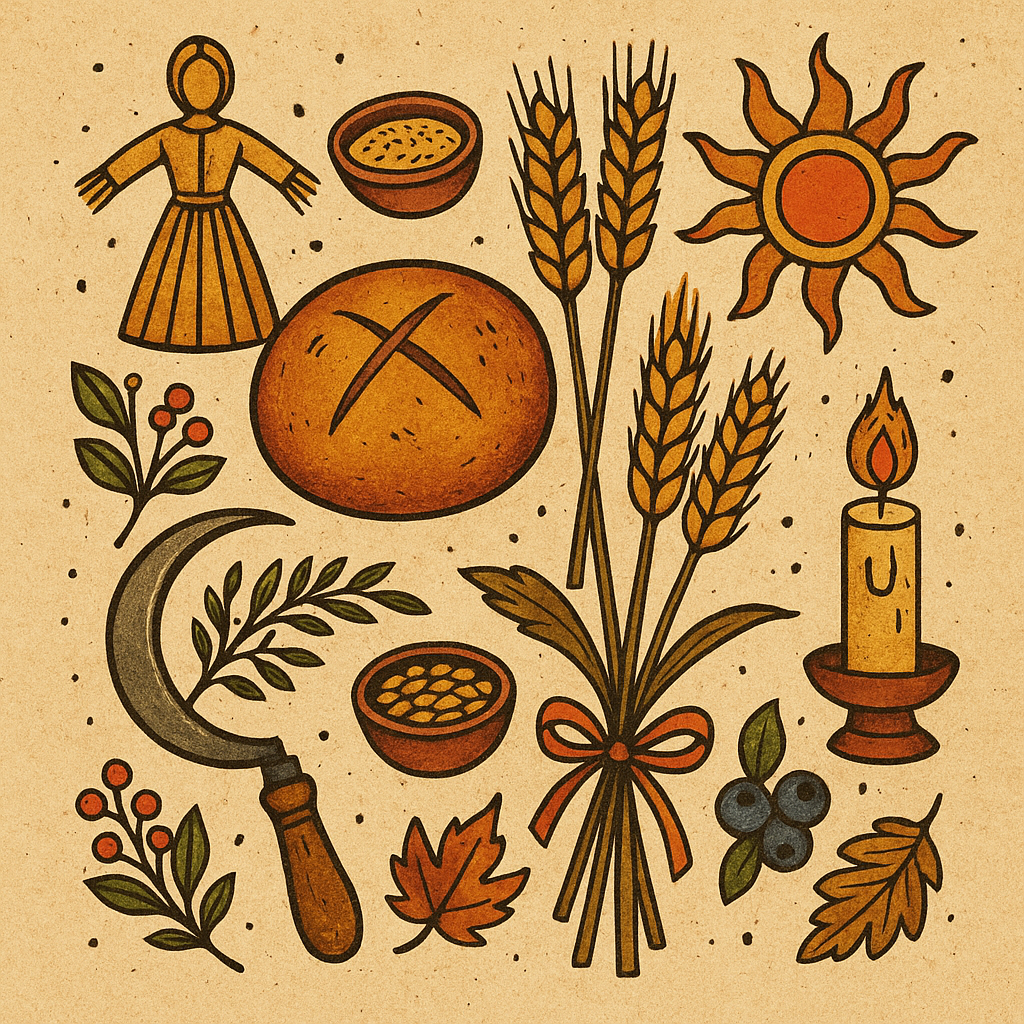
Symbols of Lammas: corn dolly, bread, wheat, the sun, a sickle and more

Symbols of Lammas and Lughnasadh

Lammas is a festival of grain, gratitude and golden light — a turning point in the Wheel of the Year when we honor both abundance and impermanence. Its symbols reflect the rhythm of harvest and the sacred balance between effort and reward.

  1. Bread and grain
    The central symbol of Lammas is the loaf. Bread made from the first grain represents survival, sacrifice and the miracle of transformation — from seed to stalk to sustenance. Wheat, barley, rye and oats also carry protective and prosperity magic, often used in offerings or home blessings.

  2. The sickle
    The sickle or scythe represents the act of harvest — the moment of cutting away, of reaping what has been sown. It’s a symbol of hard work, mortality and the necessity of release. In ritual, it can mark endings, gratitude and readiness to let go.

  3. The corn dolly
    Often woven from the last sheaf of grain, the corn dolly (or harvest spirit) was kept through winter as a charm of protection and fertility. This figure represents the living spirit of the land — honored, protected and returned to the earth in spring to ensure next year’s growth.

  4. The sun
    Though its power is beginning to wane, the sun is still a dominant force at Lammas. It ripens the grain, warms the fields, and reminds us that even as light fades, it leaves behind nourishment. Sun symbols, gold tones and fire rituals all connect to this presence.

  5. Fire
    Lammas shares fire’s symbolism with many other sabbats, but here it carries a specific tone: Warmth giving way to shadow. Bonfires at Lammas honor the labor behind the light — not just passion, but perseverance. Candles and hearth fires evoke both celebration and quiet reverence.

  6. Wheels and circles
    The Wheel of the Year turns, and Lammas marks a visible shift. Circular symbols — from braided loaves to sun wheels — reflect this ongoing cycle of growth, harvest, decay and rebirth. They remind us that the work is never truly done, only transformed.

  7. The color gold
    Gold is the signature shade of Lammas. It’s the color of ripe wheat, late-summer sunlight and divine abundance. Wearing gold or decorating with yellow, orange and amber connects you to the energy of fullness, gratitude and transition.

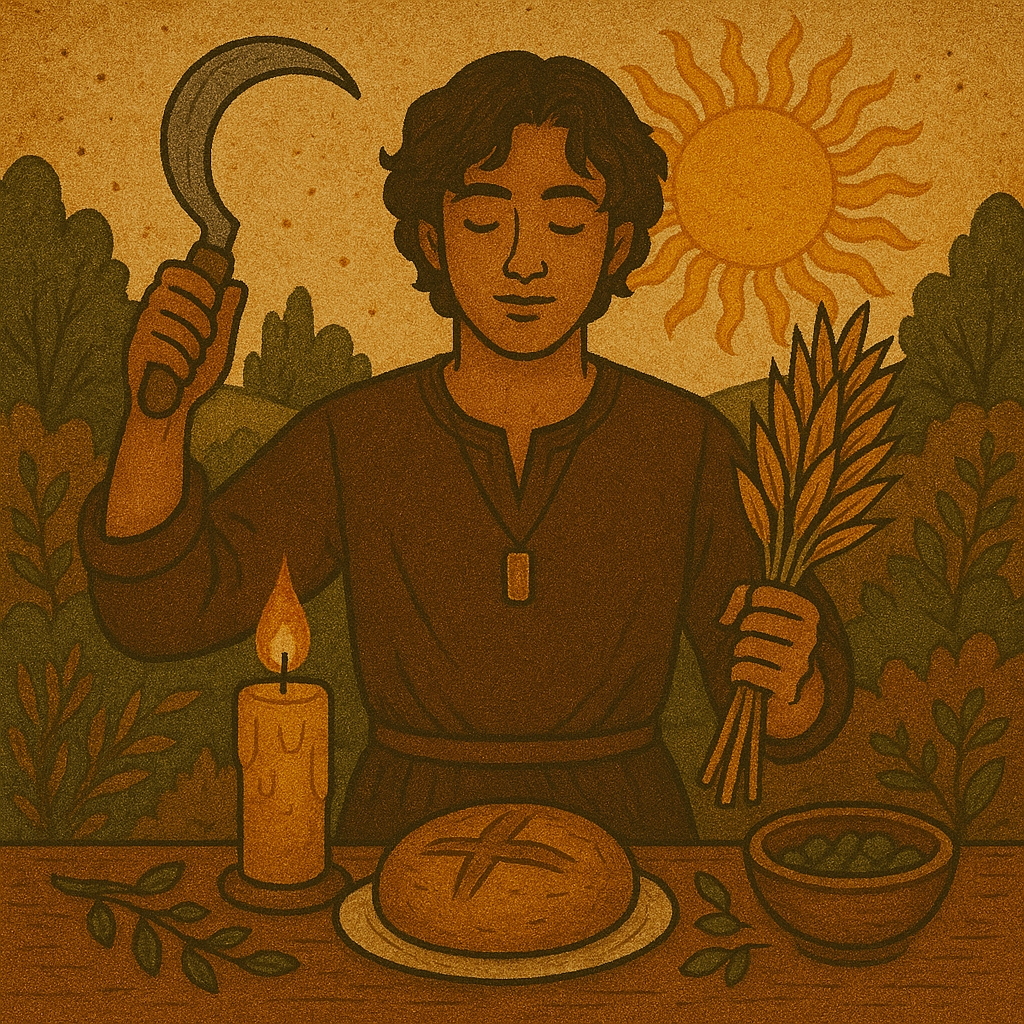
A Wiccan man performs a Lughnasadh ritual, a sickle in one hand and wheat in the other, with a candle, bread and berries on the altar

A Lammas Ritual 

This ritual is designed to honor what you’ve harvested — creatively, emotionally or literally — while also making space for what must be cut away. It draws on the ancient symbolism of the sickle, bread and the turning sun. 

What you’ll need:

  • A small round loaf of bread (homemade or bakery-fresh)

  • A knife (symbolic sickle)

  • A gold, orange or brown candle

Step 1: Set the scene. 

Cast a magic circle if you’d like. 

Place your candle in front of the bread. Light it as the sun begins to lower — golden hour, if possible. Let this moment feel sacred, even if it’s just you and your cat on the kitchen counter.

Step 2: Declare your harvest before the flame.

Hold your hands over the bread. Say what you’ve harvested this season. Maybe it’s a job. A finished creative project. A hard conversation you finally had. Say it, name it, own it. 

Then chant:

I’ve brought this to the table.
With work, with will, I’ve made it real.

Step 3: Cut the loaf. 

Use the knife to slice the bread. As you cut, envision what must be released to move forward: a habit, a fear, a stale version of you. Speak this next part as you slice:

The grain is grown, the blade is near,
I cut away what I outgrew this year.

What’s done is done. The stalk must fall.
I thank it — then I take it all.

Step 4: Chant. 

Break off a piece of bread, hold it to your heart, and chant this slowly — three times, each time a little louder:

Sun in the field and fire in the sky,
I feast, I thank, I say goodbye.
What once was seed is now my own.
I take the gift, I give it home.

Eat the bread slowly. Feel the warmth. Let yourself sit in that golden glow of satisfaction and release.

Step 5: Finish the ritual. 

Blow out the candle and scatter a few breadcrumbs outside for the spirits of the land, birds or anyone who could use a little magic.

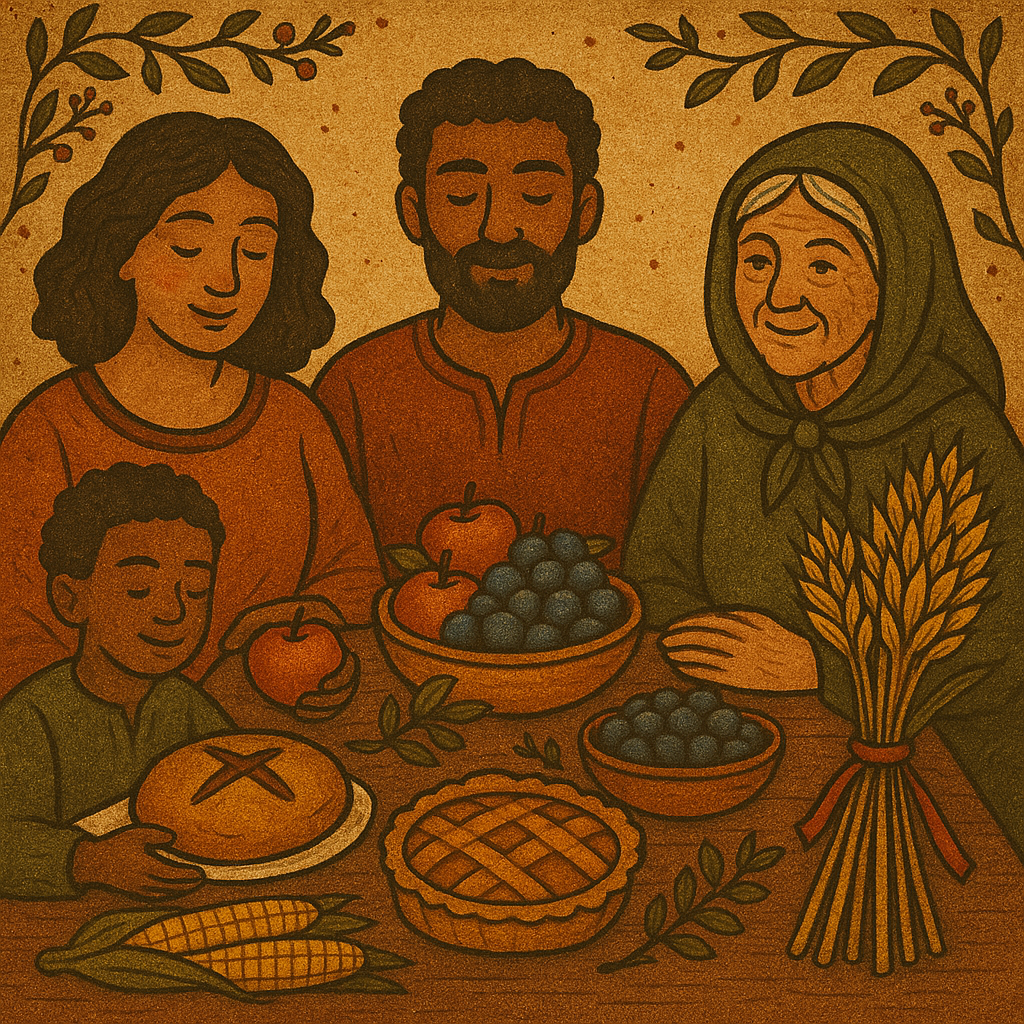
A group of people enjoy a Lammas feast of bread, fruit, pie, corn and wheat

Feasting and Traditional Foods of Lammas and Lughnasadh

Lammas is the feast that says, we made it this far — and that’s worth celebrating. After months of planting, tending, sweating and hoping, the first harvest is finally in hand. That’s why this sabbat is one of the most delicious on the Wheel: It’s a table piled high with the fruits of your labor, both literal and symbolic.

Bread (non-negotiable)

Bread: the ultimate alchemy of flour, water, salt and time. At Lammas, a loaf represents gratitude, transformation and survival. Traditional loaves were round, sun-shaped, or braided into spirals and wheels. Some folks saved a portion for blessings, while others fed it to the fire or the fields in offering.

If you bake nothing else this year, bake for Lammas — with herbs from your garden, honey from the farmer’s market, or whatever feels sacred in your kitchen.

Grains of all kinds

Wheat may get the spotlight, but barley, oats, rye and corn are all Lammas royalty. Oatcakes, porridge, barley soup, cornbread — these are humble, grounding foods with ancient roots. They stick to your ribs and remind you that nourishment is a sacred act. 

Berries and first fruits

The late-summer hedgerows are bursting. Blackberries, raspberries, blueberries — if you can pick them yourself, even better. Early apples may also be ready, and orchard fruit carries special Lammas energy: juicy, generous, wild.

Preserving, canning or pie-making also fit the season’s vibe. You’re feasting — but you’re also storing for the winter to come.

Seasonal veggies

Zucchini, tomatoes, squash, corn on the cob, beans, fresh herbs — Lughnasadh is a love letter to the garden. Many traditional dishes were simple: roasted with oil and salt, cooked into stews, or eaten fresh with bread and cheese. Let the ingredients sing. They’ve worked hard to get here.

Ale, mead and herbal infusions

Fermentation is magic. Whether it’s homebrewed ale, golden mead, or sun tea steeped with mint and calendula, a Lammas drink should feel alive. It should warm the belly and honor the earth. Toast to Lugh, to the land, to the ones who cleared the fields before you.

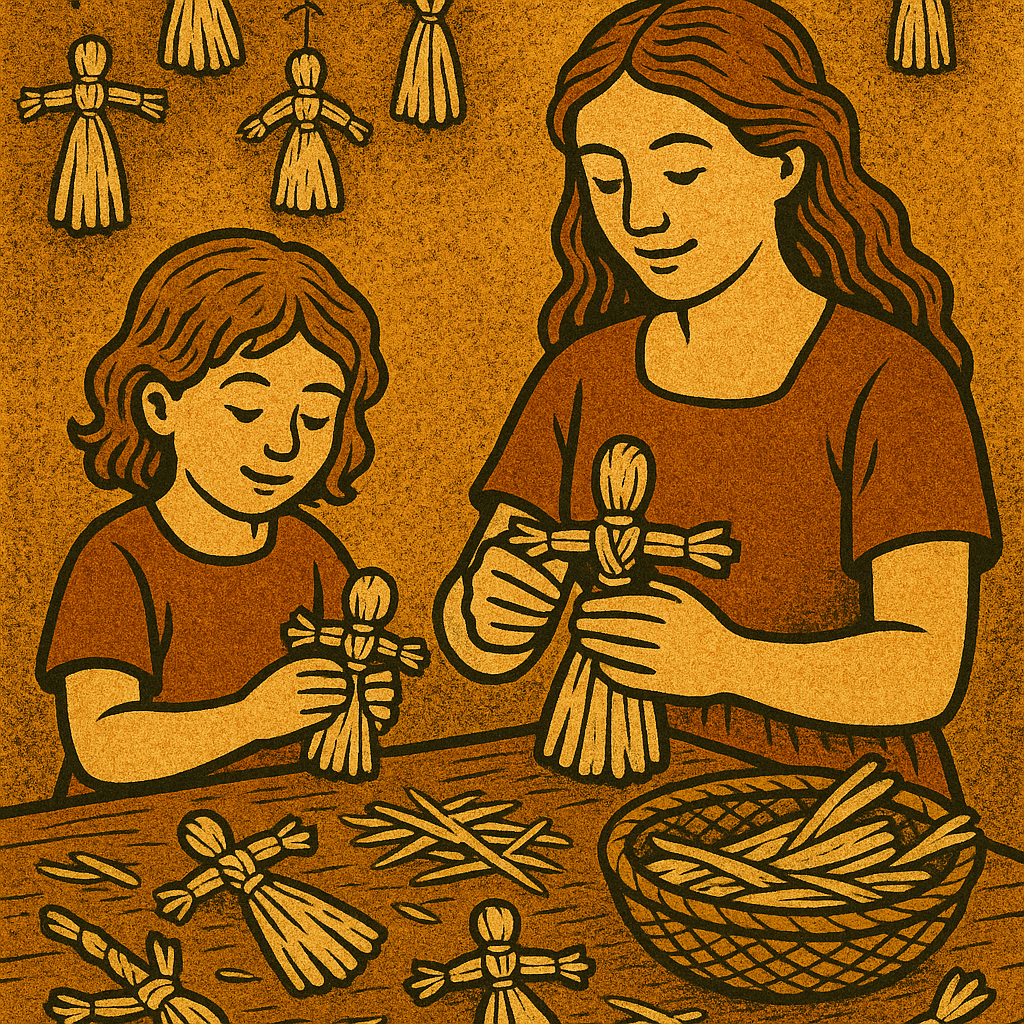
A mom and her daughter make corn dollies for Lammas

Crafting and Activities for Lammas and Lughnasadh

Lammas is a working holiday. It honors labor — physical, creative, emotional. So the crafts of this sabbat aren’t just decorative; they’re symbolic acts of gratitude, protection and offering. Whether your tools are scissors, shears, flour or fire, this is the season to make something that gives back.

1. Make a corn dolly (and don’t make it cute). 

Corn dollies are traditional harvest figures woven from the last sheaf of grain. They house the spirit of the field through winter — think of it as spiritual life support for the land. You can use wheat, corn husks or even raffia. Don’t stress about perfection; these were never meant to be precious.

Once made, you can:

  • Keep it on your altar through the darker months

  • Bury or burn it at Imbolc to return the spirit to the earth

  • Add protective herbs or charms to empower its energy

2. Craft a sun wheel or grain braid. 

Braid together wheat stalks, dried grasses, or long herbs into a spiral or circle. These were once hung over doors and hearths for luck, abundance and protection. 

3. Press flowers and herbs from your garden. 

Take stock of what’s blooming or ripening around you. Press flowers and leaves between books or use them to make bookmarks, sachets or offering bundles. Lughnasadh is a time to capture the fleeting — before it fades.

4. Bake bread with intention. 

Shape your bread into suns, sheaves, spirals or wheels. Score it with sigils. Tuck in herbs, garlic or cheese. And if your bread flops? That’s part of the offering. You still get points for showing up.

5. Host your own mini Tailteann Games. 

Whether you host a poetry contest, an art swap or a backyard obstacle course, this tradition goes back to the festival’s roots. Celebrate what you (and your people) are good at — and don’t forget to crown someone “Champion of the Grain” or whatever glorious nonsense you come up with.

6. Create a harvest altar. 

Use things you already have: bread, fruit, dried herbs, a candle or two. Add in a symbol of something you’re proud to have “harvested” this year. You can dismantle it at Mabon, or let it linger as a visual reminder of all you’ve made possible.

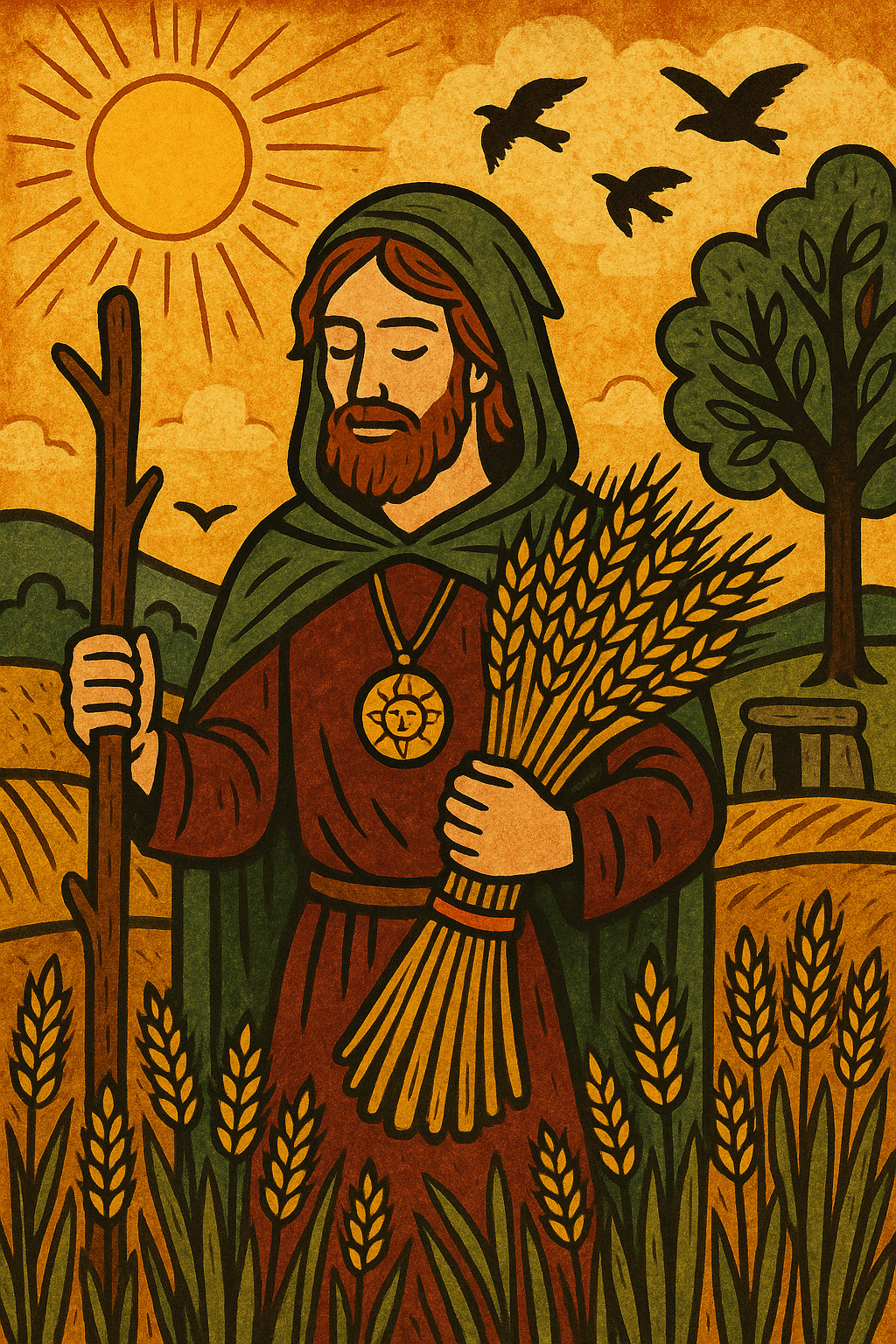
A modern pagan man holds a chaff of wheat while holding a staff at Lughnasadh

Honoring the Spirit of Lammas and Lughnasadh

Whether you call it Lammas or Lughnasadh, this festival invites you to pause for reverence. Mark the moment between heat and harvest, between holding on and letting go. It’s a time to bake (and break) bread, give thanks, and honor your labor.

From corn dollies and feasts to fiery rituals and golden symbols, Lammas and Lughnasadh remind us that everything worth harvesting starts with a seed — and a little faith in the sun.

Happy first harvest. May your table be full, your spirit light, and your sickle sharp. –Wally