The Cubism pioneer, born in a building off the Plaza de la Merced, didn’t stay long in Malaga, Spain. But that doesn’t stop the city from proudly claiming him as its own.
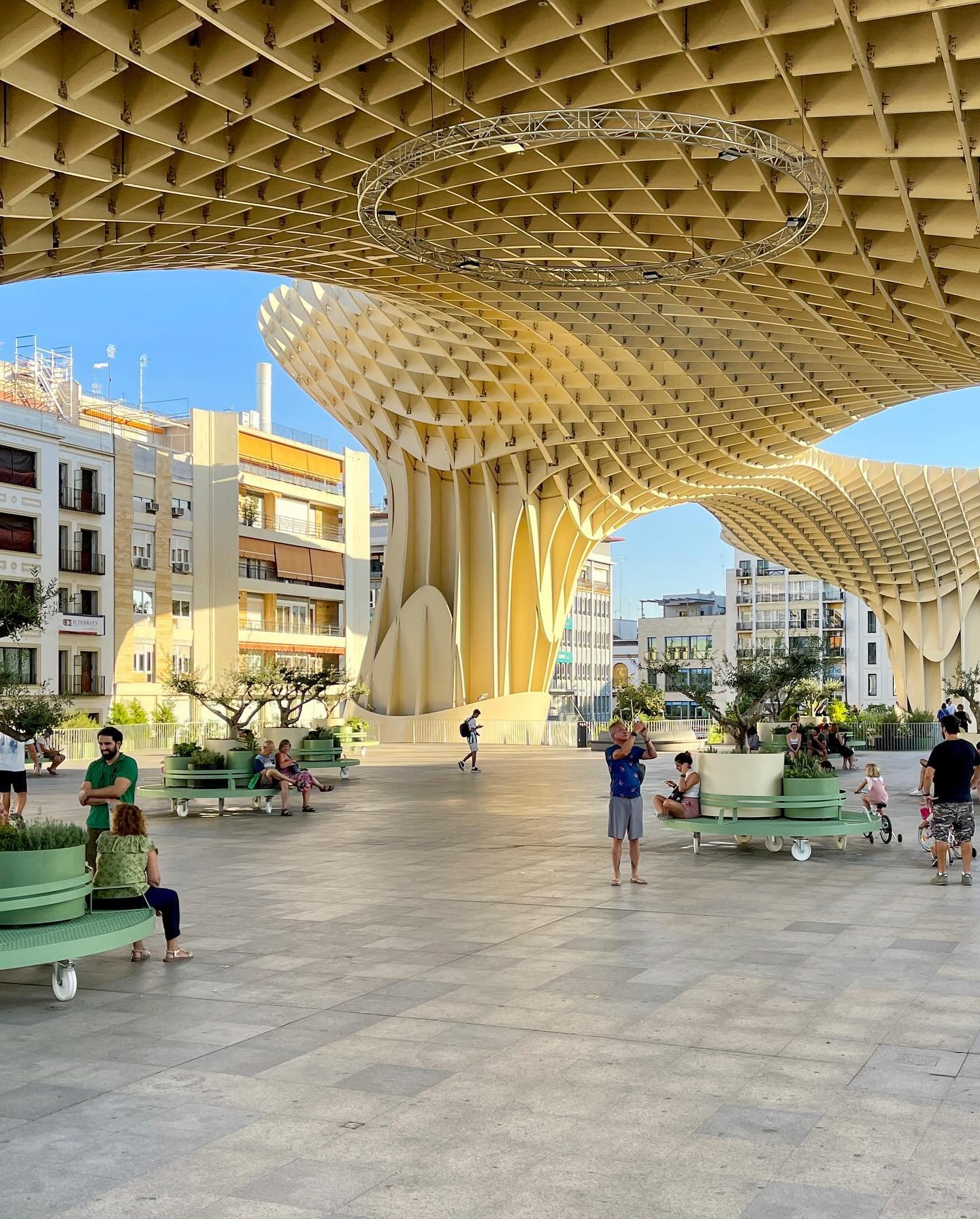
The Plaza de la Merced in Málaga, Spain, where Picasso was born. This shot was taken from atop the Gibralfaro fortress
Despite the fact that Picasso left Málaga when he was still a boy, his legacy continues to be deeply rooted to the city he was born in. Heck, the rented floor of a building off the Plaza de la Merced where Picasso was born has been designated a heritage site since the early ’80s.
Picasso’s fascination with pigeons came from his father, who bred them (A Child With Pigeons, Picasso, 1943)
1. Picasso’s father, José Ruiz Blasco, was an artist in his own right. He bred pigeons, which became one of Picasso’s favorite subjects to paint — and they still rule the plaza square.
“Picasso’s relationship with his muse began when she was only 17 years old and he was 45 and living with his wife.”
Picasso took his surname from his mother — the tail end of his 23-word name (Mother and Child, 1902)
2. His complete name was a series of the names of saints and relatives and had a whopping 23 words: Pablo Diego José Francisco de Paula Juan Nepomuceno María de los Remedios Cipriano de la Santísima Trinidad Martyr Patricio Clito Ruíz y Picasso. Spanish tradition has children take maternal surnames as well, and Picasso adopted his mother’s, as he felt it better suited him.
Picasso’s iconic Breton stripe shirt was worn by members of the French Navy
3. The iconic Breton stripe shirt he often wore humbly began as the uniform of the French Navy. According to lore from Brittany, the shirt originally included 21 horizontal stripes, one for each of Napoleon’s military victories against the British, a heritage tied to France’s Normandy coast.
The subject of this and many other paintings was Picasso’s number-one muse, Marie-Thérèse Walter (Reclining Woman Reading, 1960)
4. During the course of his career, Picasso changed companions as often as he changed focus and painting styles. He never did marry his greatest model and muse, Marie-Thérèse Walter. Their relationship began when she was only 17 years old and he was 45 and living with his first wife, Olga Khokhlova, a former Russian ballerina, with whom he had a 5-year-old son, Paulo.
The Dream, 1932
Some of his most acclaimed works, including The Dream, were inspired by her.
They had a daughter together who was named Maria de la Concepción after his dead sister, Conchita.
Four years after Picasso’s death, Marie-Thérèse was unable to go on living and hanged herself.
Georges Braque and Pablo Picasso are credited with creating Cubism
5. Picasso and Georges Braque co-founded the revolutionary art movement of Cubism. The pair were influenced by such things as ancient Iberian sculpture and African masks. Their working relationship lasted until 1914, when Braque enlisted in the French Army at the beginning of World War I.
Chicagoans have grown quite fond of The Picasso — even though it looks like a giant baboon head
6. In 1963, Picasso was commissioned by Skidmore, Owings and Merrill to create a unique monumental public sculpture for the Chicago Civic Center (now called Daley Plaza). Refusing payment, he created a maquette (smaller-sized model) for the monument and gifted the full-scale reproduction to the city.
Perhaps because Picasso had not titled the piece, it was left open to ambiguous interpretation. At its unveiling, in the summer of 1967, the 50-foot work was widely criticized and universally disliked. Some critics likened it to the head of a baboon or perhaps the artist’s Afghan dog.
Now known simply as The Picasso, opinions have softened and it has since become an iconic symbol of Chicago. You can now watch kids skateboard and slide up and down the metal base. –Duke
RELATED: El Pimpi: A Famous Málaga Restaurant in the Courtyard of Antonio Banderas’ Building